

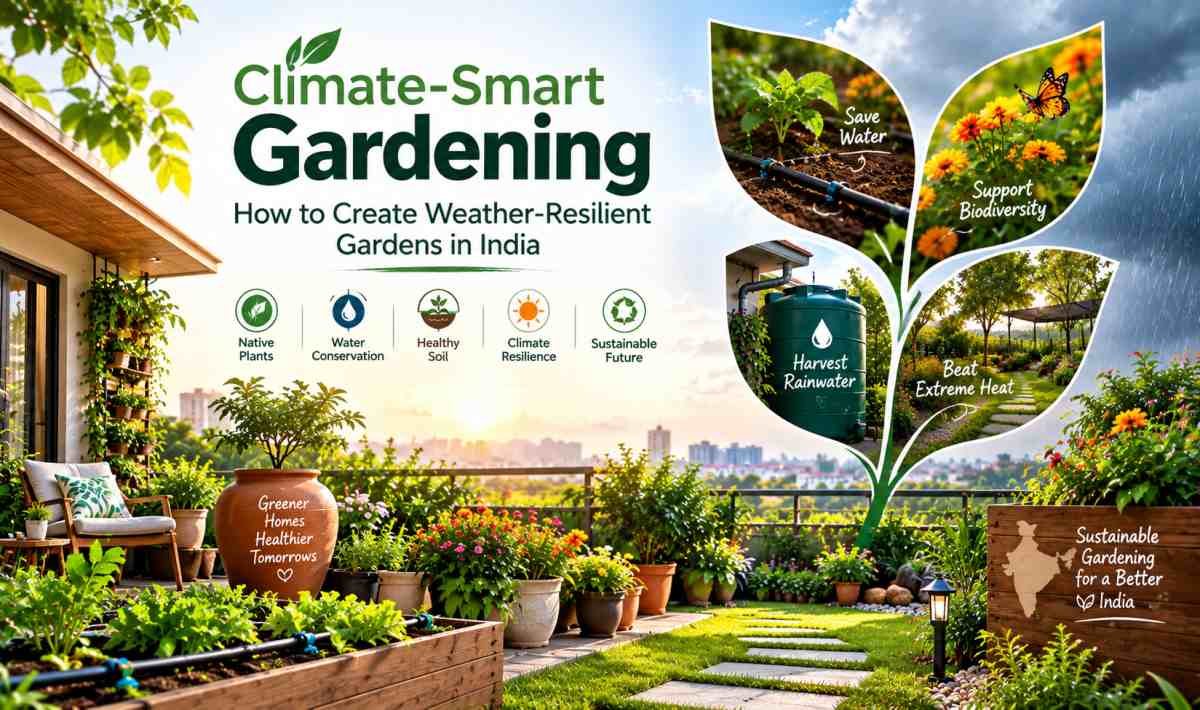
Climate-Smart Gardening: How to Create Weather-Resilient Gardens in India
Introduction
Climate change is transforming how people design, maintain, and experience gardens across India. Rising temperatures, unpredictable rainfall, extended dry periods, and intense monsoon showers are creating new challenges for homeowners and gardening enthusiasts. Traditional gardening practices may struggle to maintain healthy plants under these changing environmental conditions.
This is where climate-smart gardening offers a practical and sustainable solution.
Climate-smart gardening focuses on creating outdoor spaces that can adapt to changing weather conditions while conserving natural resources. By combining drought-tolerant plants, efficient irrigation systems, healthy soil management, and sustainable landscaping techniques, homeowners can develop beautiful gardens that require fewer resources and withstand environmental stress.
In India, where climatic conditions vary significantly between regions, weather-resilient gardening is becoming increasingly important. From rooftop gardens in metropolitan cities to residential landscapes in smaller towns, climate-friendly gardening practices can improve plant survival, reduce water consumption, and support biodiversity.
This comprehensive guide explores how to create weather-resilient gardens in India using practical techniques, innovative technologies, and environmentally responsible gardening methods.
1. What Is Climate-Smart Gardening?
Climate-smart gardening is an approach to garden planning and maintenance that considers local climate conditions, environmental challenges, and resource availability.
Unlike conventional gardening, which may depend heavily on regular watering and chemical inputs, climate-smart gardening emphasizes long-term sustainability.
Its primary objectives include:
- Conserving water through efficient irrigation.
- Selecting plants suitable for local weather conditions.
- Improving soil fertility and moisture retention.
- Reducing dependence on chemical fertilizers.
- Protecting plants against extreme weather.
- Encouraging biodiversity and ecological balance.
A climate-smart garden is not necessarily a garden filled only with drought-resistant plants. Instead, it combines suitable plant varieties with thoughtful landscape design to manage heat, rainfall, wind, and seasonal changes.
For Indian homeowners, this approach can create attractive outdoor spaces that remain functional throughout different seasons.
2. Why Climate-Smart Gardening Matters in India
India experiences diverse climatic conditions, including tropical humidity, intense summer heat, heavy monsoon rainfall, and prolonged dry seasons.
These variations influence plant growth, soil conditions, and water requirements.
Rising Summer Temperatures
Extreme summer heat can increase evaporation, dry out soil, and place considerable stress on garden plants.
Climate-smart gardening addresses these challenges through mulching, shade management, and heat-tolerant plant selection.
Unpredictable Monsoon Rainfall
Heavy rainfall can cause waterlogging, soil erosion, and root diseases. Proper drainage systems and rainwater management help protect gardens during intense monsoon conditions.
Water Scarcity
Many Indian cities experience seasonal water shortages. Water-efficient gardening practices can reduce unnecessary consumption while maintaining healthy vegetation.
Growing Urbanization
Urban homes often have limited gardening space. Climate-smart techniques such as vertical gardens, container gardening, and rooftop landscaping help residents introduce greenery into compact environments.
Together, these factors make sustainable gardening an increasingly valuable part of modern residential landscape design.
3. Choose Climate-Appropriate Plants for Your Garden
Selecting suitable plants is one of the most important steps in developing weather-resilient gardens in India.
Plants adapted to local temperature, rainfall, and soil conditions generally require less intensive maintenance.
Plants for Hot and Dry Regions
For relatively dry areas, consider:
- Bougainvillea
- Aloe vera
- Portulaca
- Certain native grasses
- Regionally suitable succulents
These plants can tolerate relatively dry conditions once established, although their watering and drainage requirements differ.
Plants for Humid and High-Rainfall Regions
Gardens in humid areas may benefit from:
- Hibiscus
- Canna
- Ferns in shaded locations
- Suitable native flowering shrubs
- Moisture-loving ornamental plants
Good airflow and drainage remain essential, even for plants that prefer moisture.
Plants for Cooler Regions
In cooler locations, gardeners can explore:
- Lavender in sunny, well-drained sites
- Rosemary in suitable climates
- Calendula
- Seasonal flowering varieties
- Locally adapted perennial plants
Gardening tip: Prioritize plants native to your specific region rather than assuming every plant commonly grown in India will suit your garden.
4. Improve Soil Health for Better Climate Resilience
Healthy soil is the foundation of successful climate-smart gardening.
Soil rich in organic matter supports plant roots, improves moisture management, and encourages beneficial microorganisms.
Add Organic Compost
Compost made from garden waste, dried leaves, and suitable kitchen scraps improves soil structure and provides nutrients.
Regular applications of mature compost can help sandy soil retain moisture and improve the workability of heavy soil.
Use Organic Mulching
Mulching involves covering exposed soil with materials such as:
- Dry leaves
- Straw
- Shredded plant material
- Untreated wood chips
- Suitable organic compost
Mulch helps reduce evaporation, moderate soil temperature, and limit weed growth.
Keep mulch away from direct contact with plant stems to discourage moisture-related problems.
Avoid Soil Compaction
Compacted soil restricts root growth and reduces water infiltration.
Use designated walking paths and avoid working wet soil unnecessarily.
Test Soil Conditions
Understanding soil pH, drainage, and nutrient levels helps gardeners choose appropriate plants and avoid excessive fertilizer application.
Healthy soil enables plants to tolerate environmental stress more effectively.
5. Install Water-Efficient Irrigation Systems
Water conservation is a major component of climate-smart gardening in India.
Traditional watering methods can waste water through evaporation, runoff, and uneven distribution.
Modern irrigation techniques offer greater control.
Drip Irrigation
Drip irrigation delivers water slowly near plant roots.
Its advantages include:
- Reduced surface evaporation.
- More targeted water delivery.
- Less unnecessary wetting of pathways.
- Compatibility with automated watering schedules.
Drip systems are especially useful for vegetable beds, shrubs, and organized landscape planting.
Smart Irrigation Controllers
Smart controllers can adjust watering schedules using soil moisture readings, weather information, or programmed settings.
This technology helps prevent unnecessary irrigation when sufficient moisture is already available.
Water at Appropriate Times
Early morning watering generally reduces evaporation and allows foliage to dry during the day.
However, irrigation should ultimately depend on soil moisture, plant requirements, and current weather conditions.
Group Plants by Water Requirements
Place plants with similar moisture needs together.
This technique, often called hydrozoning, makes irrigation more efficient and simplifies garden maintenance.
6. Use Rainwater Harvesting for Sustainable Gardening
Rainwater harvesting is an effective way to reduce dependence on municipal water supplies.
During the monsoon, rooftops and paved surfaces can generate substantial runoff.
With appropriate collection systems, some of this water can be stored for later gardening use.
Common Rainwater Harvesting Methods
Rain barrels: Collect roof runoff for non-potable garden use.
Storage tanks: Store larger quantities of rainwater for irrigation.
Rain gardens: Capture and temporarily absorb runoff using suitable vegetation and soil design.
Recharge structures: Encourage water infiltration where local ground conditions and regulations permit.
Collected water should be stored in covered, properly maintained containers to prevent mosquito breeding and contamination.
In areas experiencing irregular rainfall, rainwater harvesting can improve garden resilience when combined with efficient irrigation.
7. Design Gardens That Can Withstand Extreme Heat
High temperatures are among the biggest challenges facing Indian gardens.
Extreme heat can damage foliage, reduce flowering, and increase irrigation requirements.
Climate-smart garden design can reduce these impacts.
Create Shaded Areas
Use appropriately positioned trees, pergolas, shade cloth, or climbing plants to protect sensitive vegetation.
Deciduous trees may provide seasonal shade in suitable regions.
Select Heat-Tolerant Plants
Choose plants adapted to local summer temperatures and sunlight exposure.
Avoid placing shade-loving plants in locations receiving intense afternoon sun.
Protect Container Plants
Potted plants often experience faster moisture loss than plants growing in the ground.
Use adequately sized containers, suitable potting mixtures, and strategic placement to reduce heat stress.
Reduce Excessive Paving
Large paved surfaces can absorb and radiate heat.
Introducing vegetation, permeable pathways, and shaded planting areas can improve outdoor comfort.
These design choices support both plant health and more comfortable residential landscapes.
8. Protect Your Garden During Heavy Monsoon Rainfall
While rainfall supports plant growth, excessive water can create serious gardening problems.
Waterlogged soil limits oxygen availability around roots and can encourage disease.
Improve Garden Drainage
Ensure planting beds and containers have suitable drainage.
Raised beds may help in locations with persistently wet soil.
Prevent Soil Erosion
Groundcover plants, mulch, and carefully designed landscape slopes can reduce soil movement during heavy rainfall.
Provide Support for Vulnerable Plants
Tall flowering plants and young saplings may need suitable supports in windy conditions.
Inspect supports regularly to prevent damage to stems.
Monitor Plant Diseases
High humidity can encourage fungal problems.
Maintain adequate spacing, remove diseased plant material, and avoid unnecessary overhead watering.
A weather-resilient garden should manage both excessive rainfall and seasonal water shortages.
9. Create Climate-Smart Rooftop and Balcony Gardens
Urban gardening is becoming an important part of sustainable residential living.
However, rooftop and balcony gardens face additional challenges, including strong sunlight, wind exposure, and limited soil volume.
Choose Suitable Containers
Use durable containers with adequate drainage.
Larger containers can provide more stable growing conditions for appropriate plants.
Use Lightweight Growing Media
Rooftop gardens require carefully selected growing media that provide drainage and moisture retention without unnecessary weight.
Install Wind Protection
Screens, railings, and thoughtfully arranged plants can reduce wind exposure.
All structures and containers must be securely installed.
Check Structural Safety
Before creating a rooftop garden, consult a qualified structural professional regarding load capacity, waterproofing, drainage, and building requirements.
Wet soil, water storage, and large planters can add considerable weight.
With proper planning, urban residents can create attractive climate-smart gardens even in limited spaces.
10. Encourage Biodiversity Through Native Plant Landscaping
Biodiversity plays an important role in maintaining healthy garden ecosystems.
A diverse garden can provide food and shelter for birds, butterflies, bees, and other beneficial organisms.
Grow Regionally Native Flowers
Choose flowering species native to your local area and suited to available sunlight and soil conditions.
Reduce Chemical Pesticide Dependence
Use integrated pest management techniques, including regular monitoring, appropriate plant selection, and targeted treatment when necessary.
Provide Habitat Diversity
Combine shrubs, flowering plants, groundcovers, and suitable trees to create varied habitats.
Avoid Invasive Species
Some fast-growing ornamental plants can spread beyond gardens and harm local ecosystems.
Check regional guidance before introducing unfamiliar species.
Native plant landscaping can support biodiversity while reducing the maintenance requirements associated with unsuitable ornamental varieties.
11. Use Smart Gardening Technology for Climate Adaptation
Technology is making climate-smart gardening more accessible to homeowners.
Smart gardening systems can help monitor environmental conditions and improve resource management.
Soil Moisture Sensors
These devices measure moisture conditions and help determine when irrigation may be necessary.
Weather-Based Irrigation
Some controllers use weather forecasts or local climate information to adjust watering schedules.
Automated Watering Systems
Timers and connected irrigation equipment can simplify routine garden maintenance.
Garden Monitoring Applications
Digital tools can help gardeners track watering schedules, seasonal activities, and plant care requirements.
However, technology should complement rather than replace observation.
A well-designed garden with suitable plants and healthy soil may deliver greater long-term benefits than expensive equipment alone.
12. Practice Sustainable Composting and Waste Management
Garden waste can become a valuable resource instead of being discarded.
Composting converts suitable organic materials into a soil amendment that supports sustainable gardening.
Materials Suitable for Composting
Common ingredients include:
- Dried leaves
- Grass clippings
- Fruit and vegetable scraps
- Small amounts of shredded paper
- Non-diseased plant trimmings
Maintain an appropriate balance between moist green materials and dry brown materials.
Provide airflow and avoid excessive moisture.
Benefits of Composting
Composting can reduce organic waste disposal, improve soil structure, and support nutrient cycling.
It also reduces dependence on purchased soil amendments.
For urban households, compact compost bins can make organic waste management practical even where garden space is limited.
13. Plan Seasonal Gardening Activities in India
Successful climate-smart gardening requires adapting maintenance practices throughout the year.
Summer Gardening
During hot weather, prioritize moisture conservation, mulching, and protection for sensitive plants.
Monitor container plants more frequently because they can dry out quickly.
Monsoon Gardening
Inspect drainage systems, monitor fungal diseases, and protect vulnerable plants from heavy rain and wind.
Take advantage of suitable planting conditions without working excessively wet soil.
Winter Gardening
In cooler regions, protect frost-sensitive plants and adjust irrigation according to slower growth and reduced evaporation.
Pre-Monsoon Preparation
Clean drainage channels, repair irrigation equipment, and prepare planting beds before heavy rainfall begins.
Seasonal planning helps gardens remain healthier while reducing avoidable maintenance.
14. Common Climate-Smart Gardening Mistakes to Avoid
Even well-intentioned gardening practices can create problems when local conditions are overlooked.
Choosing unsuitable plants: Attractive plants may struggle when their climate requirements do not match the location.
Overwatering: Excessive irrigation can damage roots and waste valuable water.
Ignoring drainage: Poor drainage can cause waterlogging during monsoon periods.
Using excessive fertilizer: Too much fertilizer can damage plants and contribute to environmental pollution.
Overcrowding plants: Insufficient spacing can restrict airflow and increase disease risks.
Neglecting soil health: Poor soil conditions reduce plant resilience during extreme weather.
Installing technology without planning: Smart devices cannot compensate for inappropriate plant selection or poorly designed irrigation.
Avoiding these mistakes helps create sustainable gardens that remain attractive and manageable.
15. Future of Climate-Smart Gardening in India
The future of gardening in India is likely to place greater emphasis on climate adaptation, water efficiency, and ecological sustainability.
As cities expand and weather patterns become more challenging, homeowners and landscape designers will need practical approaches that balance aesthetics with environmental responsibility.
Several developments are particularly promising.
Water-sensitive landscaping can help residential communities manage runoff and reduce unnecessary irrigation.
Native plant gardens can support local biodiversity while improving compatibility with regional climate conditions.
Smart irrigation technology may become more accessible as affordable sensors and automated controllers develop.
Green roofs and vertical gardens can introduce vegetation into dense urban environments where conventional garden space is limited.
Community gardening initiatives can encourage shared green spaces, environmental awareness, and local food production.
However, future-ready gardening does not always require advanced technology.
Simple practices such as composting, mulching, selecting appropriate plants, and harvesting rainwater can make a meaningful difference.
The most effective climate-smart gardens will combine traditional gardening knowledge with modern environmental planning.
Conclusion
Climate-smart gardening offers Indian homeowners a practical approach to creating beautiful, sustainable, and weather-resilient outdoor spaces.
By selecting climate-appropriate plants, improving soil health, conserving water, managing monsoon rainfall, and encouraging biodiversity, gardeners can develop landscapes that respond more effectively to changing environmental conditions.
Modern technologies such as smart irrigation controllers and soil moisture sensors can provide additional support, but thoughtful planning remains essential.
Whether you maintain a spacious residential garden, a rooftop landscape, or a small apartment balcony, climate-smart gardening techniques can help reduce resource consumption and improve long-term plant health.