

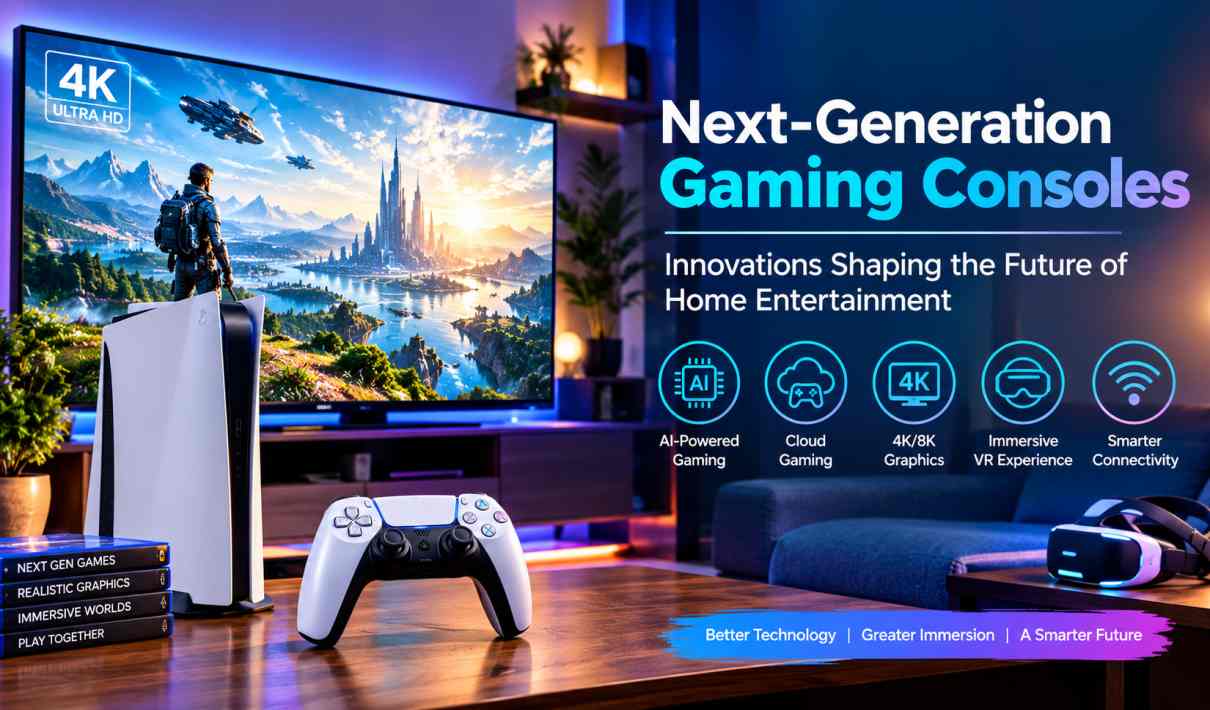
Next-Generation Gaming Consoles: Innovations Shaping the Future of Home Entertainment
Introduction
The gaming industry is experiencing remarkable technological changes, transforming how people play, connect, and enjoy digital entertainment. Modern gaming consoles are no longer simply devices for playing video games. They have evolved into powerful entertainment systems offering advanced graphics, immersive experiences, online connectivity, and multimedia capabilities.
With improvements in artificial intelligence, cloud gaming, graphics processing, and virtual reality, next-generation gaming consoles are creating exciting possibilities for the future of home entertainment.
Today’s gamers expect faster performance, realistic visuals, smooth gameplay, and convenient access to digital content. Console manufacturers are responding by developing innovative hardware and software technologies that improve gaming experiences.
Popular gaming platforms such as PlayStation, Xbox, and Nintendo demonstrate how different approaches to gaming hardware can appeal to diverse audiences.
Meanwhile, cloud technology, advanced controllers, and intelligent gaming features are influencing the direction of future console development.
This article explores the latest innovations in gaming console technology, their benefits, emerging trends, and how next-generation systems may transform home entertainment in 2027 and beyond.
What Are Next-Generation Gaming Consoles?
Next-generation gaming consoles are advanced gaming systems designed to deliver improved performance, graphics, connectivity, and interactive experiences compared with earlier hardware generations.
These consoles combine specialized processors, graphics technology, fast storage, and modern software platforms.
Their purpose is to provide high-quality gaming experiences while supporting additional entertainment features.
Modern consoles commonly offer:
- High-resolution gaming and advanced graphics
- Fast solid-state storage
- Online multiplayer connectivity
- Digital game libraries
- Advanced wireless controllers
- Streaming and entertainment applications
- Accessibility and customization features
- Support for selected cloud gaming services
However, not every console includes the same technologies.
Different manufacturers prioritize performance, portability, exclusive games, affordability, or innovative gameplay.
Understanding these differences helps consumers select gaming systems that match their entertainment preferences.
Evolution of Gaming Consoles: From Traditional Gaming to Smart Entertainment
Gaming consoles have developed significantly over several decades.
Early home gaming systems focused on relatively simple graphics and limited gameplay mechanics.
As processing technology improved, consoles introduced three-dimensional environments, larger game worlds, and increasingly sophisticated storytelling.
Internet connectivity later transformed gaming by enabling online multiplayer experiences, digital downloads, and regular software updates.
Modern consoles now combine powerful hardware with extensive digital ecosystems.
Players can purchase games online, communicate with friends, access entertainment services, and continue receiving new content after a game’s initial release.
Fast storage technology has also improved loading times and enabled more detailed virtual environments.
These developments show how gaming consoles have become important components of connected home entertainment.
1. Artificial Intelligence Is Transforming Gaming Experiences
Artificial intelligence is becoming increasingly important in video game development and interactive entertainment.
AI technologies can influence how characters behave, how game environments respond, and how developers create digital content.
Intelligent Non-Player Characters
Non-player characters, commonly known as NPCs, are computer-controlled characters that interact with gamers.
Traditional NPC behavior often follows predefined rules.
More advanced AI techniques can support flexible responses, improved decision-making, and more convincing character interactions.
Future games may introduce characters capable of responding to a wider variety of player actions.
Adaptive Gaming Experiences
AI systems can help developers design gameplay that responds to player performance.
For example, adaptive difficulty systems may adjust certain challenges based on gameplay patterns.
This can make games more accessible to players with different experience levels.
AI-Assisted Game Development
Developers are exploring AI tools for animation, testing, dialogue development, and environmental design.
These technologies may improve production efficiency, although creative oversight remains essential.
AI is likely to influence future console gaming primarily through the software and experiences that gaming hardware supports.
2. Advanced Graphics and Realistic Visual Experiences
Graphics technology remains one of the most visible areas of gaming console innovation.
Modern gaming systems use powerful graphics processors to create detailed environments, realistic lighting, and sophisticated visual effects.
4K Gaming Technology
Many modern consoles support 4K video output, allowing compatible games to display highly detailed visuals.
However, actual rendering resolution varies according to the game, graphics settings, and performance mode.
Ray Tracing Technology
Ray tracing simulates aspects of how light interacts with objects and surfaces.
It can produce more realistic reflections, shadows, and lighting effects.
Because ray tracing requires substantial processing power, developers often balance visual quality against performance.
High Frame Rate Gaming
Higher frame rates can make gameplay appear smoother and improve responsiveness.
Some games support 120 frames per second on compatible hardware and displays.
Performance depends on the game, console capabilities, and selected settings.
The Potential of 8K Gaming
8K resolution offers significantly more pixels than 4K.
Although certain gaming hardware supports 8K-related output capabilities, widespread native 8K gaming remains limited.
For most households, stable performance, attractive graphics, and responsive controls are currently more practical priorities than extremely high resolutions.
3. Cloud Gaming: Playing Without Traditional Hardware Limitations
Cloud gaming is changing how players access video games.
Instead of processing an entire game locally, cloud gaming services run games on remote servers and stream the resulting video to compatible devices.
This approach can reduce the need for expensive local gaming hardware.
Benefits of Cloud Gaming
Cloud gaming offers several potential advantages:
- Access to selected games across compatible devices
- Reduced dependence on local storage
- Convenient access to supported game libraries
- Opportunities to play without purchasing a high-performance console
Some services allow users to stream games through televisions, computers, tablets, or smartphones.
Challenges of Cloud Gaming
Cloud gaming requires a reliable internet connection.
Network latency, bandwidth limitations, and service availability can affect performance.
Subscription costs and game-library restrictions also influence the overall experience.
Cloud gaming is therefore likely to complement traditional consoles rather than replace them entirely in the near future.
4. Virtual Reality and Immersive Gaming Technology
Virtual reality offers another important direction for interactive entertainment.
VR technology places players inside computer-generated environments using specialized headsets and motion-tracking systems.
Instead of viewing gameplay only through a television, users can experience a simulated three-dimensional environment.
Immersive Virtual Environments
VR can make digital environments feel more interactive.
Players may explore virtual spaces, interact with objects, and experience games from new perspectives.
Motion Tracking
Motion-tracking technology allows compatible games to respond to physical movements.
This creates additional possibilities for interactive gameplay.
Challenges for VR Adoption
VR equipment can be expensive and requires compatible software.
Some users may also experience motion discomfort during extended sessions.
Future improvements in headset comfort, display quality, and software design could make VR more accessible.
However, virtual reality remains one of several gaming experiences rather than a guaranteed replacement for traditional television-based gameplay.
5. Faster Storage and Reduced Game Loading Times
Fast storage technology has significantly improved modern console performance.
Traditional hard drives rely on mechanical components, while solid-state drives use electronic memory.
SSDs generally provide faster data access, helping games load more quickly.
Benefits of SSD Technology
Faster storage can support:
- Shorter loading screens
- Quicker game startup
- More responsive navigation
- Faster access to game environments
- Improved handling of large game assets
Developers can also design certain game experiences around faster data-loading capabilities.
However, actual improvements depend on how individual games use the available hardware.
As storage technology advances, future consoles may provide even more efficient access to increasingly detailed digital worlds.
6. Smart Gaming Controllers and Haptic Feedback
Controllers play an essential role in the gaming experience.
Modern controllers have evolved beyond traditional buttons and directional controls.
They increasingly incorporate advanced vibration systems, motion sensors, and customizable inputs.
Haptic Feedback Technology
Haptic feedback uses vibrations and other physical sensations to communicate in-game events.
Different effects can help players distinguish between various actions or environments.
Adaptive Triggers
Some controllers feature triggers that adjust resistance during gameplay.
This technology can create additional feedback when interacting with compatible games.
Customizable Controls
Button remapping and adjustable control settings allow players to personalize their experience.
These features can also improve accessibility.
Future controllers may continue developing more precise feedback and flexible input options.
7. Cross-Platform Gaming and Connected Entertainment
Cross-platform gaming allows players using different supported devices to participate in the same multiplayer experiences.
This feature can make online gaming more convenient for friends who own different systems.
Cross-Platform Multiplayer
Compatible games may allow console, computer, and mobile players to interact.
Availability depends on the game and its supported platforms.
Cross-Progression
Some games allow players to continue their progress across multiple devices.
This can provide greater flexibility for households using different gaming platforms.
Digital Gaming Communities
Online gaming ecosystems support communication, cooperative gameplay, and community activities.
These features have helped transform gaming into a more connected entertainment experience.
However, players should use privacy controls and appropriate communication settings when participating in online communities.
8. Gaming Consoles as Complete Home Entertainment Systems
Modern consoles offer more than gaming.
Many systems provide access to streaming applications, media playback, and digital entertainment services.
Streaming Movies and Television
Compatible consoles can run entertainment applications that provide movies, television programs, and other video content.
This allows households to use one device for multiple entertainment activities.
Digital Media Libraries
Some platforms support digital media playback and access to purchased entertainment content.
Family Entertainment
Gaming consoles can also provide cooperative games and shared activities suitable for different age groups.
Parental controls, spending restrictions, and content settings help families manage gaming experiences.
These capabilities make consoles versatile additions to modern living rooms.
9. Portable Gaming and Hybrid Console Innovation
Portable gaming is becoming an increasingly important part of the wider gaming industry.
Handheld gaming systems allow users to enjoy games without remaining connected to a television.
Hybrid consoles combine portable gameplay with television-based entertainment.
Flexible Gaming Experiences
Hybrid systems allow players to switch between different gaming environments.
This flexibility can be especially useful for households sharing entertainment spaces.
Improvements in Portable Hardware
Advances in processors, batteries, displays, and cooling systems continue influencing handheld gaming technology.
However, portable devices must balance performance with battery life, heat management, and comfort.
The future of gaming may involve greater flexibility between home consoles, handheld systems, and cloud-connected devices.
10. Sustainable Gaming Consoles and Energy Efficiency
Environmental sustainability is becoming an important consideration in consumer electronics.
Gaming hardware requires energy and materials throughout manufacturing, transportation, operation, and disposal.
Manufacturers are exploring ways to improve efficiency and reduce environmental impacts.
Energy-Efficient Hardware
More efficient processors and power-management systems can help reduce electricity consumption.
Power-Saving Features
Sleep modes, automatic shutdown settings, and optimized standby functions may reduce unnecessary energy use.
Durable and Repairable Devices
Longer product lifespans can reduce electronic waste.
Repairability, replacement parts, and software support are important considerations for sustainable hardware.
Responsible Recycling
Consumers should use appropriate electronic waste recycling services when disposing of outdated gaming equipment.
Sustainable gaming requires attention to the complete product lifecycle rather than performance alone.
11. The Future of Gaming Consoles in India
India represents an important market for digital entertainment, with growing interest in online gaming, esports, and interactive technology.
Mobile gaming remains highly accessible, while console gaming appeals to consumers seeking dedicated home entertainment experiences.
Several factors could influence future console adoption in India.
Internet Connectivity
Reliable broadband connections support digital downloads, multiplayer gaming, and cloud services.
Gaming Affordability
Console prices, game costs, subscriptions, and accessories influence purchasing decisions.
Local Gaming Communities
Gaming events, online communities, and content creators can help introduce more audiences to console gaming.
Digital Entertainment Growth
As households invest in connected televisions and entertainment systems, gaming consoles may become attractive multifunctional devices.
However, affordability and access remain important barriers for many consumers.
12. Major Challenges Facing Next-Generation Gaming Consoles
Despite technological improvements, gaming consoles face several challenges.
High hardware costs: Advanced components can make new systems expensive.
Large game downloads: Modern games may require substantial storage space and internet bandwidth.
Subscription expenses: Online services and game libraries can create recurring costs.
Hardware compatibility: Not every accessory or older game works with every console.
Digital ownership limitations: Access to purchased digital content may depend on platform policies and service availability.
Environmental concerns: Manufacturing and electronic waste remain important sustainability issues.
Consumers should evaluate the total cost of ownership rather than focusing only on the initial console price.
13. Gaming Console Trends to Watch in 2027 and Beyond
Several developments could influence future gaming hardware.
Artificial intelligence may support more responsive game characters and personalized experiences.
Graphics technologies may continue improving image quality while balancing processing requirements.
Cloud gaming could expand access to selected games across more devices.
Advanced controllers may offer improved haptic feedback and customization.
Portable gaming systems may become more capable as energy-efficient hardware develops.
Manufacturers may also place greater emphasis on accessibility, repairability, and energy efficiency.
However, future hardware specifications and release schedules remain uncertain until officially announced.
The most meaningful innovations will be those that improve real gaming experiences rather than simply increasing technical specifications.
Frequently Asked Questions About Next-Generation Gaming Consoles
1. What are next-generation gaming consoles?
Next-generation gaming consoles are advanced gaming devices that offer improved processing performance, graphics, storage, connectivity, and interactive features compared with older systems.
2. How is AI changing console gaming?
AI can support intelligent game characters, adaptive gameplay, development tools, and personalized gaming experiences.
3. Will cloud gaming replace traditional consoles?
Cloud gaming may become more popular, but traditional consoles continue offering advantages such as local processing and reduced dependence on internet connectivity.
4. Are next-generation gaming consoles suitable for family entertainment?
Yes. Many consoles offer multiplayer games, entertainment applications, accessibility features, and parental controls.
5. What should buyers consider before purchasing a gaming console?
Important factors include game availability, price, performance, storage capacity, subscription costs, controller preferences, and compatibility with existing equipment.
Conclusion
Next-generation gaming consoles are shaping the future of home entertainment through improvements in graphics, artificial intelligence, cloud connectivity, storage technology, and interactive controls.
Modern gaming systems provide increasingly flexible ways to enjoy games, communicate with other players, and access digital entertainment.
Innovations such as haptic feedback, immersive environments, cross-platform gaming, and portable hardware are expanding the possibilities of interactive entertainment.
At the same time, affordability, accessibility, sustainability, and digital ownership remain important considerations.
As gaming technology continues evolving, future consoles are likely to focus on delivering more convenient, engaging, and connected experiences.
Ultimately, the future of home gaming will depend not only on powerful hardware but also on creative games, inclusive design, and meaningful improvements to how people enjoy entertainment.