
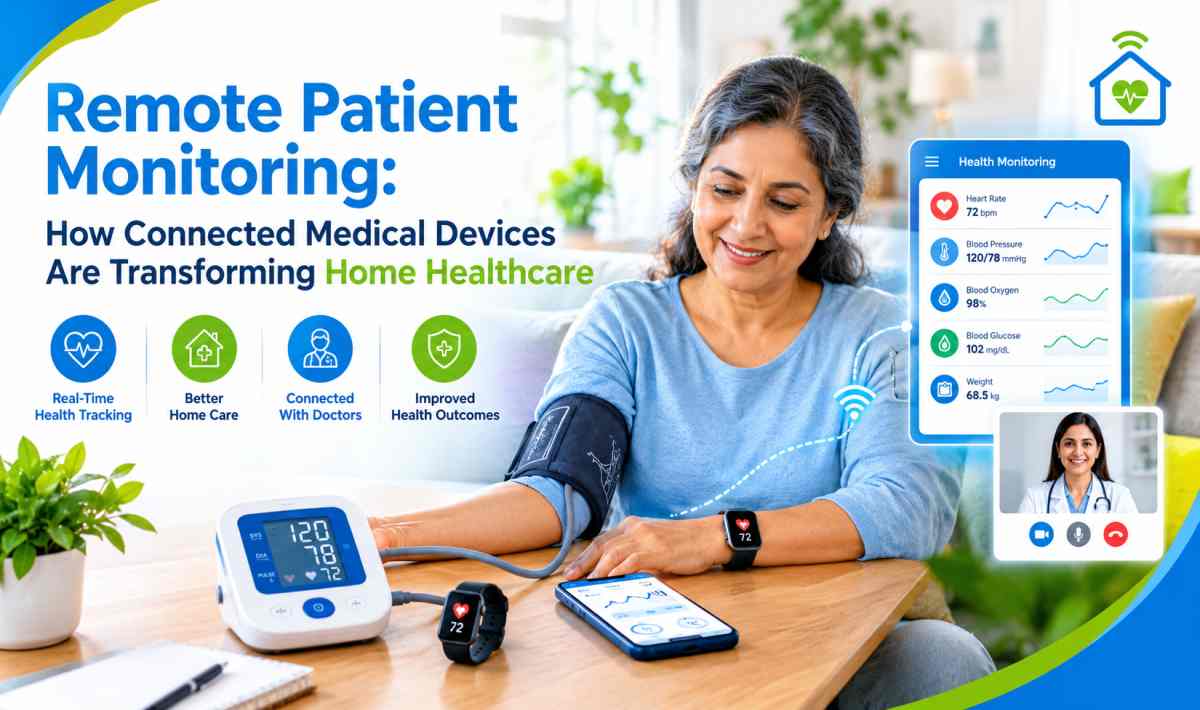
Remote Patient Monitoring: How Connected Medical Devices Are Transforming Home Healthcare
Introduction
Healthcare is undergoing a remarkable digital transformation. Traditional medical services often require patients to visit hospitals, clinics, or diagnostic centers for routine examinations and health monitoring. However, advancements in digital healthcare technology are changing how medical professionals monitor patients and deliver care.
Remote Patient Monitoring (RPM) is emerging as an important innovation in modern healthcare. By using connected medical devices, healthcare providers can collect and review certain patient health measurements without requiring frequent in-person visits.
From smart blood pressure monitors and wearable heart sensors to connected glucose monitoring systems, these technologies are making home healthcare more accessible and convenient.
Remote patient monitoring is particularly valuable for people managing chronic conditions, older adults, and patients recovering after medical procedures.
In India, growing interest in digital health services, telemedicine, and connected healthcare infrastructure is creating new opportunities for remote medical monitoring.
This article explores how remote patient monitoring works, its major benefits, commonly used devices, challenges, and the future of connected home healthcare.
What Is Remote Patient Monitoring?
Remote Patient Monitoring is a healthcare delivery approach that uses digital medical devices to collect patient health information outside traditional healthcare facilities.
These devices measure specific health indicators and transmit the information to healthcare professionals through connected digital platforms.
Depending on the monitoring program, collected information may include:
- Blood pressure measurements
- Heart rate and heart rhythm
- Blood glucose levels
- Blood oxygen saturation
- Body temperature
- Body weight
- Respiratory measurements
- Physical activity and sleep patterns
Healthcare professionals review these measurements to identify relevant changes and make informed decisions about patient care.
Unlike conventional healthcare monitoring, which often depends on scheduled appointments, RPM can provide more frequent information about a patient’s condition.
However, remote monitoring does not replace physical examinations, emergency services, or necessary hospital treatment.
How Does Remote Patient Monitoring Work?
Remote patient monitoring combines medical devices, communication networks, healthcare software, and professional medical supervision.
The process generally involves several important stages.
1. Measuring Patient Health Data
Patients use connected medical devices at home to measure specific health indicators.
For example, someone managing hypertension may use a digital blood pressure monitor to record daily readings.
Similarly, a patient with diabetes may use a connected glucose monitoring system.
2. Transmitting Information
The medical device sends collected information through Bluetooth, Wi-Fi, cellular connectivity, or a connected smartphone.
Data is transferred to a healthcare application or secure monitoring platform.
3. Reviewing Health Measurements
Healthcare professionals access patient information through digital dashboards.
These platforms may display trends, historical measurements, and changes in monitored health indicators.
4. Generating Health Alerts
Some remote monitoring systems generate notifications when measurements cross predefined thresholds.
These alerts can help healthcare teams identify situations requiring further assessment.
However, alerts are not always immediate, and their reliability depends on device accuracy, connectivity, and the monitoring service.
5. Providing Medical Guidance
Based on the information received, healthcare professionals may recommend follow-up appointments, additional testing, or changes to a treatment plan.
Medication adjustments should always be directed by an appropriately qualified healthcare professional.
Types of Connected Medical Devices Used in Home Healthcare
Connected medical devices are essential components of remote patient monitoring systems.
Different devices support different healthcare requirements.
1. Smart Blood Pressure Monitors
Connected blood pressure monitors allow patients to measure blood pressure at home and automatically store their readings.
Some devices transmit results directly to healthcare platforms.
These systems can help clinicians assess blood pressure patterns over time.
Home monitoring is especially useful when healthcare professionals need measurements taken outside clinical settings.
2. Continuous Glucose Monitoring Devices
Continuous glucose monitoring systems measure glucose levels in interstitial fluid through a small wearable sensor.
Compatible devices can display glucose trends and send information to smartphones or monitoring platforms.
For eligible patients with diabetes, these systems can support glucose management and help identify significant fluctuations.
However, device suitability and treatment decisions require professional medical guidance.
3. Wearable Heart Monitoring Devices
Wearable cardiac monitoring devices can collect heart rate information and, in some cases, record electrocardiogram measurements.
Depending on the device, these technologies may help healthcare professionals evaluate certain heart rhythm concerns.
Consumer smartwatches should not automatically be considered equivalent to clinically validated medical monitors.
4. Smart Pulse Oximeters
Pulse oximeters estimate blood oxygen saturation and pulse rate.
Connected models can record measurements and share information with healthcare systems.
However, pulse oximeter readings have limitations and may be affected by circulation, movement, skin pigmentation, and other factors.
They should not be used as the sole basis for important medical decisions.
5. Connected Weight Scales
Smart weighing scales can automatically record body weight and transmit measurements to healthcare applications.
Tracking weight changes may be useful for certain patients receiving medically supervised care.
For example, clinicians may include weight monitoring in selected heart failure management programs.
6. Smart Respiratory Monitoring Devices
Connected respiratory devices may measure breathing-related information or track the use of prescribed respiratory treatments.
Some connected inhaler systems record medication-use events.
These technologies may help healthcare teams understand treatment patterns and support follow-up care.
Major Benefits of Remote Patient Monitoring
Remote patient monitoring offers several potential advantages for patients, caregivers, and healthcare organizations.
1. Improved Access to Healthcare
Patients living in rural communities or areas with limited healthcare facilities may face difficulties attending regular medical appointments.
Remote monitoring can reduce some travel requirements by allowing suitable measurements to be collected at home.
This can be particularly valuable for people with mobility limitations.
However, reliable internet access and appropriate medical support remain important.
2. Better Chronic Disease Management
Chronic conditions such as hypertension, diabetes, and heart failure often require ongoing monitoring.
Connected medical devices can provide healthcare professionals with more frequent measurements.
This additional information may support timely treatment reviews and improved disease management.
The benefits depend on the condition, monitoring program, and quality of clinical follow-up.
3. Earlier Recognition of Health Changes
Regular monitoring can help identify changes that might otherwise remain unnoticed between appointments.
For example, repeated elevated blood pressure readings may indicate that a treatment plan needs reassessment.
Monitoring information can support earlier clinical intervention when appropriately reviewed.
4. Greater Convenience for Patients
Remote patient monitoring can reduce the need for some routine clinic visits.
Patients may collect measurements from their homes while continuing their everyday activities.
This convenience can be especially helpful for older adults and people recovering from illness.
5. Better Communication With Healthcare Providers
Digital monitoring platforms can help healthcare teams review health trends and communicate with patients.
Some systems integrate messaging, appointment scheduling, and virtual consultations.
These features can support continuity of care when combined with appropriate clinical supervision.
6. Potential Healthcare Cost Savings
Remote monitoring may reduce certain healthcare expenses by limiting unnecessary travel and supporting more efficient follow-up.
Some well-designed programs may also reduce avoidable hospital utilization.
However, financial benefits are not guaranteed.
Equipment costs, monitoring fees, staffing requirements, and the patient’s medical condition influence overall cost-effectiveness.
Remote Patient Monitoring for Chronic Disease Management
Chronic disease management represents one of the most important applications of connected home healthcare technology.
Diabetes Management
People with diabetes may require regular glucose monitoring to support treatment decisions.
Connected glucose monitoring systems can help eligible patients and healthcare professionals review glucose patterns.
This information may support personalized care and better-informed discussions about treatment.
Hypertension Management
High blood pressure often requires repeated measurements over time.
Connected blood pressure monitors allow patients to record readings outside clinical environments.
Healthcare professionals can use these measurements alongside other clinical information to evaluate blood pressure control.
Heart Failure Management
Selected heart failure patients may benefit from monitoring weight, blood pressure, symptoms, or other clinically relevant indicators.
Remote monitoring can support follow-up care and help clinicians assess changes.
However, different monitoring approaches have produced varying results in clinical studies.
Respiratory Disease Management
Some patients with chronic respiratory conditions may use connected devices to track relevant measurements or treatment use.
Remote monitoring may support disease management when integrated with a structured care plan.
It cannot replace emergency assessment when serious breathing difficulties occur.
Remote Patient Monitoring in India
India has significant opportunities to expand connected healthcare services because of its large population, geographic diversity, and growing digital infrastructure.
People in smaller towns and rural communities may need to travel considerable distances for specialized medical care.
Remote patient monitoring could help bridge some healthcare access gaps.
Growing Digital Healthcare Infrastructure
India’s Ayushman Bharat Digital Mission aims to support an integrated digital health ecosystem.
Digital health records and interoperable healthcare systems may help create an environment in which connected monitoring services can operate more effectively.
However, participation in digital health initiatives does not automatically provide remote monitoring equipment or services.
Expansion of Telemedicine
Telemedicine allows healthcare professionals to provide certain consultations remotely.
When combined with connected medical devices, telemedicine can provide clinicians with relevant health measurements before or during appointments.
This combination may support more informed virtual consultations.
Opportunities for Rural Healthcare
Remote monitoring programs could support selected patients who have limited access to frequent in-person care.
For successful implementation, these programs need affordable equipment, trained healthcare workers, dependable connectivity, and clear referral arrangements.
Growing Healthcare Technology Innovation
Healthcare technology companies are developing connected devices, digital monitoring platforms, and software designed for different clinical settings.
These innovations could contribute to more accessible home healthcare services in India.
Their effectiveness must still be demonstrated through appropriate clinical evaluation.
The Role of Artificial Intelligence in Remote Patient Monitoring
Artificial intelligence is becoming an increasingly important area of development in digital healthcare.
AI-based software can analyze large amounts of information collected through connected medical devices.
Identifying Health Trends
Machine learning systems may identify patterns in measurements collected over time.
These patterns can help highlight changes that deserve professional review.
Supporting Clinical Decision-Making
Some AI systems are designed to assist healthcare professionals by prioritizing alerts or identifying potentially concerning trends.
However, AI-generated recommendations can be inaccurate.
They should be evaluated within an appropriate clinical framework rather than treated as independent diagnoses.
Personalized Monitoring
AI-supported systems may eventually help healthcare teams adjust monitoring schedules and alert thresholds according to individual clinical needs.
Such approaches require validation, oversight, and safeguards against unreliable results.
Reducing Information Overload
Healthcare professionals may receive large volumes of information from connected monitoring devices.
Carefully validated software can help organize measurements and prioritize information.
This may improve workflow efficiency, although poorly designed alerts can create additional workload.
Challenges of Remote Patient Monitoring
Despite its potential benefits, remote patient monitoring faces several practical and clinical challenges.
Data Privacy and Cybersecurity
Connected medical devices collect sensitive personal health information.
Healthcare organizations must protect this information against unauthorized access, data breaches, and inappropriate sharing.
Secure transmission, access controls, and responsible data management are essential.
Device Accuracy and Reliability
Not every connected health device provides clinically reliable measurements.
Device accuracy may vary depending on product design, calibration, and correct usage.
Healthcare providers should select suitable, validated devices for their intended medical purposes.
Internet Connectivity
Remote monitoring often depends on stable internet or cellular connections.
Poor connectivity can delay data transmission and interrupt monitoring services.
Digital Literacy
Some patients may find connected devices and mobile applications difficult to operate.
Clear instructions, accessible interfaces, and caregiver assistance can improve usability.
Monitoring Costs
Medical devices, software subscriptions, and professional monitoring services can create financial barriers.
Affordable and scalable solutions are important for wider adoption.
Clinical Responsibility
Healthcare providers need clear procedures defining who reviews incoming measurements, when alerts are assessed, and how patients receive follow-up care.
Without these arrangements, collecting more data may not lead to better health outcomes.
The Future of Remote Patient Monitoring
Remote patient monitoring is expected to remain an important area of healthcare innovation.
Several technological developments could influence its future.
More Advanced Wearable Devices
Future wearable technologies may offer improved sensors, longer battery life, and more convenient monitoring.
Clinical validation will remain essential before new measurements can be relied upon for medical decisions.
Integration With Electronic Health Records
Connecting monitoring platforms with electronic health records could make relevant measurements easier for authorized healthcare professionals to access.
Interoperability standards and strong privacy protections will be important.
Expansion of Hospital-at-Home Programs
Hospital-at-home programs provide selected hospital-level services in patients’ homes under structured medical supervision.
Remote monitoring can form part of these programs alongside professional visits and established escalation procedures.
Such services are appropriate only for carefully selected patients.
More Personalized Healthcare
Connected devices may support increasingly individualized monitoring plans based on patients’ medical conditions and clinical requirements.
This could help healthcare professionals focus attention where it is most needed.
Greater Focus on Preventive Care
Remote monitoring may also support preventive healthcare by helping patients and clinicians observe relevant health trends.
Nevertheless, unnecessary monitoring can produce misleading alerts and anxiety.
Monitoring should therefore be selected according to medical need rather than simply because technology is available.
How to Choose the Right Remote Patient Monitoring Device
Choosing an appropriate connected medical device requires careful consideration.
Patients and caregivers should discuss monitoring needs with a qualified healthcare professional.
Important factors include:
- Clinical suitability: The device should measure information relevant to the patient’s medical condition.
- Accuracy: Prefer devices that have appropriate clinical validation for their intended use.
- Ease of use: Instructions and controls should be understandable.
- Connectivity: Confirm compatibility with available smartphones and internet services.
- Data security: Review how personal health information is stored and shared.
- Healthcare integration: Determine whether the treating healthcare team can access and review measurements.
- Total cost: Consider equipment, subscriptions, maintenance, and monitoring charges.
Patients should also understand whether their monitoring service operates continuously or only during specified hours.
A connected device does not necessarily provide emergency monitoring.
Frequently Asked Questions About Remote Patient Monitoring
1. What is remote patient monitoring in healthcare?
Remote patient monitoring uses connected medical devices to collect patient health measurements outside traditional healthcare facilities and share them with healthcare professionals for review.
2. What devices are commonly used for remote patient monitoring?
Common devices include connected blood pressure monitors, glucose monitoring systems, cardiac monitors, pulse oximeters, and digital weighing scales.
3. Is remote patient monitoring useful for older adults?
Remote monitoring may help selected older adults manage chronic conditions and reduce some routine travel requirements. Its suitability depends on individual medical needs and available support.
4. Can remote patient monitoring replace hospital visits?
No. Remote patient monitoring complements traditional healthcare but cannot replace necessary examinations, diagnostic procedures, emergency treatment, or hospital care.
5. Is remote patient monitoring available in India?
Yes. Certain healthcare providers and technology services offer remote monitoring solutions in India. Availability, clinical supervision, equipment, and pricing vary between providers.
6. What is the difference between telemedicine and remote patient monitoring?
Telemedicine generally involves providing healthcare consultations or services remotely. Remote patient monitoring focuses on collecting and sharing patient health measurements. The two approaches can work together.
Conclusion
Remote Patient Monitoring is transforming home healthcare by connecting patients and healthcare professionals through digital medical devices and secure communication systems.
Technologies such as connected blood pressure monitors, glucose sensors, wearable cardiac monitors, and smart respiratory devices can provide useful health information outside traditional medical settings.
For selected patients, these solutions may improve convenience, support chronic disease management, and help healthcare professionals recognize changes that require attention.
In India, expanding digital health infrastructure and telemedicine services create opportunities for broader adoption of connected home healthcare.
However, successful remote patient monitoring requires accurate devices, reliable connectivity, strong data protection, trained healthcare professionals, and appropriate clinical oversight.
As technology continues to evolve, remote monitoring could become a more established component of patient-centered healthcare.
Ultimately, its greatest value lies not simply in collecting health information, but in using reliable measurements to support safe, timely, and effective medical care.