

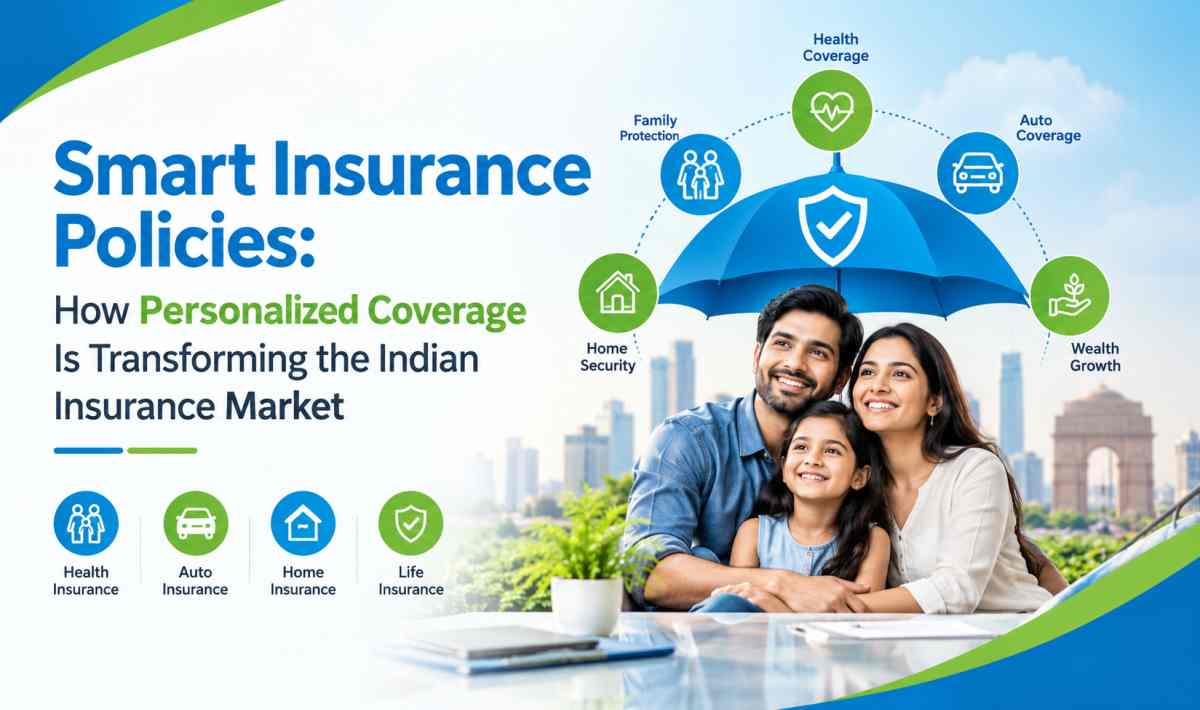
Smart Insurance Policies: How Personalized Coverage Is Transforming the Indian Insurance Market
Introduction
India’s insurance industry is undergoing a significant digital transformation. Changing customer expectations, increasing smartphone usage, artificial intelligence, and innovative financial technologies are influencing how insurance products are designed, purchased, and managed.
Traditional insurance products often followed standardized coverage structures. Today, insurers are increasingly exploring flexible solutions that reflect customers’ individual requirements, financial circumstances, and risk profiles.
Smart insurance policies represent an important development in this transformation. By combining digital technology, data analytics, and customizable coverage options, insurers can offer products that better address the needs of different customers.
From personalized health insurance and usage-based motor coverage to digital life insurance and specialized business protection, insurance services are becoming more customer-focused.
India’s growing InsurTech ecosystem is also helping insurers simplify policy comparisons, improve customer support, and modernize claims processing.
However, personalization introduces important questions about data privacy, affordability, transparency, and fair treatment.
This article explores how smart insurance policies are transforming the Indian insurance market, their benefits, emerging technologies, potential challenges, and future opportunities.
1. What Are Smart Insurance Policies?
Smart insurance policies are insurance products or services that use digital technology, flexible coverage structures, or data-based processes to improve the customer experience.
Unlike conventional policies with relatively fixed features, some smart insurance products allow customers to select additional benefits, adjust certain coverage options, or access technology-enabled services.
Personalization may involve:
- Choosing coverage based on individual protection needs.
- Adding optional benefits or riders.
- Selecting suitable deductibles and coverage limits.
- Accessing digital policy management tools.
- Receiving automated renewal reminders.
- Using technology-enabled claims services.
- Reviewing insurance options through digital platforms.
However, not every digitally purchased policy is personalized.
A policy can be issued online while retaining standard coverage conditions.
Similarly, customizable insurance does not necessarily use artificial intelligence.
The defining feature of meaningful personalization is that coverage and services respond appropriately to customers’ actual requirements.
2. Why Personalized Insurance Coverage Is Growing in India
Several developments are encouraging insurers to offer more flexible products.
Changing Customer Expectations
Modern consumers increasingly expect convenient digital services and greater control over financial decisions.
They want clear information about coverage, exclusions, premiums, and available benefits.
Personalized insurance products can help address these expectations by offering more relevant choices.
Increasing Digital Adoption
Smartphones, digital payments, and online financial platforms have made insurance services more accessible.
Customers can research policies, compare benefits, submit documents, and communicate with insurers without relying exclusively on physical branches.
Diverse Financial Needs
Insurance requirements vary significantly across households.
A young professional, a family with children, a senior citizen, and a small business owner may face very different financial risks.
Flexible insurance products can help customers select protection appropriate to their circumstances.
Growing InsurTech Innovation
Insurance technology companies are developing digital distribution platforms, automated customer support, risk assessment tools, and claims management solutions.
These innovations can improve operational efficiency and simplify certain insurance processes.
3. How Artificial Intelligence Is Transforming Smart Insurance
Artificial intelligence is becoming an important technology within the insurance industry.
AI systems can analyse information, identify patterns, automate routine tasks, and support certain business decisions.
Personalized Product Recommendations
AI-powered systems may help customers identify insurance products that match their stated requirements.
For example, a digital platform might consider a customer’s preferred coverage amount, budget, family structure, and existing protection.
However, recommendations should remain transparent and should not replace careful policy evaluation.
Faster Claims Processing
Automated systems can assist with document classification, claim registration, and preliminary information checks.
This may reduce administrative delays for straightforward claims.
Nevertheless, complex claims still require appropriate review, and automation does not guarantee approval.
Customer Support Automation
AI chatbots can answer routine questions about policy documents, payment schedules, renewals, and claim procedures.
Customers may receive faster responses to common enquiries.
Fraud Detection
Machine learning tools can help insurers identify unusual claim patterns that require further investigation.
Such systems must be used carefully to avoid unfairly flagging legitimate claims.
Human oversight remains important when automated decisions could significantly affect customers.
4. Personalized Health Insurance Policies in India
Health insurance is an important area for customizable coverage.
Healthcare needs differ according to family circumstances, age, financial capacity, and personal preferences.
Flexible Coverage Options
Customers may be able to choose among different sums insured, deductibles, and optional benefits.
Some policies also provide riders or additional coverage for specific healthcare expenses.
Availability depends on the insurer and product terms.
Family Health Insurance
Family floater plans provide shared coverage for eligible family members.
Customers should examine coverage limits, waiting periods, room-rent restrictions, and exclusions.
The lowest premium does not necessarily indicate the most suitable policy.
Wellness-Linked Benefits
Some insurers offer wellness programmes, preventive healthcare services, or rewards associated with eligible activities.
These features may encourage engagement with preventive care.
However, wellness benefits vary between products and should not be confused with guaranteed premium reductions.
Digital Healthcare Services
Certain health insurance products include teleconsultation access, digital health services, or online claims assistance.
Customers should verify whether these benefits are included or require additional payment.
5. Smart Motor Insurance and Usage-Based Coverage
Motor insurance is another area where personalization is gaining attention.
Technology-enabled products may use vehicle information, driving patterns, or selected coverage options to support more flexible insurance arrangements.
Pay-As-You-Drive Insurance
Some motor insurance products offer usage-linked options based on declared or measured vehicle usage.
These arrangements may appeal to customers who drive relatively infrequently.
Actual pricing and coverage depend on the insurer’s approved product structure.
Telematics-Based Insurance
Telematics technology can collect vehicle-related information through connected devices or applications.
Depending on the product, information may include distance travelled and certain driving characteristics.
Insurers may use permitted data to support risk assessment or customer services.
Customizable Motor Protection
Vehicle owners may choose optional covers such as roadside assistance, engine protection, or zero-depreciation benefits.
Each additional benefit has specific conditions and may increase the premium.
Important Considerations
Customers should understand what information is collected, how it is used, and whether participation is optional.
Privacy protections and transparent policy terms are particularly important in connected insurance products.
6. Personalized Life Insurance and Financial Protection
Life insurance helps provide financial protection to eligible beneficiaries following an insured event.
Personalized life insurance focuses on aligning protection with financial responsibilities and long-term needs.
Choosing Appropriate Coverage
Individuals may consider outstanding liabilities, dependent family members, future expenses, and existing financial resources.
The required coverage amount differs from person to person.
Optional Policy Riders
Some life insurance products offer additional benefits through riders.
Examples may include accidental death benefits, critical illness coverage, or premium waiver provisions.
These benefits depend on policy terms and eligibility.
Digital Policy Management
Online services can simplify premium payments, nominee updates, document access, and renewal-related communication.
Customers should ensure that important changes are properly recorded by the insurer.
Transparent Product Comparison
Life insurance products can differ substantially in purpose, benefits, costs, and conditions.
Customers should distinguish pure protection products from insurance products that include savings or investment features.
7. Role of InsurTech Companies in India’s Insurance Market
InsurTech refers to the use of technology to improve insurance products, distribution, administration, and customer services.
India’s InsurTech ecosystem includes digital insurance intermediaries, technology providers, and insurers developing innovative platforms.
Simplified Policy Comparisons
Digital comparison services can help customers examine premiums, coverage limits, exclusions, and selected policy features.
However, comparison platforms may not display every available insurance product.
Digital Documentation
Electronic forms, online verification, and digital policy issuance can reduce paperwork.
These processes may make insurance purchases more convenient.
Improved Customer Communication
Digital dashboards, notifications, and mobile applications help customers track policy information.
They may also support premium reminders and claim status updates.
Better Administrative Efficiency
Technology can assist insurers with underwriting workflows, record management, and customer service operations.
Efficiency improvements may reduce operating costs, although savings are not necessarily passed directly to policyholders.
8. Benefits of Smart Insurance Policies for Customers
Personalized insurance can provide several advantages when products are designed responsibly.
More Relevant Coverage
Customers can focus on protection that matches their financial risks rather than purchasing unnecessary optional benefits.
Greater Convenience
Digital platforms simplify access to documents, payments, policy information, and customer support.
Flexible Product Features
Some policies allow customers to select suitable coverage limits, deductibles, and additional benefits.
Improved Transparency
Clear digital explanations and comparison tools can help customers understand important policy differences.
Potential Cost Efficiency
Choosing appropriate coverage may help avoid unnecessary spending.
However, personalized insurance is not automatically cheaper than conventional insurance.
Easier Policy Management
Digital reminders and online services may reduce missed communications and administrative difficulties.
These advantages depend on the quality of the insurer’s services and the specific product purchased.
9. Challenges Facing Personalized Insurance in India
Despite its potential, smart insurance introduces several important challenges.
Data Privacy Concerns
Personalized insurance may involve collecting financial, behavioural, or health-related information.
Customers should understand why information is required and how it will be protected.
Algorithmic Bias
Automated risk models can produce unfair outcomes if they rely on inaccurate or inappropriate data.
Insurers need effective governance, testing, and review processes.
Digital Literacy
Not all customers are comfortable using mobile applications or online insurance platforms.
Accessible explanations and offline support remain important.
Complex Policy Conditions
Customization can introduce additional exclusions, eligibility rules, and benefit limitations.
Customers must review the full policy wording rather than relying only on promotional descriptions.
Cybersecurity Risks
Digital insurance platforms handle sensitive information.
Strong authentication, secure data storage, and responsible access controls are essential.
10. Insurance Regulations and Consumer Protection in India
Insurance products and distribution practices in India operate within a regulatory framework overseen by the Insurance Regulatory and Development Authority of India.
The regulator establishes requirements concerning insurance operations, policyholder protection, and market conduct.
Policyholder Rights
Customers should receive appropriate information about policy benefits, exclusions, premiums, and claim procedures.
Transparent Disclosures
Insurers and intermediaries must follow applicable disclosure requirements.
Customers should examine policy documents and relevant benefit illustrations before purchasing coverage.
Grievance Redressal
Policyholders can raise complaints through their insurer’s grievance mechanism.
Additional regulatory and ombudsman channels may be available depending on the nature of the complaint.
Responsible Use of Technology
Digital insurance services must comply with applicable regulatory and data protection obligations.
Customers should remain cautious about sharing sensitive information through unverified websites or applications.
For updated regulatory information, readers can consult the official Insurance Regulatory and Development Authority of India website.
11. How to Choose the Right Smart Insurance Policy
Selecting suitable insurance requires more than comparing premiums.
Identify Your Protection Needs
Start by determining which financial risks require coverage.
Health, life, motor, and property insurance serve different purposes.
Compare Coverage and Exclusions
Review what the policy covers and what it excludes.
Pay attention to waiting periods, deductibles, sub-limits, and claim conditions.
Evaluate Customization Options
Choose optional benefits only when they address genuine requirements.
Unnecessary riders can increase overall costs.
Review Insurer Services
Examine customer support arrangements, claims procedures, and available grievance channels.
Understand Data Collection
For technology-enabled policies, check what personal information is collected and whether it influences pricing or coverage.
Consider Long-Term Affordability
Insurance should remain financially manageable over the intended coverage period.
Premiums may change according to product conditions and applicable regulations.
12. Future of Smart Insurance Policies in India
The future of India’s insurance market is likely to involve greater digital integration and more flexible customer services.
Artificial intelligence may improve administrative efficiency, while data analytics could support better product development.
Connected devices may create additional opportunities for usage-based insurance, particularly in motor and property protection.
Digital platforms may also improve access to insurance in underserved markets.
However, future progress will depend on responsible innovation.
Insurers must balance personalization with affordability, consumer privacy, transparent pricing, and fair claims handling.
Human assistance will remain valuable, especially for complex insurance decisions and disputed claims.
The most successful insurance innovations will be those that improve practical protection rather than simply introducing additional technology.
Conclusion
Smart insurance policies are helping reshape India’s insurance industry through digital innovation, flexible product features, and more customer-focused services.
Personalized health insurance, technology-enabled motor coverage, customizable life protection, and digital insurance platforms demonstrate how the market is evolving.
These developments may improve convenience, product relevance, and administrative efficiency.
However, customers should not assume that smarter technology automatically means better insurance.
Coverage quality, affordability, policy conditions, privacy safeguards, and dependable claims support remain essential.
As India’s insurance market continues to modernize, responsible personalization can help make financial protection more accessible and relevant to different customer needs.
Ultimately, the value of a smart insurance policy lies in how effectively it protects the policyholder when coverage is needed.