

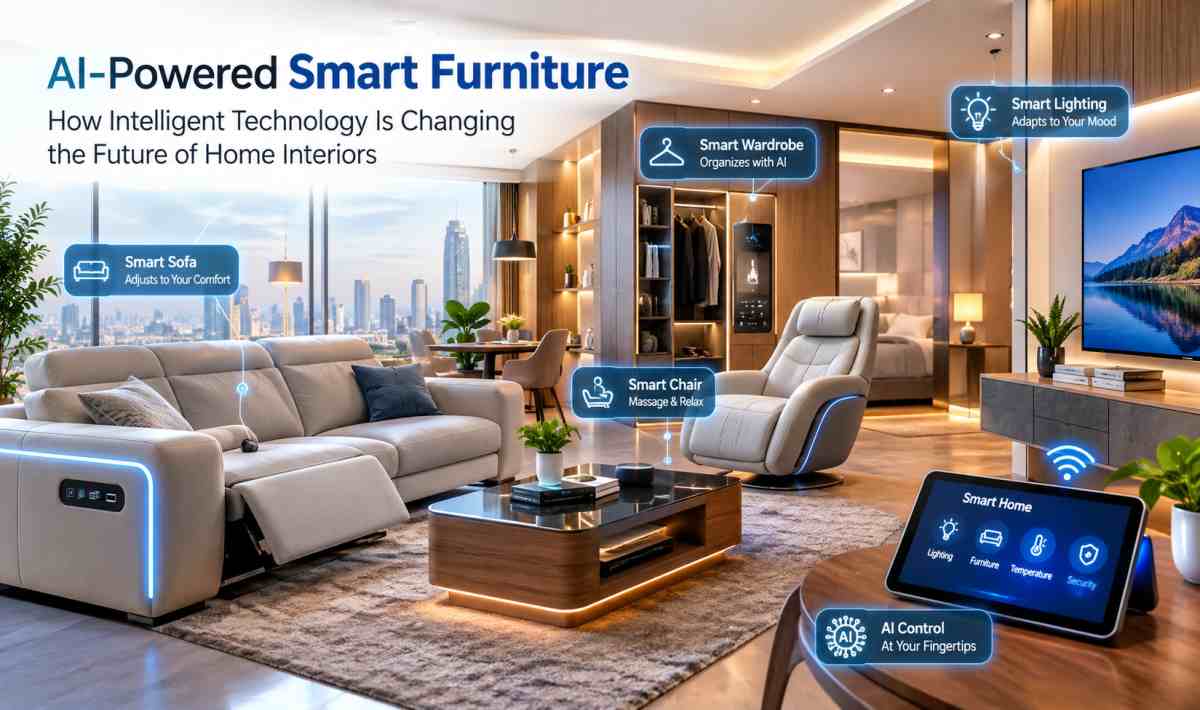
AI-Powered Smart Furniture: How Intelligent Technology Is Changing the Future of Home Interiors
The furniture industry is experiencing a technological transformation as artificial intelligence (AI), automation, and smart home connectivity become increasingly important in modern interior design. Traditional furniture is evolving beyond basic functionality, introducing intelligent features that improve comfort, convenience, productivity, and energy efficiency.
AI-powered smart furniture represents an emerging direction in home design, combining advanced sensors, connected devices, automated controls, and intelligent software to create personalized living environments.
From smart beds that monitor sleeping patterns to adjustable desks that encourage healthier working habits, intelligent furniture is changing how people interact with their homes. These innovations are particularly relevant to urban households seeking greater functionality within limited spaces.
As technology continues to develop, smart furniture could become an important component of connected homes.
This article explores the latest developments in AI-powered furniture, its benefits, applications, challenges, and future possibilities for modern home interiors.
What Is AI-Powered Smart Furniture?
AI-powered smart furniture refers to furniture equipped with intelligent software, sensors, automation systems, or connected technologies that allow it to respond to user preferences and environmental conditions.
Unlike conventional furniture, intelligent furniture can offer personalized settings, automated adjustments, and information about how it is used.
For example, an intelligent office desk might remember preferred heights, while an advanced smart bed may use sensor data to recommend adjustments for improved comfort.
However, not every automated furniture product uses artificial intelligence. Some products rely on programmable controls or simple sensors rather than machine learning.
Common technologies associated with smart furniture include:
- Artificial Intelligence: Software that analyzes information and supports personalized recommendations.
- Internet of Things (IoT): Connectivity between furniture, mobile applications, and smart home systems.
- Smart Sensors: Devices that detect movement, pressure, temperature, or occupancy.
- Automation: Motorized systems that adjust furniture positions or settings.
- Voice Control: Integration with compatible digital assistants.
- Mobile Applications: Remote management of connected furniture features.
Together, these technologies can make furniture more responsive, convenient, and adaptable.
Why AI-Powered Smart Furniture Is Becoming Popular
Modern homeowners increasingly value convenience, flexibility, and personalized living experiences.
The growing adoption of connected home devices has also encouraged furniture manufacturers to explore intelligent products.
1. Increasing Demand for Smart Homes
Smart lighting, connected security systems, automated curtains, and intelligent appliances are becoming familiar features in contemporary homes.
Smart furniture extends these capabilities into bedrooms, living rooms, and home offices.
2. Growing Urbanization
Urban apartments often have limited floor space.
Multifunctional furniture with automated adjustments can help residents use available space more efficiently.
3. Greater Focus on Comfort
Consumers increasingly appreciate furniture that adapts to individual preferences.
Adjustable seating, customizable beds, and ergonomic desks can support more comfortable daily routines.
4. Work-From-Home Requirements
Remote and hybrid working arrangements have increased interest in flexible home office furniture.
Height-adjustable desks and connected workstations offer practical solutions for changing work environments.
5. Technological Innovation
Advancements in sensors, connectivity, embedded electronics, and intelligent software are creating new opportunities for furniture designers.
These developments are helping manufacturers introduce more sophisticated furniture features.
Top AI-Powered Smart Furniture Innovations Transforming Modern Homes
1. Smart Beds With Intelligent Sleep Features
Smart beds are among the most recognizable examples of technology-integrated furniture.
Advanced models may include adjustable firmness, sleep monitoring, temperature management, and personalized positioning.
Some connected beds use sensors to collect information about movement and sleeping patterns.
Depending on the product, available features may include:
- Adjustable mattress firmness
- Automated head and foot positioning
- Sleep tracking through integrated sensors
- Personalized comfort settings
- Temperature regulation
- Smartphone application connectivity
Certain systems can analyze collected information and suggest adjustments based on user preferences.
However, sleep-monitoring features should not automatically be considered medical diagnostic tools.
Smart beds are especially appealing to homeowners seeking personalized bedroom comfort and connected sleep technology.
2. Intelligent Sofas and Smart Recliners
Living room furniture is also evolving through automation and connected features.
Modern smart sofas may include motorized reclining mechanisms, adjustable headrests, USB charging ports, and customizable seating positions.
Premium designs sometimes incorporate heating, massage functions, or wireless charging.
Selected connected seating systems can store preferred positions and integrate with compatible smart home controls.
Potential benefits include improved convenience, personalized comfort, and easier adjustment.
For modern interiors, smart sofas combine traditional furniture design with practical technological features.
3. AI-Enabled Smart Office Desks
Smart office desks are becoming increasingly relevant as homeowners create dedicated workspaces.
Height-adjustable desks allow users to alternate between sitting and standing throughout the working day.
Advanced connected models may offer programmable height settings, activity reminders, and application-based controls.
Some experimental systems use sensors and software to analyze workspace activity.
Popular features include:
- Electric height adjustment
- Saved user preferences
- Scheduled movement reminders
- Integrated charging facilities
- Cable management systems
- Connected productivity applications
Although these features can encourage movement and ergonomic awareness, users should still maintain comfortable working positions and take regular breaks.
Smart desks demonstrate how furniture technology can support flexible home office environments.
4. Automated Storage and Intelligent Wardrobes
Storage furniture is becoming more sophisticated through motorized mechanisms and connected technologies.
Automated wardrobes may incorporate electronic locks, adjustable lighting, motorized compartments, and digital inventory features.
More advanced concepts explore AI-assisted clothing organization and personalized wardrobe recommendations.
For example, a connected wardrobe application could help users track clothing items and organize outfits.
Potential advantages include better organization, easier access, and improved space utilization.
However, fully autonomous AI wardrobes remain an emerging concept rather than a standard household product.
5. Smart Dining Tables and Multifunctional Furniture
Modern dining areas increasingly serve multiple purposes, including eating, working, studying, and entertainment.
Technology-integrated dining tables can support these activities through adjustable surfaces, integrated charging, and connected controls.
Some innovative designs feature motorized height adjustment or expandable configurations.
Experimental concepts also explore interactive displays and intelligent surface technology.
These developments are particularly relevant to compact apartments where one furniture item must perform several functions.
Multifunctional smart furniture allows homeowners to create adaptable interiors without permanently dedicating space to every activity.
How Artificial Intelligence Improves Home Interior Design
Artificial intelligence is influencing not only furniture functionality but also the process of planning and designing interiors.
AI-assisted design platforms can help homeowners explore furniture arrangements, color combinations, and decorative styles.
Personalized Furniture Recommendations
AI-based recommendation systems can analyze room dimensions, design preferences, and selected furniture styles.
They may suggest products that complement existing interiors.
This can simplify the furniture selection process.
Intelligent Space Planning
Digital design tools can generate possible furniture layouts based on available floor space.
These systems can help identify arrangements that improve circulation and functionality.
However, suggested layouts should still be checked against actual measurements.
Virtual Furniture Visualization
Augmented reality and AI-assisted visualization allow users to preview furniture within digital representations of their rooms.
This can make it easier to compare designs before purchasing.
Custom Furniture Design
AI-assisted design software can support furniture customization by exploring different dimensions, materials, and configurations.
Manufacturers can use these tools to develop designs suited to individual requirements.
Together, these applications are making furniture planning more interactive and personalized.
Major Benefits of AI-Powered Smart Furniture
Enhanced Comfort and Convenience
Intelligent furniture can reduce repetitive manual adjustments.
Automated reclining chairs, adjustable beds, and programmable desks allow users to personalize furniture settings.
Better Space Utilization
Compact homes benefit from furniture that performs multiple functions.
Motorized transformations and adaptable configurations can improve the practical use of available space.
Personalized Living Experiences
Connected furniture can remember preferred settings and offer customized recommendations.
This creates a more individualized home environment.
Potential Energy Savings
Furniture equipped with occupancy sensors or connected lighting controls may help reduce unnecessary electricity consumption.
However, actual energy savings depend on the product’s design, usage patterns, and standby power requirements.
Improved Accessibility
Adjustable furniture can make certain everyday activities easier for people with different mobility and comfort requirements.
For example, motorized height adjustment may reduce the need for difficult manual repositioning.
Modern Interior Aesthetics
Smart furniture manufacturers increasingly combine technological functionality with contemporary design.
Minimalist finishes, concealed controls, and integrated charging features can complement modern interiors.
AI-Powered Smart Furniture and Sustainable Interior Design
Sustainability is becoming an important consideration in furniture manufacturing.
Technology-integrated furniture can contribute to responsible interior design when manufacturers prioritize durability, repairability, and efficient operation.
Energy-Efficient Components
Low-power sensors, efficient motors, and intelligent standby systems can help limit electricity consumption.
Sustainable Materials
Manufacturers may use responsibly sourced wood, recycled metals, recycled fabrics, and other lower-impact materials.
Durable Furniture Construction
Long-lasting furniture reduces the frequency of replacement.
Smart products should ideally allow damaged electronic components to be repaired without replacing the entire furniture item.
Modular Furniture Design
Modular construction allows homeowners to replace or upgrade selected components.
This approach may extend product life and reduce unnecessary waste.
Nevertheless, connected furniture also introduces electronic waste and additional manufacturing impacts.
Truly sustainable smart furniture must balance technological innovation with material efficiency, durability, and responsible disposal.
The Role of Smart Furniture in Indian Homes
India presents interesting opportunities for intelligent furniture because of changing urban lifestyles and growing interest in connected home technologies.
Cities such as Bengaluru, Mumbai, Hyderabad, Pune, and Delhi have diverse housing markets where space-efficient interior solutions can be valuable.
Compact Apartment Solutions
Multifunctional furniture can help homeowners make better use of limited residential space.
Adjustable desks, convertible seating, and automated storage are relevant examples.
Modern Residential Projects
Premium residential developments may incorporate connected lighting, automated climate controls, and smart home systems.
Compatible furniture can complement these installations.
Home Office Furniture
Professionals working remotely may benefit from adjustable desks and ergonomic seating.
Premium Interior Design
Technology-integrated beds, recliners, and entertainment furniture can appeal to buyers seeking personalized comfort.
However, Indian consumers should evaluate service availability, warranty coverage, electrical compatibility, and long-term maintenance before investing.
Challenges of AI-Powered Smart Furniture
Despite its advantages, intelligent furniture presents several practical challenges.
Higher Initial Investment
Advanced electronics, sensors, and motorized components can increase manufacturing costs.
As a result, some smart furniture products are more expensive than conventional alternatives.
Maintenance Requirements
Electronic components may require repairs, software updates, or replacement parts.
Buyers should investigate the manufacturer’s after-sales support.
Data Privacy Concerns
Connected furniture can collect information about personal routines, movement, and preferences.
Manufacturers should provide transparent privacy policies and appropriate security protections.
Compatibility Issues
Not every smart furniture product works with every connected home platform.
Homeowners should verify compatibility before purchasing.
Technology Obsolescence
Software support may eventually end, even when the physical furniture remains usable.
Products with replaceable electronics and manual controls may offer better long-term value.
How to Choose the Best Smart Furniture for Your Home
Choosing intelligent furniture requires balancing functionality, design, budget, and maintenance.
Before purchasing, homeowners should consider several important factors.
Identify practical requirements: Choose features that genuinely improve daily activities rather than paying for unnecessary technology.
Measure available space: Check furniture dimensions, movement clearance, and electrical access.
Evaluate construction quality: Durable frames, reliable motors, and comfortable materials remain essential.
Check smart home compatibility: Confirm whether the product supports existing devices and applications.
Review privacy protections: Understand what information connected furniture collects and how it is stored.
Compare warranty and service options: Reliable technical support can be especially important for motorized furniture.
Consider long-term ownership costs: Include potential repair expenses, replacement components, and electricity consumption.
A thoughtful purchase should deliver lasting practical value alongside technological convenience.
Future of AI-Powered Smart Furniture: Trends to Watch in 2027 and Beyond
The future of furniture design is likely to involve greater personalization, improved connectivity, and more adaptable products.
Several emerging developments deserve attention.
Predictive Furniture Adjustments
Future systems may use machine learning to recognize user preferences and recommend suitable furniture settings.
Voice-Integrated Furniture
Improved voice assistant compatibility could make connected furniture easier to operate.
Adaptive Ergonomic Designs
Furniture may increasingly use sensor information to suggest adjustments based on individual working or seating preferences.
Intelligent Modular Furniture
Future modular systems could combine motorized movement with customizable configurations for compact homes.
AI-Assisted Furniture Manufacturing
Manufacturers may use artificial intelligence to improve design processes, reduce material waste, and support customized production.
Repairable Smart Furniture
Greater attention to sustainability could encourage designs with replaceable electronics and longer software support.
Although some of these developments remain experimental, they illustrate the possibilities for future home interiors.
Frequently Asked Questions About AI-Powered Smart Furniture
1. What is AI-powered smart furniture?
AI-powered smart furniture combines intelligent software, sensors, connectivity, and automation to provide personalized features and convenient furniture controls.
2. Is smart furniture suitable for small apartments?
Yes. Multifunctional desks, automated storage systems, and adjustable furniture can help improve space utilization in compact homes.
3. Is AI-powered furniture expensive?
Prices vary considerably. Basic connected furniture may be relatively accessible, while advanced intelligent systems generally require a higher investment.
4. Can smart furniture save electricity?
Certain products can support energy efficiency through occupancy sensing and automated controls. Actual savings depend on their features and electricity consumption.
5. What is the future of smart furniture in India?
Smart furniture could gain wider adoption as connected home technology develops and consumers seek more convenient, adaptable interior solutions.
Conclusion
AI-powered smart furniture is opening new possibilities for modern home interiors by combining traditional furniture functionality with intelligent technology.
Smart beds, automated seating, connected desks, and innovative storage solutions demonstrate how furniture can become more adaptable to individual lifestyles.
Artificial intelligence is also influencing interior planning, product customization, and furniture manufacturing.
However, successful adoption requires careful consideration of affordability, durability, privacy, compatibility, and environmental impact.
For Indian homeowners, intelligent furniture offers opportunities to create comfortable, functional, and space-efficient living environments.
As technological innovation continues, the future of furniture design will increasingly focus on balancing intelligent features with practical everyday needs.
Ultimately, the most successful smart furniture will not simply incorporate advanced technology. It will use that technology to make homes more comfortable, accessible, efficient, and enjoyable.