

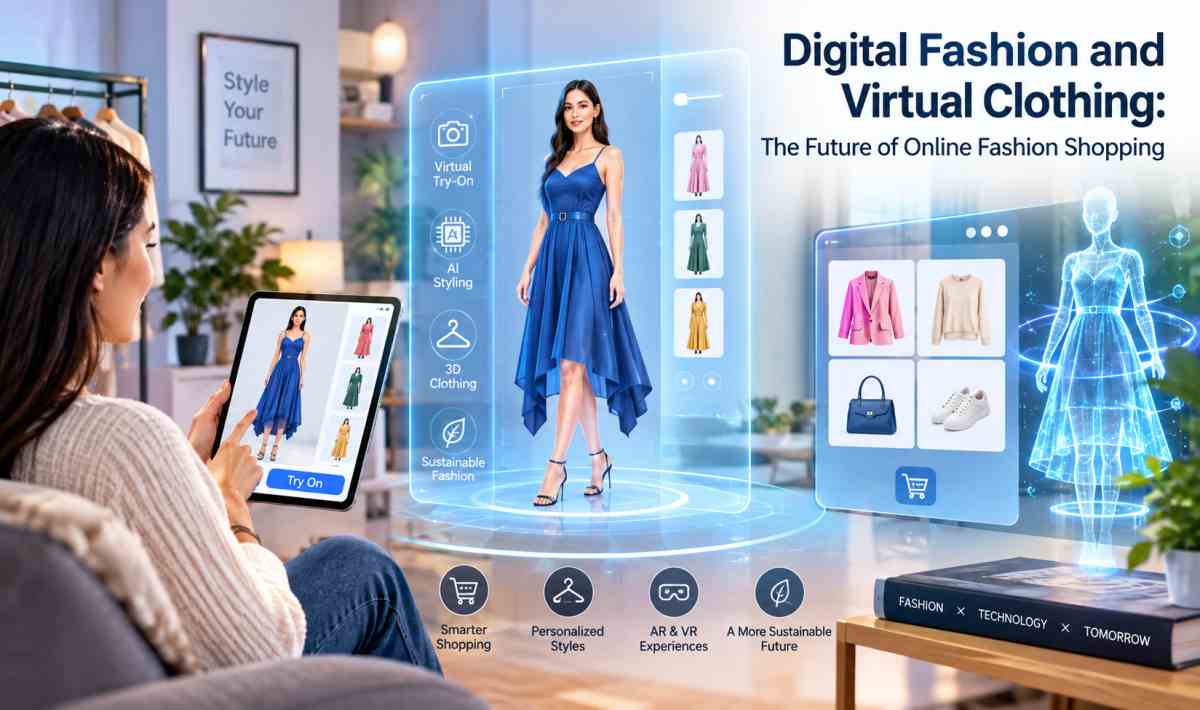
Digital Fashion and Virtual Clothing: The Future of Online Fashion Shopping
The fashion industry is experiencing a technological transformation that is changing how people discover, experience, and purchase clothing. From artificial intelligence-powered styling assistants to virtual fitting rooms, digital fashion and virtual clothing are creating new possibilities for consumers, designers, and fashion retailers.
Traditional online shopping relies heavily on product photographs, size charts, and customer reviews. However, modern shoppers increasingly expect interactive experiences that help them understand how clothing might look and fit before purchasing.
Digital fashion technologies are responding to these expectations by introducing virtual garments, augmented reality experiences, and personalized shopping recommendations.
As we move through 2026 and look toward 2027, the combination of fashion and technology is expected to influence the future of online retail.
But what exactly is digital fashion, and how will virtual clothing change the shopping experience?
Let’s explore the technologies, benefits, challenges, and emerging opportunities shaping this exciting industry.
What Is Digital Fashion?
Digital fashion refers to clothing, accessories, and fashion experiences created or represented using digital technology.
Unlike traditional garments, some digital fashion products exist entirely in virtual environments. Others are digital representations of physical clothing designed to improve online shopping experiences.
Digital fashion can include:
- Virtual clothing: Computer-generated garments worn by digital avatars or applied to photographs.
- Digital fashion collections: Clothing designs developed using specialized 3D software.
- Virtual fitting rooms: Technology that helps shoppers visualize clothing before purchasing.
- Augmented reality fashion: Digital garments and accessories displayed over real-world images.
- AI-powered fashion styling: Personalized outfit suggestions generated using artificial intelligence.
- Virtual fashion shows: Digital presentations of fashion collections.
These technologies allow fashion brands to create interactive shopping experiences while exploring new approaches to design, marketing, and product development.
What Is Virtual Clothing and How Does It Work?
Virtual clothing consists of digitally created garments that can be displayed on avatars, photographs, or other digital representations.
Unlike physical clothing, purely virtual garments cannot be worn in everyday life. However, they can be used in online environments, digital content, gaming, and virtual fashion experiences.
Designers typically create virtual garments using 3D fashion software.
The process involves developing garment patterns, selecting digital fabrics, adjusting textures, and simulating how clothing moves.
Advanced software can imitate certain fabric properties, including draping, folding, and movement.
For example, a designer can create a digital jacket and display it on a virtual model without manufacturing a physical sample.
Similarly, a shopper may use a virtual try-on application to preview how a particular outfit could look.
However, visual accuracy depends on the technology, garment data, and quality of the shopper’s digital representation.
How Digital Fashion Is Transforming Online Shopping
The growth of online fashion shopping has created opportunities for technologies that make purchasing decisions more convenient and personalized.
Digital fashion is influencing several important areas of the customer experience.
1. Virtual Try-On Technology
One of the most promising developments in fashion e-commerce is virtual try-on technology.
Virtual try-on tools allow shoppers to preview clothing or accessories using photographs, live camera feeds, or digital avatars.
For example, customers may be able to visualize sunglasses on their faces or experiment with different clothing styles.
Some systems use augmented reality, while others rely on artificial intelligence and image-generation technology.
The primary advantages include greater shopping convenience and improved product visualization.
However, virtual try-on does not always provide an accurate representation of physical fit, especially for complex garments.
2. AI-Powered Fashion Recommendations
Artificial intelligence is increasingly influencing how fashion retailers recommend products.
AI systems can analyze information such as browsing activity, purchase history, stated preferences, and product characteristics.
These insights help retailers suggest clothing that may match a customer’s interests.
For example, someone frequently browsing traditional Indian outfits may receive recommendations for sarees, kurtas, or Indo-Western clothing.
AI styling assistants can also suggest outfit combinations based on occasions, colours, and available wardrobe items.
When implemented responsibly, these tools can make product discovery more efficient and relevant.
3. Personalized Digital Shopping Experiences
Personalization is becoming an important feature of modern fashion e-commerce.
Instead of presenting identical recommendations to every visitor, retailers can create shopping experiences based on individual preferences.
Digital tools may allow customers to save their measurements, explore preferred styles, or create virtual wardrobes.
Some platforms also offer interactive product displays that help shoppers examine garment details.
These features can reduce the time required to browse large collections.
However, retailers must protect customer information and provide transparency about how personal data is collected and used.
4. Interactive Virtual Fashion Stores
Virtual fashion stores are another emerging development.
These stores use digital environments to recreate aspects of physical retail shopping.
Customers may explore three-dimensional showrooms, inspect products, and interact with digital displays.
Some experiences include virtual shopping assistants or customizable avatars.
Although conventional websites remain the dominant online shopping format, immersive stores offer fashion brands opportunities to experiment with customer engagement.
Their long-term success will depend on convenience, accessibility, cost, and consumer interest.
The Role of Augmented Reality in Digital Fashion
Augmented reality (AR) combines digital elements with views of the physical world.
In fashion shopping, AR can help customers visualize products through smartphone cameras and other compatible devices.
For example, shoppers may use AR applications to preview eyewear, footwear, jewellery, or selected clothing items.
AR technology can also support interactive product demonstrations.
Benefits of Augmented Reality Fashion
Better product visualization: Customers can explore how certain products may appear in different contexts.
Greater convenience: Shoppers can experiment with styles without visiting a physical store.
Interactive experiences: AR features can make online product discovery more engaging.
Improved shopping confidence: Useful visual previews may help customers evaluate products before purchasing.
Nevertheless, AR experiences vary in accuracy.
A digital preview should complement, rather than replace, reliable product descriptions, measurements, and return policies.
Artificial Intelligence and the Future of Fashion Technology
Artificial intelligence is becoming an important component of digital fashion development.
Its applications extend beyond product recommendations and virtual fitting rooms.
Fashion companies can use AI-supported systems to assist with design exploration, product categorization, demand forecasting, and inventory planning.
AI-Generated Fashion Designs
AI design tools can help designers explore patterns, colours, silhouettes, and creative concepts.
Designers may generate multiple visual variations before selecting ideas for further development.
This approach can accelerate early-stage experimentation.
However, human creativity, technical knowledge, and design judgment remain essential.
AI-generated designs may also raise questions about intellectual property, originality, and the use of existing creative work.
Smart Size Recommendations
Selecting the correct size remains a challenge in online clothing shopping.
AI-supported sizing systems attempt to address this problem by analyzing measurements, garment specifications, and historical fit information.
Some tools recommend sizes based on previous purchases or customer feedback.
Accurate recommendations may help reduce unnecessary returns, although performance varies across brands and garment categories.
Fashion Trend Forecasting
Fashion retailers also use data analytics to identify emerging consumer preferences.
By examining sales patterns, search activity, and other available information, businesses can gain insights into changing demand.
These insights may support product planning and inventory decisions.
However, trend predictions are not guarantees, and fashion preferences can change unexpectedly.
Digital Fashion and Sustainability
Sustainability is an increasingly important consideration in the fashion industry.
Digital fashion offers potential environmental advantages, particularly during product design and development.
Traditional clothing production can involve multiple physical samples, material consumption, transportation, and manufacturing processes.
Digital design tools may reduce the need for some physical samples by allowing designers to test concepts virtually.
How Digital Fashion Can Support Sustainability
Reduced physical sampling: Designers can review certain garment concepts without producing every sample.
Improved product development: Digital prototypes may help teams identify design issues earlier.
Better inventory planning: Data-driven forecasting can support more informed production decisions.
Potentially fewer unsuitable purchases: Effective visualization and sizing tools may help customers choose appropriate products.
However, digital fashion is not automatically sustainable.
Data centres, computing equipment, digital infrastructure, and energy-intensive technologies also have environmental impacts.
Additionally, digital clothing does not necessarily reduce physical clothing consumption.
The sustainability benefits depend on how technologies are developed, powered, and used.
Digital Fashion Trends to Watch in 2026 and Beyond
Several emerging developments could influence the future of fashion technology.
1. AI-Powered Virtual Fitting Rooms
Virtual fitting rooms are becoming more sophisticated as computer vision and generative AI technologies develop.
Future systems may provide improved garment visualization and more personalized shopping experiences.
2. Digital-First Fashion Design
More fashion businesses are exploring digital design workflows before manufacturing physical products.
Three-dimensional garment development can support collaboration between designers, manufacturers, and retailers.
3. Virtual Fashion Influencers
Computer-generated personalities and digital avatars are appearing in fashion marketing.
Brands may use these characters to present collections, demonstrate products, or create digital campaigns.
Transparency remains important when audiences interact with AI-generated personalities.
4. Gaming and Avatar Fashion
Virtual clothing is also relevant to gaming environments where users customize digital characters.
Digital outfits, accessories, and character customization can provide opportunities for fashion-inspired creativity.
However, demand for digital-only garments depends heavily on the popularity and policies of individual platforms.
5. More Personalized Fashion E-Commerce
Online retailers are likely to continue exploring AI styling assistants, interactive product displays, and personalized recommendations.
The most successful applications will be those that solve practical shopping problems rather than simply introducing novelty.
How Digital Fashion Is Creating Opportunities in India
India’s expanding digital commerce ecosystem offers opportunities for fashion technology innovation.
With a diverse clothing market that includes ethnic wear, contemporary fashion, and occasion-specific garments, Indian retailers can explore numerous digital applications.
For example, virtual shopping experiences could help customers preview sarees, kurtas, lehengas, and Indo-Western outfits.
Digital visualization may also support customers purchasing clothing for weddings, festivals, and other special occasions.
Opportunities for Indian Fashion Businesses
Ethnic wear visualization: Retailers can develop interactive previews for traditional clothing.
Online boutique experiences: Smaller fashion businesses can experiment with digital catalogues and personalized recommendations.
Digital garment development: Designers can explore 3D samples before physical production.
Regional fashion discovery: Technology can help customers explore clothing styles from different parts of India.
Personalized festive shopping: Retailers can recommend outfits based on occasions and customer preferences.
However, successful adoption requires attention to affordability, language accessibility, reliable sizing information, and customer trust.
For Indian fashion businesses, practical improvements to existing online stores may offer greater immediate value than expensive immersive experiences.
Benefits of Digital Fashion for Consumers and Retailers
Digital fashion technology can create value for both shoppers and fashion businesses.
Benefits for Consumers
Convenience: Customers can explore clothing collections from home.
Personalization: AI-powered systems can suggest products based on individual preferences.
Creative experimentation: Virtual clothing allows users to explore styles without purchasing every physical item.
Product visualization: Interactive previews can provide additional information before buying.
Access to wider collections: Online platforms can showcase products beyond the limitations of physical store space.
Benefits for Fashion Retailers
Improved product presentation: Three-dimensional displays can showcase garment details.
Design flexibility: Digital tools support experimentation with styles and materials.
Potential operational savings: Virtual sampling may reduce selected development expenses.
Customer engagement: Interactive shopping features can encourage exploration.
Better planning: Analytics can support inventory management and product decisions.
These benefits depend on implementation quality, technology costs, and customer adoption.
Challenges Facing Digital Fashion and Virtual Clothing
Despite its potential, digital fashion faces several challenges.
High Technology Costs
Advanced virtual fitting rooms, realistic garment simulations, and immersive shopping platforms can require substantial investment.
Smaller businesses may struggle to justify these expenses.
Accuracy of Virtual Try-Ons
Digital clothing previews may not accurately reproduce garment fit, fabric behaviour, or real-world appearance.
Customers should still consult size guides and product specifications.
Privacy and Data Security
Some personalization and virtual fitting systems process photographs, measurements, or other personal information.
Retailers must manage this information responsibly and comply with applicable privacy requirements.
Limited Consumer Adoption
Not every shopper wants an immersive digital experience.
Many customers prefer straightforward websites with clear photographs, reliable reviews, and simple checkout processes.
Environmental Concerns
Computationally intensive technologies consume energy and require physical infrastructure.
Their environmental benefits should be evaluated rather than assumed.
Overcoming these challenges will be important for wider adoption.
The Future of Online Fashion Shopping
The future of online fashion shopping will likely combine traditional e-commerce with increasingly sophisticated digital tools.
Instead of replacing physical clothing, virtual fashion technologies may improve how garments are designed, marketed, discovered, and purchased.
A future shopping experience could allow customers to receive personalized recommendations, examine realistic garment previews, compare sizing information, and complete purchases through a streamlined platform.
Fashion designers may also collaborate through digital development environments before manufacturing selected products.
For retailers, the central challenge will be balancing innovation with affordability, accuracy, accessibility, and customer trust.
The technologies that deliver measurable improvements in convenience and purchasing confidence are likely to have the greatest practical impact.
Frequently Asked Questions (FAQs)
1. What is digital fashion?
Digital fashion refers to clothing and fashion experiences created or represented through digital technologies. It includes virtual garments, 3D fashion design, virtual try-ons, and interactive shopping experiences.
2. What is the difference between digital fashion and virtual clothing?
Digital fashion is a broad category covering technology-driven fashion experiences. Virtual clothing specifically refers to digitally created garments that can be displayed on avatars, photographs, or digital platforms.
3. Can virtual clothing replace real clothes?
Virtual clothing cannot replace physical garments for everyday use. However, it can support digital entertainment, online content creation, product visualization, and fashion design.
4. How does AI improve online fashion shopping?
AI can support personalized recommendations, virtual try-on experiences, size suggestions, product discovery, and inventory planning.
5. Is digital fashion environmentally friendly?
Digital fashion may reduce some physical sampling and development waste. However, its overall environmental impact depends on energy consumption, technology infrastructure, and whether it actually reduces physical resource use.
6. What is the future of digital fashion in India?
Digital fashion in India offers opportunities in ethnic wear visualization, personalized shopping, 3D garment design, and interactive e-commerce. Adoption will depend on affordability, accessibility, and consumer demand.
Conclusion
Digital fashion and virtual clothing are introducing new possibilities for the global fashion industry.
From AI-powered recommendations and virtual fitting rooms to augmented reality shopping and digital garment development, these technologies are changing how consumers and businesses interact with fashion.
Although challenges involving accuracy, cost, privacy, and sustainability remain, digital innovation can make online shopping more informative, personalized, and engaging.
For fashion retailers, the priority should be adopting technologies that genuinely improve customer experiences.
As fashion and technology continue to evolve, digital tools are likely to become an increasingly important part of online shopping.
The future of fashion is not simply physical or digital. It is a combination of both, supported by technology that makes shopping more convenient, creative, and accessible.