

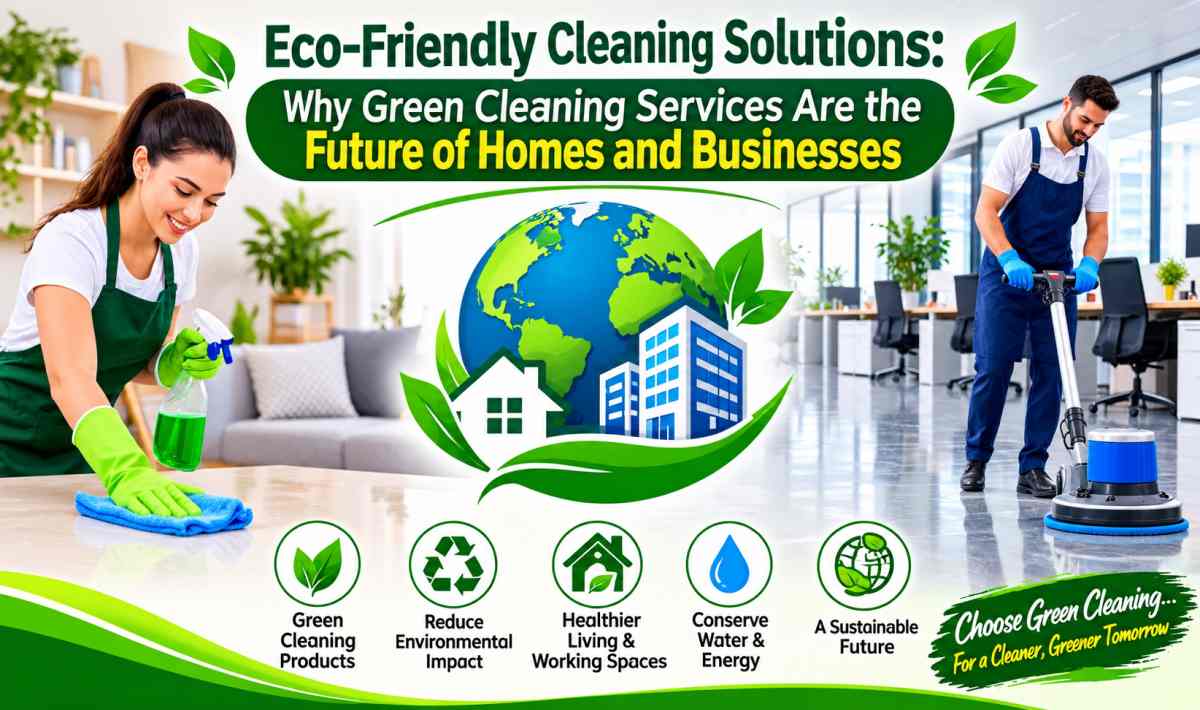
Eco-Friendly Cleaning Solutions: Why Green Cleaning Services Are the Future of Homes and Businesses
Introduction
Cleanliness is essential for maintaining healthy homes, productive workplaces, and welcoming commercial environments. However, traditional cleaning practices can involve harsh chemicals, excessive water consumption, and disposable materials that contribute to environmental pollution. As environmental awareness continues to grow, homeowners and businesses are exploring safer and more sustainable alternatives.
Eco-friendly cleaning solutions are transforming the cleaning industry by combining effective cleaning techniques with environmentally responsible products and practices. From biodegradable cleaning agents to energy-efficient equipment, green cleaning services help reduce environmental impact while maintaining high hygiene standards.
Today, professional cleaning companies are increasingly adopting sustainable methods to meet changing customer expectations. Whether it is residential cleaning, office maintenance, or commercial sanitation, green cleaning is becoming an important part of modern property management.
This article explores the benefits, technologies, applications, and future trends of eco-friendly cleaning services and explains why sustainable cleaning solutions are gaining importance for homes and businesses.
1. What Are Eco-Friendly Cleaning Solutions?
Eco-friendly cleaning solutions refer to cleaning products, technologies, and practices designed to minimize environmental harm while effectively removing dirt, dust, grease, and other contaminants.
Unlike conventional approaches that may rely heavily on strong chemical formulations, green cleaning emphasizes responsible product selection, efficient resource utilization, and waste reduction.
Common features of environmentally friendly cleaning services include:
- Biodegradable cleaning products with lower environmental impact.
- Reusable microfiber cloths and cleaning accessories.
- Water-efficient cleaning equipment.
- Energy-efficient vacuum cleaners and machinery.
- Reduced packaging and disposable plastic waste.
- Proper chemical storage and waste disposal.
- Cleaning products with recognized environmental certifications.
However, not every product labeled natural or green is automatically safer or more sustainable. Professional cleaning companies should evaluate product ingredients, effectiveness, safety instructions, and independent certifications before selecting cleaning supplies.
By following these principles, cleaning service providers can create more sustainable cleaning programs without compromising cleanliness.
2. Why Green Cleaning Services Are Becoming Popular
The increasing popularity of green cleaning services reflects changing attitudes toward environmental responsibility, indoor air quality, and sustainable living.
Growing Environmental Awareness
Consumers are becoming more conscious of how everyday activities affect the environment. Cleaning products, packaging materials, and wastewater can contribute to pollution when poorly selected or managed.
Eco-friendly cleaning services help address these concerns through responsible purchasing and waste reduction.
Greater Focus on Indoor Environments
People spend significant time inside homes, offices, schools, and commercial buildings.
Cleaning products that release strong fragrances or irritating substances may affect indoor comfort, particularly when used incorrectly or without adequate ventilation.
Green cleaning programs often prioritize lower-emission products and safer application practices.
Corporate Sustainability Goals
Many organizations are incorporating environmental considerations into their operational strategies.
Professional green cleaning services can support workplace sustainability initiatives by reducing unnecessary chemical consumption, water waste, and disposable materials.
Demand for Responsible Services
Customers increasingly expect cleaning companies to explain which products they use and how their services affect people and the environment.
Businesses that provide transparent information about their cleaning methods can build customer confidence and differentiate themselves in competitive markets.
3. Major Benefits of Eco-Friendly Cleaning Solutions
Switching to sustainable cleaning methods can offer several advantages for residential and commercial properties.
Improved Indoor Air Quality
Certain conventional cleaning products release volatile organic compounds, commonly known as VOCs.
Depending on the formulation and exposure, these substances can contribute to indoor air pollution.
Choosing appropriate low-emission cleaning products, ensuring ventilation, and following manufacturer instructions can help reduce unnecessary exposure.
Reduced Environmental Pollution
Some cleaning chemicals can enter wastewater systems during routine cleaning.
Environmentally preferable formulations and correct disposal practices can help reduce the release of potentially harmful substances.
Less Packaging Waste
Professional cleaning companies can reduce packaging waste by purchasing concentrated products and using refillable containers where appropriate.
Reusable cleaning tools also decrease dependence on disposable materials.
Efficient Resource Consumption
Modern cleaning equipment can reduce unnecessary water and electricity use.
For example, properly maintained microfiber systems may require less cleaning solution than some traditional methods.
Potential Long-Term Savings
Although certain certified cleaning products may cost more initially, concentrated formulations, reusable materials, and efficient equipment can reduce operating expenses over time.
Actual savings depend on purchasing costs, equipment maintenance, labor requirements, and cleaning frequency.
4. Eco-Friendly Residential Cleaning Services
Green residential cleaning services are becoming increasingly relevant for homeowners who want comfortable, hygienic living spaces while reducing their environmental footprint.
Professional residential cleaning companies can apply sustainable practices throughout the home.
Kitchen Cleaning
Kitchens require regular cleaning because food preparation creates grease, spills, and residue.
Eco-friendly kitchen cleaning may involve suitable biodegradable detergents, reusable cleaning cloths, and careful product selection for food-contact surfaces.
Cleaning companies should use products according to their labels and follow appropriate rinsing requirements.
Bathroom Cleaning
Bathrooms require effective removal of soap residue, mineral deposits, and moisture-related buildup.
Environmentally preferable bathroom cleaners can be used alongside microfiber tools and efficient water management.
Where disinfection is necessary, cleaners should use an appropriate registered disinfectant according to its label.
Floor and Carpet Cleaning
Sustainable floor cleaning involves selecting products compatible with flooring materials and avoiding unnecessary chemical application.
Professional carpet cleaning companies may use efficient extraction equipment, appropriate cleaning agents, and controlled water consumption.
Furniture and Upholstery Cleaning
Eco-friendly upholstery cleaning focuses on fabric-compatible products and methods that avoid unnecessary residues.
Professional cleaners should assess fabric care instructions before applying moisture or cleaning chemicals.
These practices can support effective residential cleaning while reducing waste and unnecessary resource consumption.
5. Green Commercial Cleaning for Modern Businesses
Commercial properties often require extensive cleaning because of high occupancy, shared facilities, and daily operations.
Green commercial cleaning services can help organizations maintain cleanliness while supporting environmental objectives.
Office Buildings
Office cleaning programs can incorporate reusable microfiber materials, efficient vacuum cleaners, and environmentally preferable surface cleaners.
Frequently touched surfaces should receive appropriate attention based on workplace needs.
Shopping Malls and Retail Stores
Retail environments require regular floor maintenance, restroom cleaning, and waste management.
Cleaning companies can use efficient equipment and concentrated cleaning products to reduce resource consumption.
Hotels and Hospitality Properties
Hotels can implement sustainable housekeeping programs through responsible laundry practices, refillable dispensers, and reduced disposable packaging.
Maintaining guest hygiene and comfort must remain a priority.
Educational Institutions
Schools and colleges benefit from cleaning programs that consider student and staff exposure to cleaning chemicals.
Suitable products, trained cleaning personnel, and appropriate ventilation can support healthier learning environments.
Healthcare Facilities
Healthcare cleaning requires specialized infection prevention procedures.
Environmentally preferable products may be incorporated where suitable, but required disinfection standards and healthcare regulations must always take priority.
Green cleaning should never replace necessary infection-control measures.
6. Innovative Technologies Transforming Green Cleaning Services
Technology is playing an increasingly important role in improving the sustainability and efficiency of professional cleaning services.
Robotic Cleaning Equipment
Automated floor-cleaning machines can perform repetitive cleaning tasks in offices, airports, shopping centers, and other large facilities.
Some advanced systems optimize cleaning routes and monitor operational performance.
Their environmental benefits depend on energy consumption, equipment lifespan, water usage, and maintenance.
Smart Cleaning Sensors
Smart sensors can help facility managers understand restroom usage, occupancy patterns, and cleaning requirements.
This information allows cleaning teams to allocate resources based on actual demand rather than relying entirely on fixed schedules.
Water-Efficient Cleaning Machines
Modern scrubbers and extraction systems may include technologies that regulate water and cleaning-solution consumption.
Such equipment can help reduce waste when correctly operated and maintained.
Advanced Microfiber Technology
Microfiber cleaning materials capture dust and particles effectively when used properly.
Reusable microfiber systems can reduce disposable wipe consumption and may lower the amount of cleaning solution required.
Digital Cleaning Management
Cleaning companies can use digital platforms to schedule services, track equipment maintenance, monitor supply consumption, and record completed tasks.
These systems can improve operational visibility and help identify opportunities to reduce waste.
7. Sustainable Cleaning Products and Materials
Selecting appropriate products is one of the most important elements of an environmentally responsible cleaning program.
Biodegradable Cleaning Agents
Biodegradable ingredients can break down through biological processes under suitable conditions.
However, biodegradability alone does not establish that a complete product is environmentally harmless.
Plant-Based Cleaning Products
Some cleaning formulations contain ingredients derived from renewable plant sources.
Their environmental performance depends on manufacturing processes, formulation, packaging, and disposal.
Concentrated Cleaning Solutions
Concentrated products can reduce packaging and transportation requirements because smaller quantities are shipped and stored.
Accurate dilution is essential for maintaining cleaning effectiveness and avoiding unnecessary chemical use.
Reusable Cleaning Accessories
Washable microfiber cloths, durable mop heads, and refillable bottles can help reduce disposable waste.
Cleaning companies should establish appropriate washing and replacement procedures to maintain hygiene.
Certified Cleaning Products
Independent environmental certifications can help buyers identify products that meet defined criteria.
Examples include recognized programs such as Green Seal and the U.S. Environmental Protection Agency’s Safer Choice program.
Certification requirements vary, so businesses should review what each label actually verifies.
8. How Green Cleaning Supports Corporate Sustainability
Sustainability has become an important consideration in commercial property management.
Green cleaning services can contribute to environmental initiatives through measurable operational improvements.
Reducing Operational Waste
Cleaning contractors can monitor packaging consumption, disposable supplies, and waste segregation.
Tracking these indicators helps businesses identify areas for improvement.
Supporting Environmental Reporting
Organizations may include relevant cleaning-related resource consumption in their internal sustainability assessments.
Reliable reporting requires accurate records rather than unsupported environmental claims.
Improving Resource Management
Efficient cleaning schedules, appropriate equipment selection, and controlled product dilution can help reduce unnecessary consumption.
Encouraging Employee Participation
Workplace sustainability programs can encourage employees to dispose of waste correctly and support responsible use of shared facilities.
By integrating these practices, businesses can make cleaning operations part of broader environmental management strategies.
9. Challenges Facing Eco-Friendly Cleaning Companies
Despite its advantages, the transition toward sustainable cleaning presents several challenges.
Higher Initial Investment
Certified cleaning products and efficient equipment may require additional upfront expenditure.
Companies must evaluate total operating costs rather than focusing only on purchase prices.
Limited Customer Awareness
Some customers assume that environmentally preferable cleaning products are less effective than conventional alternatives.
Cleaning companies can address these concerns through transparent product information and demonstrations of cleaning performance.
Employee Training Requirements
Green cleaning requires proper product selection, dilution, equipment operation, and waste management.
Without adequate training, even environmentally preferable products may be used inefficiently or unsafely.
Misleading Environmental Claims
Greenwashing occurs when businesses exaggerate or misrepresent the environmental benefits of products or services.
Cleaning companies should avoid unsupported claims such as completely chemical-free, entirely non-toxic, or zero environmental impact.
Clear, verifiable information helps customers make informed decisions.
10. How to Choose the Best Eco-Friendly Cleaning Company
Selecting a reliable green cleaning company requires more than checking whether it advertises environmentally friendly services.
Customers should evaluate several factors before making a decision.
Product transparency: Ask which cleaning products the company uses and whether relevant safety information is available.
Environmental certifications: Look for credible product certifications and independently verified environmental claims.
Professional experience: Choose a provider with experience cleaning the specific type of property.
Equipment efficiency: Ask whether the company uses reusable materials and resource-efficient equipment.
Staff training: Confirm that employees understand safe chemical handling, cleaning procedures, and waste disposal.
Customized services: A reliable provider should recommend cleaning methods based on the property’s materials, occupancy, and hygiene requirements.
Customer reviews: Evaluate feedback concerning service quality, reliability, and professionalism.
A good cleaning company should balance environmental responsibility with effective cleaning, transparent pricing, and customer satisfaction.
11. Future Trends in Eco-Friendly Cleaning Services for 2027
Several developments are expected to influence sustainable cleaning practices in the coming years.
AI-Enabled Cleaning Management
Artificial intelligence may help cleaning companies analyze building usage patterns, optimize schedules, and allocate staff more efficiently.
Growth of Sustainable Cleaning Equipment
Manufacturers are likely to continue developing equipment that emphasizes water efficiency, energy management, and durability.
Increased Demand for Product Transparency
Customers may increasingly request detailed information about ingredients, certifications, packaging, and environmental performance.
Greater Adoption of Refill Systems
Refillable containers and concentrated cleaning formulations could become more common as businesses seek to reduce packaging waste.
Data-Driven Sustainability Monitoring
Digital systems may help cleaning contractors measure chemical consumption, water use, equipment performance, and waste generation.
Expansion of Specialized Green Cleaning
Demand may grow for environmentally responsible cleaning programs tailored to offices, residential communities, hospitality properties, and educational institutions.
These developments suggest that sustainability and technology will increasingly influence how professional cleaning services are delivered.
12. Why Green Cleaning Services Are the Future
The future of professional cleaning is likely to involve a stronger combination of environmental responsibility, operational efficiency, and customer-focused service.
Green cleaning companies can differentiate themselves by offering practical solutions that reduce unnecessary waste and resource consumption.
For homeowners, sustainable cleaning provides an opportunity to maintain comfortable living environments while making more responsible purchasing decisions.
For businesses, environmentally preferable cleaning practices can support sustainability objectives and improve operational resource management.
Professional cleaning companies that invest in staff training, credible product selection, and efficient equipment may be better positioned to meet evolving customer expectations.
However, sustainable cleaning must remain effective, safe, and appropriate for each environment. Environmental claims should be supported by evidence, and necessary hygiene standards should never be compromised.
Conclusion
Eco-friendly cleaning solutions are helping reshape the future of residential and commercial cleaning services. By combining environmentally preferable products, reusable materials, efficient equipment, and responsible cleaning practices, professional cleaning companies can reduce waste while maintaining high standards of cleanliness.
From smart cleaning technologies to sustainable housekeeping programs, green cleaning offers opportunities for homes and businesses to improve resource efficiency and make environmentally conscious choices.
As interest in sustainable living and responsible business operations continues to develop, green cleaning services are likely to play an increasingly important role in the cleaning industry.
Choosing a professional cleaning company that prioritizes effective cleaning, transparent environmental practices, and customer safety is a practical step toward cleaner properties and a more sustainable future.