

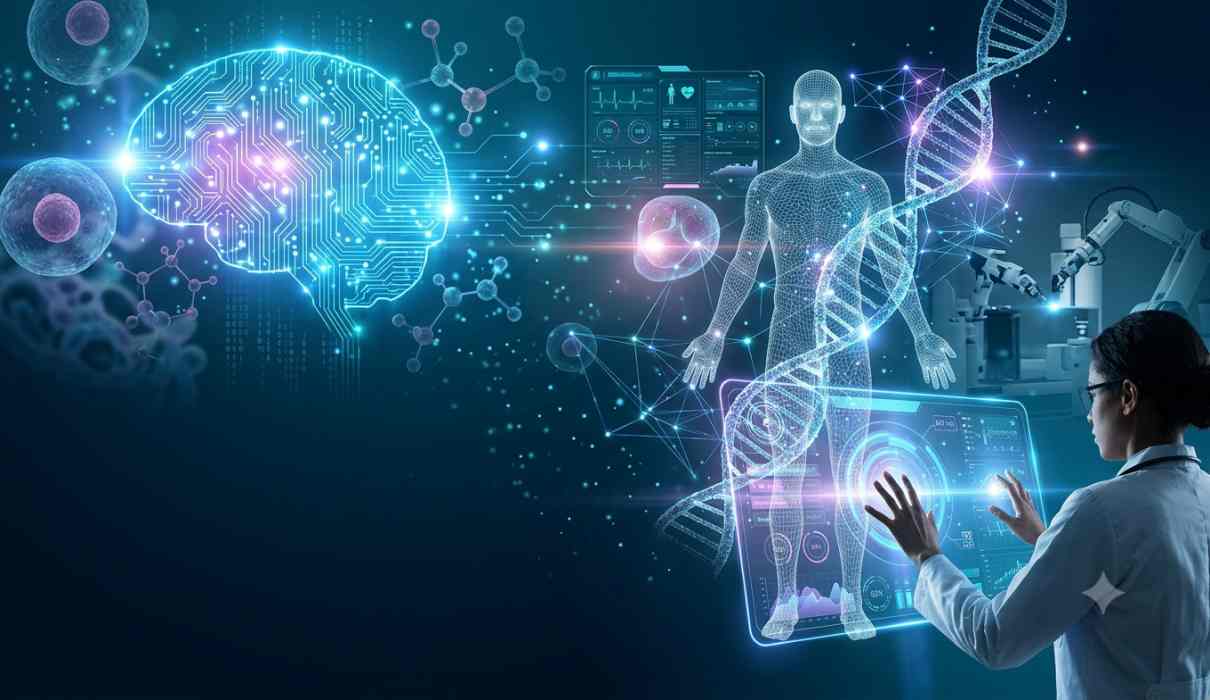
Modern Science and Medicine: AI Technology, Biotechnology, Digital Health and Next-Generation Treatments
Modern science and medicine are entering a period of rapid transformation. Advances in artificial intelligence, biotechnology, digital health, genomics, medical robotics and precision medicine are changing how diseases are detected, treated and managed. At the same time, researchers are developing new approaches that could make healthcare more personalized, data-driven and accessible.
From AI-assisted medical imaging to advanced drug discovery and wearable health technologies, innovation is influencing almost every stage of healthcare. These developments are not simply about introducing new devices or software. They are also changing how researchers understand disease, how doctors make clinical decisions and how patients participate in their own care.
As technology continues to develop, the future of medicine is likely to combine human expertise with increasingly sophisticated digital and biological tools. Understanding these trends provides valuable insight into where healthcare and medical science may be heading.
The Growing Role of Artificial Intelligence in Medicine
Artificial intelligence is one of the most important technologies influencing modern medicine. AI systems can process large quantities of information, identify patterns and assist professionals with tasks that traditionally required considerable time.
One major application is medical imaging. AI-based systems can help analyze X-rays, CT scans, MRI images and other diagnostic images. By identifying patterns that may require closer examination, these systems can support healthcare professionals during the diagnostic process.
AI is also being explored for clinical decision support. Medical professionals can potentially use algorithms to organize patient information, identify relevant risk factors and support the evaluation of different diagnostic or treatment options. Importantly, AI is generally most useful when it complements professional judgment rather than attempting to replace it.
Another growing area is administrative automation. Healthcare organizations generate enormous amounts of documentation, including clinical notes, appointment information and patient records. AI-powered tools can help automate certain repetitive tasks, allowing professionals to spend more time on patient care.
The future could bring more integrated AI systems capable of combining information from medical records, imaging, laboratory tests and wearable devices. However, responsible implementation will require attention to accuracy, privacy, security, transparency and human oversight.
Biotechnology Is Transforming Healthcare
Biotechnology connects biology with technology to develop new medicines, therapies and diagnostic approaches. It has become a central part of modern medical research.
One of the most significant developments has been the expansion of genomics. Researchers can study genetic information to understand why certain diseases develop and why patients may respond differently to particular treatments. This knowledge contributes to the development of personalized healthcare.
Gene-based technologies are also opening new possibilities for treating inherited diseases. Instead of focusing only on managing symptoms, researchers are investigating ways to modify or replace faulty genetic information. Gene therapies and gene-editing technologies represent important areas of ongoing scientific research.
Biotechnology is also changing vaccine development and pharmaceutical research. Modern biological techniques can help researchers investigate disease mechanisms, identify potential therapeutic targets and develop new treatment candidates.
Another promising field is regenerative medicine. Scientists are studying stem cells, tissue engineering and related technologies with the goal of repairing or replacing damaged biological tissues. Although many applications remain under research, regenerative medicine could become increasingly important for certain injuries and chronic conditions.
Digital Health and Connected Healthcare
Digital health is another major trend reshaping modern medicine. Smartphones, wearable devices, telehealth platforms and connected medical equipment are creating new ways to collect and use health information.
Wearable technologies can monitor measurements such as heart rate, activity levels and sleep patterns. Some specialized devices can also monitor additional physiological information. This continuous data collection may help people better understand their health and provide healthcare professionals with additional information when clinically appropriate.
Telemedicine has also expanded access to healthcare by allowing patients to communicate with healthcare professionals remotely. Virtual consultations can be particularly useful when an in-person examination is not necessary or when geographic distance creates barriers to accessing care.
Digital health platforms can also support medication reminders, appointment scheduling, health education and communication between patients and healthcare providers.
However, digital health must be developed carefully. Health information is highly sensitive, and systems need strong privacy and cybersecurity protections. Technology should also remain accessible to people who may have limited internet connectivity, digital skills or access to advanced devices.
Precision Medicine and Personalized Treatment
Traditional medicine often uses treatment approaches designed for broad groups of patients. Precision medicine aims to make healthcare more individualized by considering factors such as genetics, lifestyle, environment and specific disease characteristics.
For example, two people with the same broad diagnosis may have different biological characteristics and respond differently to a particular treatment. Genomic testing and advanced diagnostics can help researchers understand some of these differences.
Cancer treatment is an important area where personalized medicine is being investigated and applied. Tumors can contain different molecular characteristics, and identifying those characteristics can help clinicians select therapies for appropriate patients.
Personalized medicine is also supported by advances in data science. By analyzing large datasets, researchers can investigate relationships between genetic information, clinical outcomes and treatment responses.
As biological data becomes more accessible, personalized approaches may expand beyond cancer into other areas of medicine. Nevertheless, successful implementation depends on high-quality evidence, appropriate testing, clinical expertise and responsible handling of patient data.
Next-Generation Drug Discovery
Developing a new medicine traditionally requires years of research and testing. Modern technology is creating opportunities to make parts of this process more efficient.
AI and machine learning can help researchers analyze biological data, identify potential drug targets and investigate molecules that could have therapeutic properties. These tools can rapidly evaluate large numbers of possibilities that would be difficult to examine manually.
Biotechnology is also contributing to new classes of medicines. Biological drugs, cell-based treatments and gene-based therapies are expanding the range of therapeutic approaches available to researchers.
Another important development is the use of computational models to predict how potential medicines may interact with biological targets. While predictions still need to be validated through laboratory research and clinical studies, computational tools can help prioritize candidates for further investigation.
The combination of AI, laboratory automation and biotechnology could make drug discovery increasingly data-driven. However, a promising computer model does not automatically translate into an effective or safe medicine. Rigorous scientific testing remains essential.
Medical Robotics and Advanced Surgery
Robotics is becoming increasingly relevant to modern healthcare. Robotic surgical systems can provide surgeons with sophisticated instruments and enhanced control during certain procedures.
These systems may support minimally invasive surgery by allowing precise instrument movement through small incisions. Depending on the procedure and clinical circumstances, this can contribute to improved surgical workflows and potentially support recovery.
Beyond surgery, robotics is being explored for rehabilitation, prosthetics and patient assistance. Robotic rehabilitation systems can help patients perform controlled movements during physical therapy, while advanced prosthetic technologies aim to provide more natural functionality.
Future medical robotics could incorporate AI-based assistance, real-time imaging and sensor technologies. Such systems may provide additional information to clinicians while maintaining human control over important medical decisions.
Advanced Diagnostics and Early Disease Detection
Early detection can be important for many diseases because identifying a condition at an earlier stage may provide more opportunities for intervention.
Modern science is therefore focusing heavily on advanced diagnostic technologies. Researchers are investigating improved blood tests, molecular diagnostics, imaging technologies and other approaches that could identify biological changes associated with disease.
Liquid biopsy research, for example, explores the use of biological samples such as blood to identify molecular signals associated with certain diseases. This remains an active area of research, with potential applications in cancer and other conditions.
AI can also contribute by analyzing complex diagnostic data. When combined with laboratory science and clinical expertise, computational methods may help identify patterns that require additional investigation.
The broader goal is to move healthcare toward earlier, more accurate and increasingly personalized detection while ensuring that new diagnostic methods are properly validated before widespread clinical use.
The Importance of Wearable and Remote Monitoring Technologies
Wearable technology is changing the relationship between individuals and health information. Smartwatches, fitness trackers and specialized medical sensors can provide continuous measurements that were previously available only during occasional healthcare visits.
Remote patient monitoring can be particularly valuable for managing certain chronic conditions. Instead of relying exclusively on periodic appointments, healthcare teams may be able to review selected health information collected remotely.
This can support more continuous care, but it also creates challenges. More data does not automatically mean better healthcare. Clinicians need meaningful information rather than excessive amounts of low-value data.
Future systems may therefore focus on identifying important changes and presenting information in ways that healthcare professionals can interpret efficiently.
Digital Twins and Simulation in Medicine
Another emerging concept is the digital twin. In healthcare, researchers are exploring digital models that represent aspects of an individual patient’s biology or health condition.
The concept could potentially allow researchers to simulate different scenarios before making certain clinical decisions. For example, models might eventually help investigate how a patient’s characteristics could influence treatment responses.
Digital twins are still an evolving research area, and their practical clinical applications will require extensive validation. Nevertheless, the idea illustrates how computing and biological science are increasingly converging.
Simulation technology can also support medical education. Virtual environments allow students and healthcare professionals to practice procedures, study anatomy and develop decision-making skills without exposing patients to unnecessary risk.
Challenges Facing Modern Science and Medicine
Despite enormous potential, medical innovation also introduces important challenges.
Data privacy is one of the biggest concerns. Healthcare systems increasingly depend on digital information, making cybersecurity and responsible data management essential.
AI reliability is another issue. An algorithm can produce incorrect results, particularly when trained on incomplete or unrepresentative datasets. Healthcare organizations therefore need appropriate validation, monitoring and human oversight.
Cost and accessibility also matter. Advanced treatments and technologies can be expensive, potentially creating differences in access between populations. Scientific progress has the greatest social value when its benefits can reach people who need them.
Regulation is equally important. New medicines, medical devices and AI systems must be evaluated according to appropriate safety and effectiveness standards. Rapid technological development can make regulatory frameworks more challenging to maintain.
Finally, healthcare remains fundamentally human. Technology can process information and automate tasks, but communication, empathy, professional judgment and patient preferences remain essential components of quality care.
The Future of Modern Science and Medicine
The future of medicine is likely to be increasingly connected, personalized and technology-driven. AI may become more deeply integrated into clinical workflows, while biotechnology could produce new approaches to disease treatment and prevention.
Digital health platforms may connect patients, healthcare professionals and medical devices more efficiently. Wearable sensors could provide continuous information, while advanced analytics may help transform large datasets into clinically useful insights.
At the same time, precision medicine may continue moving healthcare away from one-size-fits-all approaches. Genetic information, molecular diagnostics and individual health data could contribute to more targeted treatment strategies.
The development of new therapies will remain a major priority. Gene therapies, cell-based treatments, regenerative medicine and advanced biological medicines could expand treatment options for conditions that have historically been difficult to manage.
However, the future should not be viewed simply as a competition between humans and machines. The most important transformation may come from collaboration between scientists, physicians, engineers, researchers and patients.
Conclusion
Modern science and medicine are being transformed by the convergence of artificial intelligence, biotechnology, digital health and advanced medical research. AI is supporting data analysis and diagnostics, biotechnology is opening new possibilities in genetics and therapeutics, while digital health is creating more connected ways to monitor and manage health.
Next-generation treatments, precision medicine, advanced diagnostics, robotics and regenerative technologies demonstrate how rapidly healthcare is evolving. At the same time, responsible innovation requires strong evidence, ethical standards, privacy protection, cybersecurity and equitable access.
As these technologies mature, medicine may become increasingly capable of understanding individual biological differences and delivering more targeted forms of care. The central goal, however, remains unchanged: using scientific knowledge and technological innovation to improve prevention, diagnosis, treatment and quality of life.
The future of healthcare will therefore depend not only on what technology can do, but on how thoughtfully scientists, healthcare professionals, policymakers and society choose to use it.