

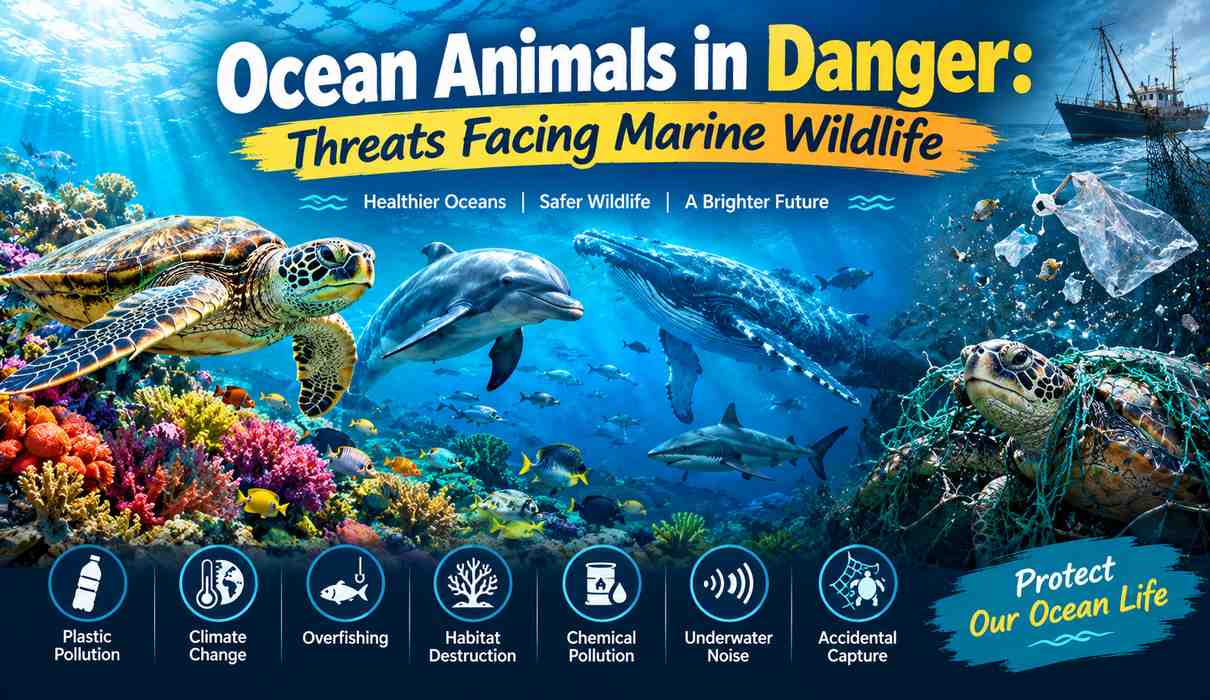
Ocean Animals in Danger: Threats Facing Marine Wildlife
Oceans cover more than two-thirds of our planet and support an extraordinary variety of life. From enormous whales and gentle sea turtles to colorful coral reef fish, sharks, dolphins, seals, and tiny plankton, marine ecosystems are home to millions of species. However, many ocean animals are facing increasing threats caused by human activities and environmental changes.
Pollution, climate change, overfishing, habitat destruction, plastic waste, underwater noise, and accidental fishing are affecting marine wildlife around the world. Some species are particularly vulnerable because they depend on specific habitats or food sources that are changing rapidly.
Protecting ocean animals is not only about saving individual species. Healthy marine ecosystems also support coastal communities, fisheries, tourism, food security, and the overall health of the planet.
In this article, we explore the major threats facing marine wildlife, examples of ocean animals at risk, and what individuals, communities, governments, and conservation organizations can do to protect marine ecosystems.
Why Are Ocean Animals Important?
Ocean animals play essential roles in marine ecosystems.
Predators such as sharks help maintain balance within food webs by controlling populations of other animals. Whales contribute to nutrient cycling, while sea turtles can influence marine and coastal ecosystems through their feeding and movement patterns.
Small organisms are equally important. Plankton form the foundation of many marine food chains and contribute significantly to global oxygen production through photosynthesis.
Healthy oceans also benefit humans. Millions of people depend directly or indirectly on marine resources for food, employment, transportation, recreation, and tourism.
When marine wildlife populations decline, the effects can spread throughout an ecosystem.
For this reason, protecting ocean animals is an important part of maintaining healthy and productive seas.
1. Plastic Pollution
Plastic pollution is one of the most visible threats to marine wildlife.
Plastic bags, bottles, fishing equipment, food packaging, and other waste can enter rivers and eventually reach the ocean. Once in marine environments, plastic can remain for long periods and break into smaller particles known as microplastics.
Marine animals may mistake plastic for food. Sea turtles, seabirds, fish, whales, and other animals can ingest plastic while feeding.
Large pieces of plastic can also entangle animals. Abandoned fishing nets and lines, sometimes called ghost gear, are particularly dangerous because they can continue trapping marine animals after they are lost or discarded.
Plastic pollution can therefore affect wildlife through both ingestion and entanglement.
Reducing unnecessary single-use plastics, improving waste collection, recycling where appropriate, and preventing plastic from entering waterways are important steps toward reducing this threat.
2. Climate Change and Rising Ocean Temperatures
Climate change is changing marine environments.
As global temperatures rise, ocean temperatures are also increasing. This can affect species that depend on specific temperature ranges.
One major consequence is coral bleaching.
Corals live in close association with microscopic organisms that provide them with much of their energy. When corals experience prolonged heat stress, they can lose these organisms and become pale or white. Severe or prolonged bleaching can cause coral mortality.
Coral reefs provide food and shelter for a large variety of marine organisms. Damage to reefs can therefore affect fish, crustaceans, mollusks, sea turtles, and many other species.
Climate change can also alter migration patterns, breeding seasons, food availability, and the distribution of marine species.
3. Ocean Acidification
The ocean absorbs a significant portion of the carbon dioxide released into the atmosphere. While this helps moderate atmospheric warming, it also changes ocean chemistry.
As seawater absorbs more carbon dioxide, it becomes more acidic. This process is known as ocean acidification.
Ocean acidification can make it more difficult for some marine organisms to build and maintain shells or skeletons made from calcium carbonate.
Organisms that may be affected include certain shellfish, corals, and microscopic marine organisms.
Because these species can form important parts of marine food webs, changes in their populations may affect larger animals that depend on them.
Ocean acidification is therefore another reason why reducing greenhouse gas emissions is important for marine ecosystems.
4. Overfishing
Fishing provides food and livelihoods for communities around the world, but excessive fishing pressure can damage marine ecosystems.
Overfishing occurs when fish are harvested faster than populations can naturally replenish themselves.
The effects can extend beyond the targeted species.
Some fishing methods can accidentally capture animals such as dolphins, sea turtles, sharks, seabirds, and other marine wildlife. This is known as bycatch.
Sustainable fishing practices can help reduce these impacts. Measures may include catch limits, protected areas, seasonal restrictions, selective fishing equipment, and improved monitoring.
Responsible fisheries management is important for both marine wildlife and the people who depend on healthy fish populations.
5. Destruction of Marine Habitats
Ocean animals need healthy habitats to feed, reproduce, shelter, and raise their young.
Important marine habitats include:
- Coral reefs
- Mangrove forests
- Seagrass meadows
- Kelp forests
- Coastal wetlands
- Open-ocean ecosystems
- Deep-sea environments
Coastal development, pollution, dredging, destructive fishing practices, and other activities can damage these habitats.
Mangroves and seagrass ecosystems are particularly valuable because they provide nursery areas for many young marine animals.
Protecting habitats can therefore benefit multiple species at the same time.
Marine protected areas are one tool that governments and conservation organizations can use to safeguard important ecosystems and reduce harmful activities in designated locations.
6. Ocean Noise Pollution
The ocean may look quiet from the surface, but underwater environments can be filled with sound.
Ships, construction activities, sonar, drilling, and other human activities can create underwater noise.
Many marine animals depend heavily on sound.
Whales and dolphins use sounds to communicate, navigate, locate prey, and interact with other members of their groups.
Excessive underwater noise can interfere with these behaviors and potentially disrupt feeding, communication, and movement.
Reducing unnecessary underwater noise and carefully managing activities in important marine habitats can help minimize disturbance to sensitive species.
7. Oil Spills and Chemical Pollution
Oil spills can have serious consequences for marine ecosystems.
Oil can contaminate seawater, beaches, wetlands, and other habitats. Marine animals that come into contact with oil can experience physical and ecological impacts.
Chemical pollutants can also enter oceans through industrial discharge, agricultural runoff, wastewater, and other sources.
Some pollutants can accumulate in organisms and become more concentrated as they move through food webs.
Reducing pollution at its source is generally more effective than trying to remove contaminants after they have entered the marine environment.
Strong environmental regulations, proper waste management, spill prevention