

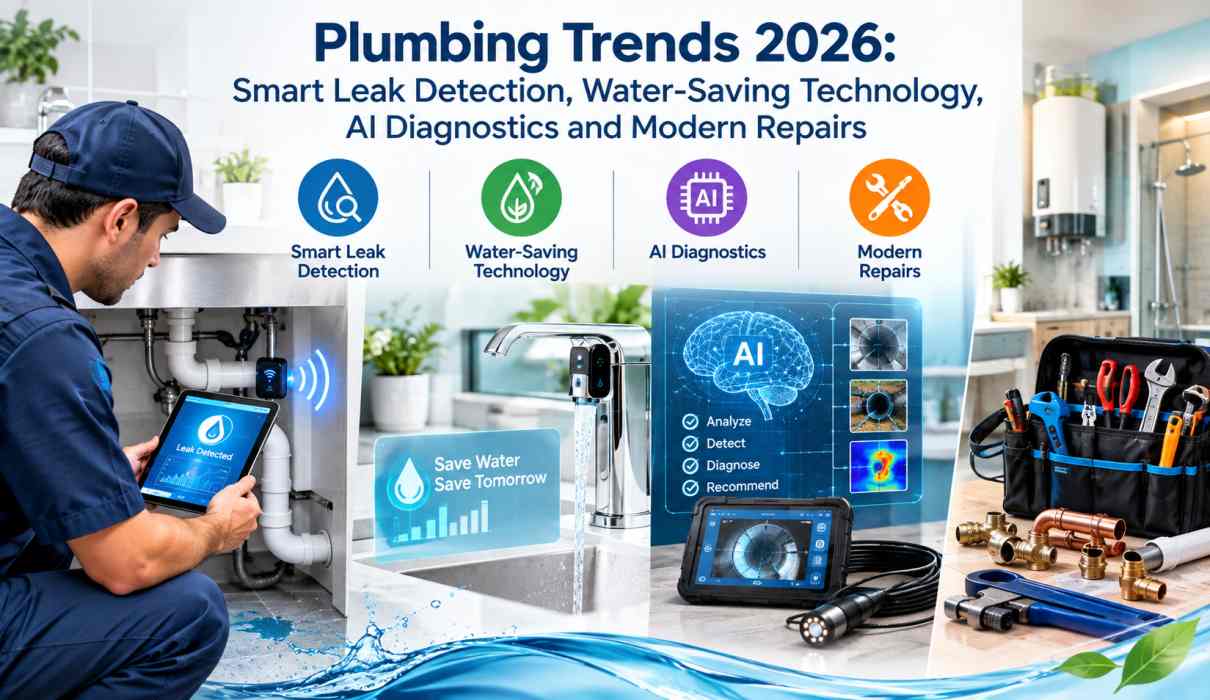
Plumbing Trends 2026: Smart Leak Detection, Water-Saving Technology, AI Diagnostics and Modern Repairs
The plumbing industry is changing rapidly in 2026. Traditional pipes, valves, fixtures, pumps, drains, and water heaters remain essential, but new technologies are transforming how plumbing systems are monitored, maintained, repaired, and managed. Smart leak detection, water-saving fixtures, connected plumbing systems, AI-powered diagnostics, advanced inspection equipment, and predictive maintenance are becoming increasingly important parts of modern plumbing services.
For homeowners, property managers, businesses, and plumbing professionals, these developments offer practical benefits. Modern plumbing technology can help identify problems earlier, reduce unnecessary water consumption, improve maintenance planning, and make repairs more efficient.
Recent industry coverage identifies smart leak detection, water monitoring, advanced sewer and drain inspection, predictive maintenance, connected fixtures, and plumbing business software among the key technology areas attracting attention in 2026.
The plumbing trends of 2026 are therefore not simply about replacing traditional equipment with digital devices. They are about creating plumbing systems that are more efficient, measurable, preventative, and responsive.
1. Smart Leak Detection Is Becoming a Major Plumbing Trend
One of the biggest developments in modern plumbing is the growth of smart leak detection.
Traditional leak detection often depends on visible signs such as dripping water, damp walls, unusual smells, low water pressure, or unexpectedly high water bills. Unfortunately, concealed leaks can continue for days or weeks before they become obvious.
Smart leak detection systems approach the problem differently. Sensors can monitor moisture, water flow, pressure, and usage patterns. Some systems can send alerts to a smartphone when unusual activity is detected, while advanced systems can automatically shut off the water supply during certain leak events.
Modern monitoring devices can use moisture detection or flow monitoring, and some systems combine these capabilities with automatic shut-off valves.
For homeowners, this can provide an additional layer of protection against water damage. For professional plumbers, it creates opportunities to provide installation, testing, maintenance, and monitoring services.
2. Water-Saving Technology Is Moving Into Everyday Plumbing
Water conservation is another major theme in 2026.
Increasing awareness of water scarcity, rising utility costs, sustainability goals, and the need for efficient building management are encouraging property owners to examine how much water their plumbing systems consume.
Water-saving technology can include:
- Low-flow faucets
- Efficient showerheads
- Dual-flush toilets
- Smart irrigation controls
- Water-efficient appliances
- Flow regulators
- Smart water meters
- Automatic shut-off systems
- Greywater systems where appropriate
- Leak monitoring equipment
The goal is not simply to use less water. Efficient plumbing should provide the required performance while minimizing unnecessary consumption.
For example, a leaking faucet or toilet may appear to be a minor problem, but continuous water loss can accumulate over time. Smart monitoring can help identify abnormal consumption before it becomes a larger issue.
3. AI Diagnostics Are Changing Plumbing Repairs
Artificial intelligence is increasingly being used to analyze information from sensors, meters, inspection equipment, and connected building systems.
In plumbing, AI can assist with identifying unusual water-flow patterns, detecting anomalies, supporting predictive maintenance, and organizing large amounts of operational data.
For example, a smart water-monitoring system can establish a baseline for normal consumption. If the system later identifies an unusual pattern, it can generate an alert for further investigation.
AI-powered monitoring is also being explored at larger infrastructure scales. In September 2026, NSW Water announced an AI-powered monitoring initiative intended to identify leaks more quickly across government facilities and reduce water waste.
The technology does not eliminate the need for skilled plumbers. Instead, it can give professionals better information before they begin a repair.
A plumber can then combine digital information with physical inspection, professional experience, pressure testing, camera inspection, and other diagnostic methods.
4. Predictive Maintenance Replaces Reactive Plumbing
Traditional plumbing maintenance is often reactive. Something breaks, the customer calls a plumber, and the repair begins.
A growing alternative is predictive plumbing maintenance.
Predictive maintenance uses information about equipment condition, usage, age, pressure, temperature, flow, and previous failures to identify potential problems before they become emergencies.
This approach can be particularly valuable for:
- Apartment buildings
- Hotels
- Hospitals
- Schools
- Offices
- Factories
- Retail properties
- Large residential developments
Instead of waiting for a pump to fail or a pipe problem to become severe, property managers can schedule inspections and maintenance based on actual system conditions.
This can improve planning and potentially reduce emergency service interruptions.
5. Advanced Drain and Sewer Inspection
Drain and sewer problems can be difficult to diagnose because much of the plumbing infrastructure is hidden underground or inside walls.
In 2026, professional plumbers increasingly have access to advanced inspection equipment, including specialized cameras and locating tools.
Camera inspection allows technicians to examine the inside of pipes without immediately opening floors or walls.
It can help identify problems such as:
- Blockages
- Cracks
- Root intrusion
- Corrosion
- Pipe deformation
- Build-up
- Broken connections
- Structural damage
This can make diagnosis more precise and reduce unnecessary excavation.
For customers, one of the biggest advantages is better information. Rather than relying only on symptoms, a plumber can often identify what is actually happening inside the drainage system.
6. Smart Plumbing Fixtures Are Becoming More Common
Smart technology is moving beyond smartphones, lighting, and security systems and into bathrooms and kitchens.
Connected plumbing fixtures can provide greater control over water use and, in some cases, allow users to customize settings or monitor consumption.
Examples include:
- Smart faucets
- Digital showers
- Touchless fixtures
- Smart toilets
- Connected water heaters
- Intelligent water monitors
- Automatic shut-off valves
Connected plumbing technology is being highlighted as a way to improve efficiency, water conservation, and maintenance. Industry coverage in 2026 includes examples ranging from AI-powered leak detection to connected faucets and water-heating equipment.
These products can be particularly useful in modern homes, commercial properties, hotels, and other buildings where convenience and resource management are priorities.
7. Digital Plumbing Services Improve Customer Experience
Technology is also changing the business side of plumbing.
Customers increasingly expect convenient scheduling, digital estimates, appointment notifications, electronic invoices, online payments, and clear communication.
Professional plumbing companies can use digital platforms to manage:
- Service appointments
- Technician schedules
- Customer records
- Job histories
- Estimates
- Invoices
- Inventory
- Maintenance agreements
- Customer notifications
This can reduce administrative work and allow technicians to spend more time on actual service.
For customers, better digital communication can make the entire process easier to understand. They can receive updates about appointments, repair recommendations, costs, and maintenance requirements without relying entirely on phone calls.
8. Sustainable Plumbing Is Becoming a Long-Term Priority
Sustainability is becoming increasingly important in residential and commercial construction.
A sustainable plumbing system considers not only the initial installation cost but also long-term water consumption, energy use, maintenance, durability, and environmental impact.
Modern sustainable plumbing strategies may include:
- Water-efficient fixtures
- Leak prevention
- Rainwater harvesting
- Greywater reuse
- Efficient water heating
- Smart irrigation
- Water monitoring
- Durable piping systems
- Responsible material selection
In India and other water-stressed regions, connected water management can be especially relevant because monitoring helps building owners understand where water is being consumed or lost.
IoT-based systems can combine sensors, meters, analytics, and automation to help facilities monitor water use and identify inefficiencies.
9. Modern Plumbing Materials and Installation Methods
Technology is also influencing the materials used in plumbing installations.
Depending on local codes, building requirements, application, and professional recommendations, modern plumbing projects may use different combinations of materials such as PEX, CPVC, copper, stainless steel, HDPE, and other approved systems.
The important trend is not that one material is suitable for every application. Instead, plumbers increasingly need to understand the advantages, limitations, installation requirements, compatibility, and long-term performance of different systems.
Professional installation remains essential because incorrect connections, unsuitable materials, poor support, inadequate pressure management, or improper installation can create problems regardless of how advanced the product is.
10. Water Heater Technology Is Evolving
Water heating is another area where plumbing and energy technology overlap.
Modern properties can use a variety of water-heating technologies depending on location, energy availability, building design, and household requirements.
Energy-efficient systems can help reduce operating costs while providing reliable hot water.
Smart controls can also allow users or building managers to monitor temperatures, schedules, and system performance.
For plumbing professionals, this means modern water-heater service increasingly involves electrical, mechanical, digital, and plumbing considerations.
Proper installation and maintenance remain important for safety, efficiency, and equipment life.
11. Emergency Plumbing Is Becoming More Data-Driven
Emergency plumbing problems can include burst pipes, major leaks, blocked drains, overflowing toilets, failed pumps, and water-heater failures.
Smart monitoring can potentially identify certain problems before they become major emergencies.
For example, an abnormal flow pattern detected while a property is unoccupied could trigger an alert. If the system includes an appropriate automatic shut-off mechanism, the water supply may be isolated according to the system’s settings.
This does not eliminate emergency plumbing services, but it can change their role from purely reactive response toward faster diagnosis and damage prevention.
12. Skilled Plumbers Remain Essential in a High-Tech Industry
One misconception about smart plumbing is that technology will replace professional plumbers.
In reality, advanced technology increases the importance of skilled technicians.
Sensors can detect unusual conditions, but someone still needs to determine the cause.
An AI system can identify an abnormal water pattern, but a qualified professional may need to inspect the property, test the plumbing, identify the failed component, and complete the repair.
Plumbers therefore need a combination of traditional technical knowledge and modern technology skills.
Future-ready plumbing professionals may need to understand:
- Smart sensors
- Digital monitoring
- Connected fixtures
- Diagnostic equipment
- Water efficiency
- Modern piping systems
- Plumbing software
- Data interpretation
- Preventive maintenance
The best results come from combining technology with practical expertise.
13. What Homeowners Should Look for in Modern Plumbing Services
When choosing a plumber in 2026, customers should consider more than price alone.
Important factors include:
- Appropriate qualifications and licensing where required
- Relevant experience
- Clear estimates
- Transparent communication
- Emergency availability
- Modern diagnostic equipment
- Maintenance services
- Knowledge of water-efficient systems
- Experience with smart plumbing technology
- Warranty or service information where applicable
For complex installations, customers should also confirm that the proposed equipment is compatible with the property’s existing plumbing, electrical systems, water pressure, and local requirements.
Technology should solve a real problem rather than simply add unnecessary complexity.
14. The Future of Plumbing Services in 2026 and Beyond
The plumbing industry is moving toward a model where prevention becomes just as important as repair.
Future plumbing systems are likely to become more connected and data-driven. Sensors can continuously collect information, software can analyze usage, and automated systems can alert owners when something appears unusual.
At the same time, conventional plumbing expertise will remain fundamental.
The future is therefore not simply “smart plumbing.” It is smarter plumbing supported by skilled professionals.
As technology becomes more accessible, customers may increasingly expect plumbing companies to provide both traditional repair services and modern solutions such as leak monitoring, water-efficiency upgrades, smart fixtures, predictive maintenance, and advanced diagnostics.
Conclusion
The Plumbing Trends 2026 highlight a clear movement toward smarter, more efficient, and more preventative plumbing systems. Smart leak detection can help identify water problems earlier, water-saving technology can reduce unnecessary consumption, AI diagnostics can support faster analysis, and advanced inspection tools can improve the accuracy of repairs.
At the same time, sustainable plumbing, connected fixtures, digital service management, predictive maintenance, and modern water-heating technologies are creating new opportunities for homeowners, property managers, businesses, and professional plumbing companies.
The most valuable technology is not necessarily the most complicated. The best plumbing solutions are those that solve practical problems, improve efficiency, protect buildings, conserve resources, and make maintenance easier.
As 2026 progresses, the plumbing industry is increasingly combining traditional craftsmanship with digital innovation. For customers and professionals alike, understanding these developments can help create plumbing systems that are more reliable, efficient, sustainable, and prepared for the future.