

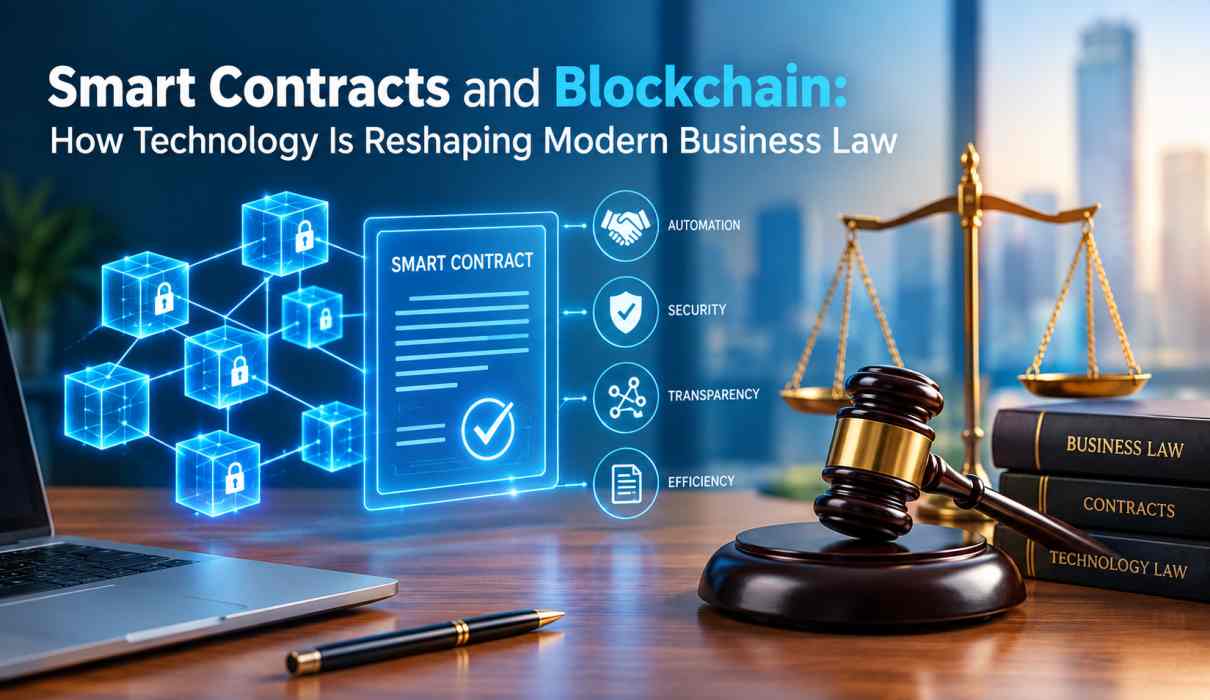
Smart Contracts and Blockchain: How Technology Is Reshaping Modern Business Law
Technology is changing the way businesses create agreements, manage transactions and handle legal obligations. Among the most important developments is the combination of blockchain technology and smart contracts. Once primarily associated with cryptocurrency, blockchain has developed into a broader technology for recording transactions, verifying information and creating shared digital records.
Smart contracts are one of the most practical applications of blockchain for businesses. They are programs designed to automatically execute predefined actions when specific conditions are satisfied. Instead of relying entirely on manual processes, businesses can use smart contracts to automate parts of agreements, payments, approvals and other commercial transactions.
This evolution is also creating new questions for business law. How should smart contracts be interpreted? When is a digital agreement legally enforceable? Who is responsible when automated code produces an unexpected result? How should businesses handle privacy, cybersecurity and regulatory compliance?
Understanding these issues is becoming increasingly important as organizations explore blockchain-based solutions.
What Are Smart Contracts?
A smart contract is essentially computer code designed to perform specific actions when predetermined conditions are met. The concept was proposed long before modern blockchain networks became popular, but blockchain has provided an infrastructure that can make smart contracts more useful for digital transactions.
For example, imagine a supplier and a retailer agreeing that payment will automatically be released when a shipment is confirmed as delivered. A blockchain-based smart contract could be programmed to trigger the payment after receiving the required verification.
Traditional contracts generally require people or organizations to monitor obligations and take action. Smart contracts can automate certain parts of this process.
However, a smart contract should not automatically be treated as a complete replacement for a traditional legal contract. In many situations, the legal agreement may still need human-readable terms explaining rights, responsibilities, exceptions, dispute procedures and applicable law.
The strongest approach may therefore combine legal language with technological automation.
How Blockchain Supports Smart Contracts
Blockchain is a distributed digital ledger that records transactions across a network. Instead of relying on a single central database, blockchain systems can maintain synchronized records across multiple participants.
Several characteristics make blockchain attractive for smart contracts.
Transparency
Depending on the blockchain and its permissions, participants can verify relevant transactions and contract activity. This can improve visibility between parties that do not necessarily trust one another.
Immutability
Blockchain records are generally designed to be difficult to alter after confirmation. This can help create reliable transaction histories, although the precise level of immutability depends on the blockchain architecture.
Automation
Smart contracts can automatically execute programmed instructions once specified conditions are met.
Traceability
Transactions can be recorded in a chronological manner, creating an auditable history of activity.
Reduced Intermediary Dependence
Some processes that traditionally require intermediaries can potentially be automated or streamlined. This does not mean intermediaries will disappear, but their roles may change.
These characteristics have significant implications for modern commercial transactions.
Smart Contracts and Traditional Legal Contracts
One of the biggest misconceptions about smart contracts is that every piece of blockchain code automatically constitutes a legally enforceable contract.
In reality, a legal contract generally involves elements such as offer, acceptance, consideration, contractual capacity and lawful purpose, depending on the applicable jurisdiction.
A smart contract, by contrast, is primarily a technological mechanism.
The two concepts can overlap, but they are not identical.
For example, a traditional contract might state that a buyer must pay within 30 days of receiving conforming goods. A smart contract could automate the payment after receiving a verified delivery record.
The traditional agreement establishes the broader legal relationship, while the smart contract handles a specific automated function.
This distinction is important because business relationships often involve circumstances that cannot easily be translated into code.
Consider a construction contract. Payment may depend on whether construction work meets a particular quality standard. A computer program may be able to verify certain objective measurements, but it may not be able to determine every question involving workmanship, contractual interpretation or unforeseen circumstances.
Human legal judgment can therefore remain essential.
How Smart Contracts Are Changing Business Transactions
Smart contracts can potentially transform several areas of commercial activity.
1. Contract Automation
Businesses often spend considerable time creating, reviewing, approving and administering contracts.
Smart contract technology can automate repetitive contractual processes. Routine obligations such as payment releases, access permissions, subscription changes or transaction confirmations may be triggered automatically.
This can reduce manual intervention and improve operational efficiency.
2. Supply Chain Management
Supply chains involve multiple parties, including manufacturers, suppliers, logistics providers, distributors and retailers.
Blockchain can provide a shared record of transactions and movements, while smart contracts can automate certain actions.
For example, a smart contract could initiate a payment when a verified shipment reaches a specified location and meets predefined conditions.
This can potentially improve coordination and reduce administrative delays.
3. International Trade
Cross-border transactions frequently involve multiple documents, currencies, intermediaries and regulatory requirements.
Blockchain-based systems may help participants share transaction information more efficiently. Smart contracts can potentially automate portions of trade-related processes.
However, businesses must still comply with customs requirements, sanctions rules, tax regulations and other applicable laws.
4. Real Estate Transactions
Property transactions traditionally involve substantial documentation, verification and intermediary involvement.
Blockchain applications could potentially support digital ownership records, transaction histories and automated processes.
Smart contracts might also be used to automate certain stages of property transactions once required conditions are verified.
Nevertheless, property law is heavily dependent on jurisdiction. Government registration systems, title requirements and other legal formalities may still be necessary.
5. Financial Services
Financial institutions are exploring blockchain applications for payments, settlements, asset management and other processes.
Smart contracts can automate financial workflows based on predefined conditions.
For businesses, this could mean faster processing and fewer manual steps. At the same time, financial applications require careful attention to licensing, consumer protection, anti-money-laundering requirements and other regulations.
Legal Benefits of Blockchain Technology
Blockchain can offer several potential advantages from a legal and compliance perspective.
Better Record Keeping
A reliable digital transaction history can make it easier to establish when certain actions occurred.
Improved Auditability
Organizations can use transaction records to support internal audits and compliance processes.
Greater Operational Efficiency
Automating repetitive contractual processes can reduce administrative workloads.
Reduced Disputes Over Transaction History
Where participants share access to a trusted record, disagreements about whether a particular transaction occurred may potentially be reduced.
Faster Execution
Automated processes can execute immediately after predefined conditions are satisfied rather than waiting for manual approval.
However, these benefits depend heavily on implementation quality. Blockchain is not automatically accurate simply because it uses distributed ledger technology.
The Legal Challenges of Smart Contracts
Despite their potential, smart contracts create several important legal challenges.
Enforceability
The first question is whether a particular smart contract arrangement is legally enforceable under the relevant jurisdiction.
Some electronic transactions can already be legally recognized, but the legal treatment of blockchain-based arrangements can vary depending on the country, transaction and contractual structure.
Businesses should therefore avoid assuming that blockchain code alone provides legal certainty.
Errors in Code
Software can contain bugs.
If a smart contract automatically performs an unintended action because of a programming error, reversing that action may be difficult.
This creates an important legal question: should the parties be bound by the coded result, the underlying agreement or some combination of both?
Well-drafted agreements should anticipate these situations.
Immutability and Mistakes
Blockchain records are designed to resist unauthorized changes. That is useful for maintaining transaction integrity, but it can create complications when incorrect information is recorded.
Businesses need mechanisms for correcting errors without undermining the integrity of the broader system.
Jurisdiction
Blockchain transactions can involve participants located in different countries.
A company might operate in one jurisdiction, its customer may be located in another, and the blockchain infrastructure may operate globally.
Determining which country’s laws apply can therefore become complicated.
Privacy
Some blockchains provide highly visible transaction records. Businesses must consider whether information stored or referenced through a blockchain complies with applicable privacy and data-protection requirements.
Sensitive personal information generally requires careful handling, particularly where data cannot easily be modified or removed.
Dispute Resolution
Smart contracts can automatically execute transactions, but disputes still occur.
A well-designed legal framework should establish how disputes will be handled, which courts or arbitration mechanisms have jurisdiction, and what happens if the automated system produces an unexpected outcome.
The Role of Lawyers in a Blockchain-Based Economy
The growth of smart contracts does not necessarily reduce the importance of lawyers. Instead, it changes some of the skills and services that legal professionals may need to provide.
Lawyers increasingly need to understand how technological systems interact with contractual obligations.
Legal professionals may help businesses:
- Draft blockchain-related agreements
- Review smart contract structures
- Identify regulatory requirements
- Establish dispute-resolution mechanisms
- Address intellectual property issues
- Develop privacy and data-protection policies
- Assess commercial risks
- Coordinate legal terms with technical code
This creates opportunities for collaboration between lawyers, developers, cybersecurity specialists and compliance professionals.
The future of legal services may therefore involve more interdisciplinary work.
Smart Contracts and Intellectual Property
Blockchain can also influence intellectual property management.
Businesses can use blockchain-based records to document certain events associated with digital assets, licensing arrangements or intellectual property transactions.
Smart contracts may help automate royalty payments when predefined conditions are met.
For example, a digital content platform could potentially use automated rules to distribute payments among rights holders according to agreed terms.
However, blockchain records do not automatically establish ownership of intellectual property. Ownership and licensing rights continue to depend on applicable laws and contractual arrangements.
Blockchain and Regulatory Compliance
Businesses considering blockchain adoption must treat regulatory compliance as a central part of implementation.
Depending on the application, relevant areas may include:
- Data protection
- Financial regulation
- Consumer protection
- Taxation
- Anti-money-laundering requirements
- Intellectual property
- Electronic transactions
- Securities regulation
- Cross-border trade rules
Regulatory frameworks are also evolving in many jurisdictions.
Companies should therefore conduct appropriate legal and compliance reviews before deploying blockchain systems for commercially significant activities.
How Businesses Can Prepare for Smart Contract Adoption
Companies interested in adopting smart contracts can take several practical steps.
Start With a Specific Business Problem
Instead of adopting blockchain simply because it is a trending technology, businesses should identify a process where automation, transparency or shared records could provide measurable value.
Combine Code With Legal Documentation
Important transactions should not necessarily depend entirely on software code. Businesses can use legal agreements to define broader rights, responsibilities and remedies.
Conduct Technical Audits
Smart contract code should be tested and independently reviewed where appropriate.
Define What Happens When Things Go Wrong
Contracts should address unexpected events, software errors, network failures, incorrect data and disputed transactions.
Establish Governance
Businesses should determine who can update systems, approve changes and respond to emergencies.
Review Applicable Laws
Legal and compliance teams should assess the relevant jurisdiction before deployment.
Protect Sensitive Information
Businesses should avoid placing inappropriate confidential or personal information on public blockchain networks.
The Future of Smart Contracts and Business Law
The relationship between technology and law is likely to become increasingly interconnected.
Future business transactions may combine traditional legal agreements, artificial intelligence, blockchain networks, digital identities and automated compliance systems.
Instead of asking whether technology will replace lawyers, a more useful question is how technology will change the work lawyers perform.
Routine administrative activities may become increasingly automated, while legal professionals may focus more heavily on negotiation, risk management, regulatory interpretation, dispute resolution and strategic advice.
Smart contracts could become particularly useful for standardized transactions where conditions can be clearly defined and verified.
More complex commercial relationships will likely continue to require human judgment because business agreements frequently involve uncertainty, exceptions and subjective considerations.
Conclusion
Smart contracts and blockchain technology are reshaping modern business law by introducing new ways to automate transactions, maintain records and manage contractual obligations.
Their potential applications extend across supply chains, finance, real estate, international trade, intellectual property and other commercial sectors.
At the same time, blockchain does not eliminate traditional legal considerations. Enforceability, jurisdiction, privacy, cybersecurity, regulatory compliance and dispute resolution remain important.
The most practical future may involve collaboration between legal agreements and technological automation rather than complete replacement of traditional contracts.
For businesses, the key is to understand both sides of the equation. Blockchain can provide a powerful technological foundation, while legal frameworks establish the rights, responsibilities and remedies that technology alone cannot define.
As digital commerce continues to evolve, organizations that understand the relationship between smart contracts, blockchain and business law will be better positioned to evaluate new opportunities while managing the legal and operational challenges that accompany them.