

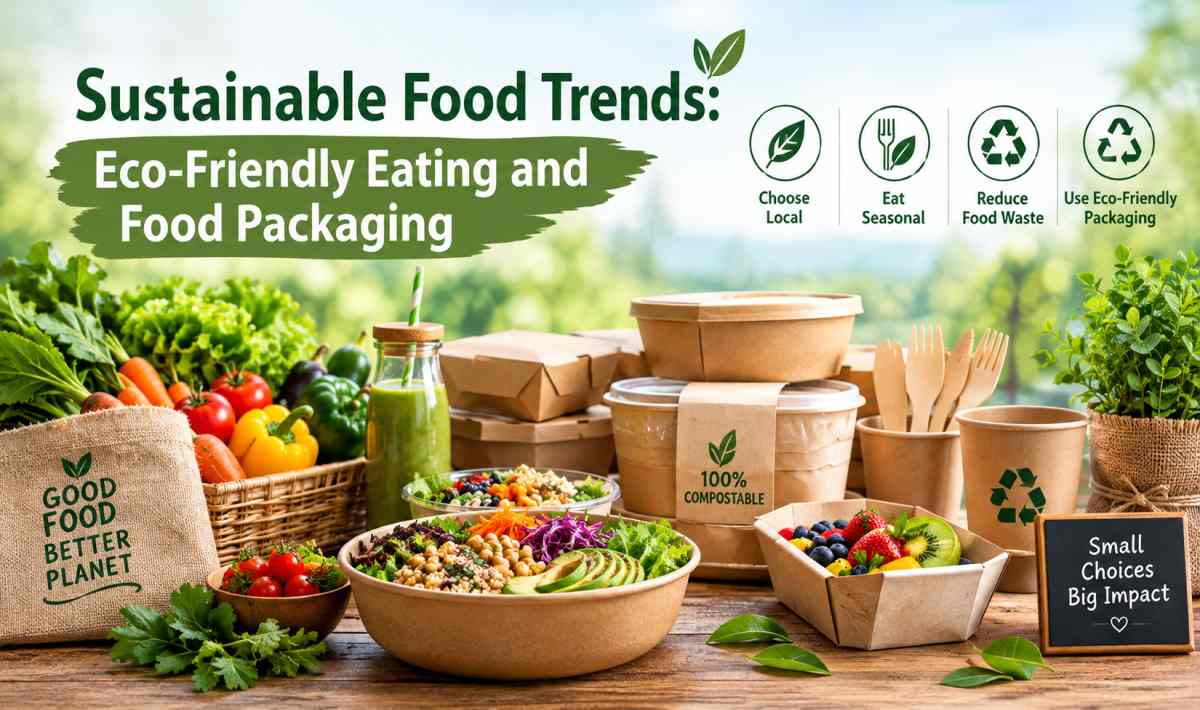
Sustainable Food Trends: Eco-Friendly Eating and Food Packaging
Sustainable food trends are transforming the way people grow, purchase, prepare, consume, and package food. As environmental awareness increases, consumers and businesses are looking for practical ways to reduce waste, conserve natural resources, and make more responsible food choices. From plant-based meals to recyclable food containers, sustainability is becoming an important consideration throughout the modern food industry.
Eco-friendly eating focuses on choosing food thoughtfully, reducing unnecessary waste, supporting responsible farming, and making better use of available ingredients. At the same time, sustainable food packaging encourages businesses to explore recyclable materials, reusable containers, compostable alternatives, and packaging designs that minimise resource consumption.
These developments are particularly relevant in India, where traditional food habits, seasonal ingredients, regional farming, and rapidly growing food delivery services offer opportunities to build more sustainable food systems.
In this article, we explore the latest sustainable food trends, the benefits of eco-friendly eating, innovative food packaging solutions, and practical strategies that consumers and businesses can adopt to support a greener future.
What Are Sustainable Food Trends?
Sustainable food trends refer to changing consumer habits, production methods, and business practices that aim to reduce the environmental impact of the food system. They include everything from responsible ingredient sourcing and plant-forward meals to waste reduction and environmentally considerate packaging.
Food production requires land, water, energy, transportation, and labour. When these resources are used inefficiently, the result can include unnecessary waste, pollution, and pressure on natural ecosystems.
Sustainable food practices aim to address these challenges without compromising food safety, nutrition, affordability, or accessibility.
Examples include purchasing seasonal vegetables, planning meals to avoid food waste, supporting local producers where appropriate, choosing products with suitable packaging, and improving recycling practices.
The objective is not to follow one perfect diet or purchase every new eco-friendly product. Instead, sustainability involves making practical choices that reduce environmental impact over time.
1. Plant-Based Eating Is Becoming More Popular
Plant-based eating is one of the most recognised sustainable food trends. It involves eating more foods such as vegetables, fruits, beans, lentils, nuts, seeds, and whole grains.
Replacing some resource-intensive animal products with suitable plant-based alternatives can reduce environmental impacts, although the benefits depend on the ingredients, production methods, and supply chains involved.
Benefits of Plant-Based Foods
Plant-based meals offer several advantages:
- They provide a wide range of ingredients and flavours.
- Lentils, beans, and chickpeas can provide affordable protein.
- Seasonal vegetables and fruits support dietary variety.
- Many plant-based recipes are easy to prepare at home.
- They can help consumers explore different regional cuisines.
Indian cuisine already includes many plant-forward dishes, including dal, rajma, chana masala, vegetable pulao, sambar, and millet-based meals.
Restaurants and food manufacturers are responding by introducing more vegetable-focused dishes, plant-based snacks, and convenient meal options.
Consumers do not necessarily need to eliminate all animal products to participate in this trend. Adding more plant-based meals to a balanced diet can be a practical starting point.
2. Local and Seasonal Food Is Gaining Attention
Buying local and seasonal food is another important development in sustainable eating. Seasonal produce is harvested during its natural growing period, while locally sourced ingredients may require less transportation to reach consumers.
Purchasing suitable regional products can support farmers, neighbourhood markets, and small food businesses. It may also reduce certain transportation and storage impacts, depending on the production system.
Why Seasonal Food Matters
Seasonal eating encourages people to explore ingredients available at different times of the year.
In India, examples include mangoes during the summer, fresh peas in cooler months, and a wide variety of regional vegetables throughout the year.
Consumers can make seasonal eating easier by visiting local markets, checking which ingredients are readily available, and planning meals around them.
Food businesses can also develop seasonal menus that use locally available produce and reduce dependence on ingredients requiring extensive storage or transportation.
However, local food is not automatically the most sustainable option. Farming practices, refrigeration, transportation methods, and production efficiency also influence the total environmental footprint.
3. Sustainable Food Packaging Is Transforming the Industry
Food packaging protects products from contamination, moisture, damage, and spoilage. However, single-use packaging can contribute to waste when it is unnecessary or cannot be recovered through local waste-management systems.
Sustainable food packaging aims to reduce material consumption while maintaining food safety, product quality, and convenience.
Businesses are exploring recyclable cartons, recycled-content materials, reusable containers, lightweight packaging, and compostable products designed for appropriate disposal systems.
Popular Eco-Friendly Food Packaging Solutions
Recyclable paper and cardboard: These materials are commonly used for bakery boxes, takeaway containers, dry-food cartons, and shipping packages. Their recyclability depends on coatings, food contamination, material composition, and local recycling facilities.
Recycled-content packaging: Packaging made with suitable recycled materials can reduce demand for virgin resources. Food-contact applications must meet relevant safety requirements.
Reusable containers: Reusable food boxes, cups, and delivery containers can reduce single-use waste when they are returned, cleaned, and reused sufficiently often.
Compostable packaging: Certain materials are designed to break down under specified composting conditions. They may require industrial composting facilities and should not automatically be treated as suitable for ordinary disposal.
Lightweight packaging: Using less material without compromising protection can reduce packaging consumption and transportation weight.
The best packaging choice depends on the food, required shelf life, hygiene standards, local collection systems, and the likelihood that the material will actually be reused, recycled, or composted.
4. Reducing Food Waste at Home and in Restaurants
Food waste is a significant challenge for the global food system. When food is discarded, the resources used to grow, process, package, and transport it are also wasted.
Reducing avoidable food waste is therefore one of the most practical sustainable food trends for households and businesses.
Practical Ways to Reduce Food Waste
Consumers can adopt several simple habits:
- Plan meals before shopping.
- Check existing ingredients before buying more.
- Store food according to recommended food-safety guidance.
- Freeze suitable foods when they cannot be used in time.
- Use leftovers safely in other meals.
- Buy appropriate quantities instead of overstocking.
- Compost suitable unavoidable food scraps where facilities are available.
Restaurants can improve inventory management, monitor food preparation waste, adjust portion sizes, and develop menus that use ingredients efficiently.
Food retailers can also improve stock rotation and manage surplus products before they become unsuitable for consumption.
Where appropriate, businesses can partner with eligible food donation organisations to distribute safe surplus food in accordance with applicable food-safety requirements.
Preventing food waste saves resources and can reduce operating costs, making it beneficial for both the environment and business efficiency.
5. Eco-Friendly Food Delivery and Takeaway Services
Food delivery services have become an important part of modern dining. Although they provide convenience, takeaway meals can generate large quantities of packaging waste when every order includes multiple containers, bags, sachets, and disposable utensils.
Sustainable food delivery focuses on reducing unnecessary packaging while protecting food quality and hygiene.
Restaurants can choose appropriately sized containers, avoid excessive wrapping, and offer customers the option to decline disposable cutlery when it is not required.
Some businesses are introducing reusable-container return programmes. These systems can work well when customers have convenient return points and operators maintain reliable collection, cleaning, and sanitation procedures.
Food delivery platforms can contribute by supporting restaurants that use responsible packaging and giving customers clear choices about unnecessary accessories.
Consumers can also help by ordering suitable quantities, avoiding unnecessary extras, and selecting businesses with transparent packaging policies.
The goal is to make food delivery more convenient without creating avoidable environmental costs.
6. Upcycled Food Is Creating New Opportunities
Upcycled food uses suitable ingredients or food by-products that might otherwise go unused or be discarded. This approach can help businesses extract more value from existing resources.
For example, suitable fruit pulp may be incorporated into food products, surplus produce can be processed into preserves, and certain grain by-products can be converted into useful ingredients.
Food manufacturers are exploring upcycling to develop new products, improve resource efficiency, and reduce waste.
However, not every by-product is safe or appropriate for human consumption. Businesses must follow food-safety standards and maintain suitable processing, storage, traceability, and labelling practices.
Upcycling should complement waste prevention rather than replace it. Avoiding the production of unnecessary surplus food remains an important priority.
7. Traditional Grains and Regional Ingredients Are Returning
Traditional grains and regional ingredients are receiving renewed attention as consumers explore diverse food choices and food businesses develop new products.
India has a rich agricultural heritage that includes ragi, jowar, bajra, and numerous region-specific grains and pulses.
Depending on the crop variety, climate, and farming methods, some traditional grains may grow well in local conditions and contribute to agricultural diversity.
Consumers can incorporate these ingredients into millet dosa, ragi porridge, bajra roti, jowar bhakri, and mixed-grain recipes.
Food manufacturers are also developing millet snacks, breakfast cereals, ready-to-cook mixes, and convenient traditional-food products.
Greater demand for suitable regional crops may create additional opportunities for farmers and local food producers.
Nevertheless, the sustainability of any crop depends on factors such as water requirements, soil conditions, agricultural practices, processing, and transportation.
8. Responsible Sourcing and Ethical Food Production
Sustainable food systems depend on how ingredients are grown, processed, transported, and purchased.
Responsible sourcing involves evaluating suppliers, improving traceability, managing resources efficiently, and supporting appropriate agricultural practices.
Food businesses can develop long-term relationships with farmers and suppliers to improve supply reliability and understand how ingredients are produced.
Consumers can look for credible certifications where relevant, read product labels, and ask businesses about their sourcing policies.
Environmental claims such as organic, natural, green, and sustainable are not interchangeable. Companies should explain their claims clearly and support them with reliable evidence.
Ethical food production also considers fair treatment of workers, responsible purchasing practices, and the long-term well-being of farming communities.
These principles help businesses build trust while encouraging more transparent food supply chains.
9. Technology Is Improving Sustainable Food Management
Technology is helping food producers, retailers, restaurants, and delivery companies identify inefficiencies and make informed decisions.
Digital inventory systems can monitor stock levels and expiry dates. Demand-forecasting tools can help kitchens prepare quantities that more closely match expected orders, while temperature-monitoring systems can support safe storage.
Food manufacturers are also experimenting with improved packaging materials and more efficient processing techniques.
Artificial intelligence may help businesses forecast demand, optimise delivery routes, and reduce unnecessary resource use.
Digital traceability tools can make it easier to track ingredients through supply chains and identify potential quality issues.
However, technology also requires energy, equipment, and infrastructure. Its environmental benefits depend on whether the improvements it delivers outweigh the resources required to operate it.
Combining technology with sensible business practices can help create more efficient and sustainable food operations.
10. Benefits of Eco-Friendly Eating and Packaging
Sustainable food practices can offer environmental, economic, and community benefits.
Environmental Benefits
Reducing food waste, limiting unnecessary packaging, and improving resource efficiency can reduce pressure on land, water, energy, and waste-management systems.
Economic Benefits
Better stock management can reduce losses for households and restaurants. Efficient packaging design may lower material consumption and transportation costs.
Community Benefits
Buying suitable regional ingredients can support local farmers, independent retailers, and traditional food businesses.
Consumer Benefits
Eco-friendly eating can encourage thoughtful meal planning, greater ingredient awareness, and more efficient use of household resources.
The actual benefits depend on the practices adopted, local conditions, and the consistency with which those practices are maintained.
11. Challenges in Adopting Sustainable Food Practices
Despite growing interest, sustainable food practices face several challenges.
Cost is one concern. Specialised packaging materials and reusable-container programmes may require higher initial investment. Their long-term value depends on purchasing volume, return rates, cleaning requirements, and local waste infrastructure.
Another challenge is recycling availability. A package labelled recyclable may not be accepted by every local recycling system. Compostable materials may require facilities that are unavailable in some areas.
Consumer awareness is equally important. People may misunderstand recycling symbols, compostability claims, and the environmental impact of different ingredients.
Food safety must remain a priority. Packaging should protect products appropriately, and sustainability measures should never compromise hygiene or storage conditions.
Businesses can address these challenges by evaluating local disposal options, training employees, measuring results, and communicating accurate information to customers.
12. How Consumers and Businesses Can Make a Difference
Sustainable food choices do not require an immediate lifestyle transformation. Small, consistent improvements can be easier to maintain and measure.
Tips for Consumers
- Choose seasonal produce when practical.
- Plan meals and shopping lists to avoid unnecessary purchases.
- Use reusable shopping bags and water bottles.
- Carry suitable reusable food containers where permitted.
- Store food safely and use leftovers appropriately.
- Avoid unnecessary packaging where alternatives exist.
- Follow local recycling and composting guidelines.
Tips for Food Businesses
- Measure food waste before setting reduction targets.
- Review packaging and remove unnecessary components.
- Select materials compatible with local recovery systems.
- Introduce reusable-container programmes where practical.
- Improve inventory management and demand forecasting.
- Source suitable regional ingredients responsibly.
- Make environmental claims clear and evidence-based.
Businesses can monitor progress through indicators such as food waste per meal, packaging weight per order, reusable-container return rates, and the amount of packaging actually recovered.
Measuring outcomes helps businesses distinguish genuine improvements from marketing claims.
Future of Sustainable Food Trends
The future of sustainable food will likely involve a combination of traditional food knowledge, better packaging design, responsible farming, improved logistics, and changing consumer expectations.
Plant-forward meals, seasonal ingredients, waste prevention, reusable delivery systems, and more effective recycling are all areas where consumers and businesses can explore practical improvements.
Nevertheless, no single product or trend can solve every sustainability challenge. Paper packaging is not always the best choice, compostable materials require suitable disposal conditions, and locally produced food still needs responsible farming practices.
The most effective solutions will protect food, reduce unnecessary resource consumption, fit local infrastructure, and demonstrate measurable environmental benefits.
As sustainability awareness increases, food manufacturers, restaurants, retailers, farmers, and consumers can work together to create a more responsible food system.
Conclusion
Sustainable food trends are changing how people think about food production, consumption, and packaging. Eco-friendly eating encourages responsible ingredient choices, seasonal shopping, plant-forward meals, and reduced food waste. Sustainable food packaging creates opportunities to improve material efficiency, expand reuse, and support effective recycling and composting systems.
In India and around the world, these developments can also create opportunities for local farmers, innovative food companies, and businesses seeking more efficient operations.
The most effective approach is to focus on actions that are practical, measurable, and easy to maintain. Planning meals, using ingredients efficiently, selecting suitable packaging, and supporting responsible businesses are valuable starting points.
Building a sustainable food future requires collaboration among consumers, producers, restaurants, packaging manufacturers, and policymakers. By making informed choices today, society can move towards a food system that better balances convenience, affordability, food safety, and environmental responsibility.
Frequently Asked Questions (FAQs)
1. What are sustainable food trends?
Sustainable food trends are practices and innovations that aim to reduce the environmental impact of food production, consumption, packaging, and waste management.
2. What is eco-friendly eating?
Eco-friendly eating involves making thoughtful food choices, reducing avoidable waste, using ingredients efficiently, and considering the environmental impact of food production.
3. What is sustainable food packaging?
Sustainable food packaging aims to reduce unnecessary material use and environmental impact while protecting food quality, hygiene, and safety. Options include reusable, recyclable, recycled-content, and suitable compostable packaging.
4. How can people reduce food waste at home?
People can plan meals, purchase appropriate quantities, store ingredients correctly, use suitable leftovers safely, and compost appropriate food scraps where facilities are available.
5. Are plant-based foods more sustainable?
Many plant-based foods can have lower environmental impacts than some animal-based alternatives. However, the exact impact depends on the ingredients, farming practices, processing, and supply chain.
6. Is biodegradable packaging always environmentally friendly?
No. Its environmental performance depends on the material, disposal conditions, and available waste-management infrastructure. Some products require specific industrial composting conditions.
7. How can restaurants adopt sustainable food practices?
Restaurants can reduce food waste, improve stock management, select appropriate packaging, offer reusable-container programmes where feasible, and source ingredients responsibly.
8. Why are millets important in sustainable food discussions?
Millets and other traditional grains can support dietary diversity and agricultural variety. Their sustainability depends on local growing conditions and farming practices.
9. What is upcycled food?
Upcycled food uses suitable ingredients or by-products that might otherwise be discarded to create additional food products, subject to food-safety requirements.
10. What is the future of sustainable food packaging?
Future developments may include better recyclable materials, improved reusable systems, packaging designed for local waste infrastructure, and more efficient material use. Successful solutions will depend on practical recovery systems and measurable results.