

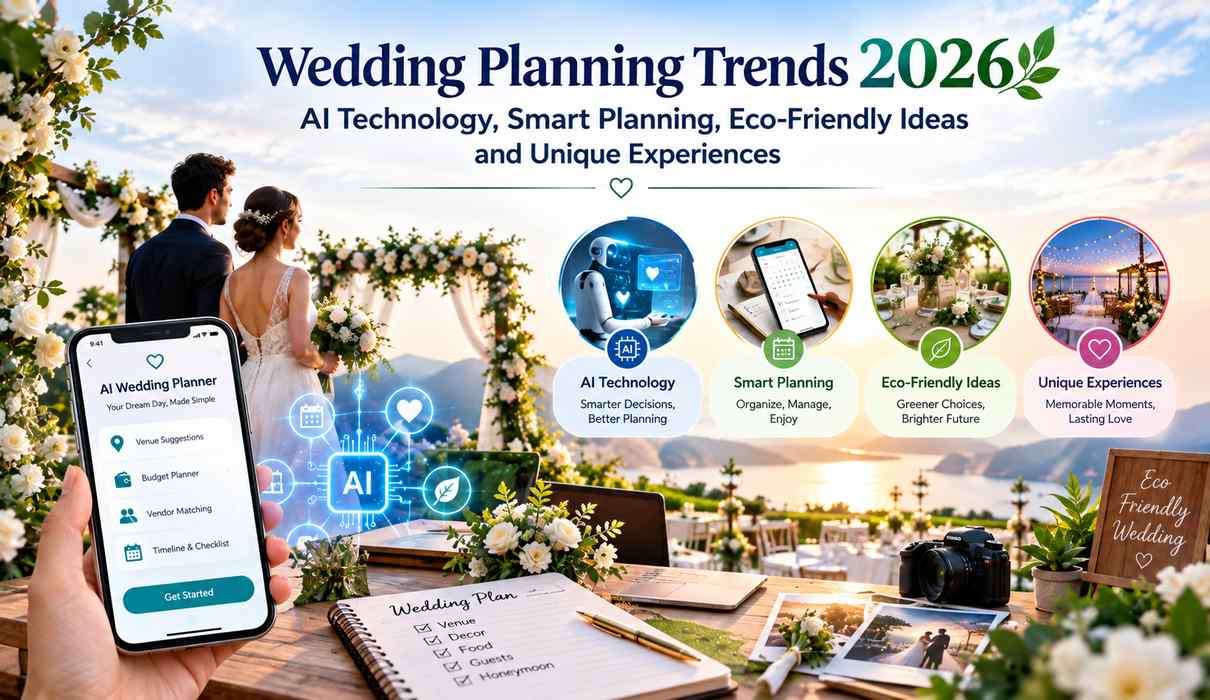
Wedding Planning Trends 2026: AI Technology, Smart Planning, Eco-Friendly Ideas and Unique Experiences
Wedding planning is entering a new era in 2026. Couples are no longer simply following traditional wedding formulas. Instead, they are creating celebrations that reflect their personalities, relationships, values, cultures and lifestyles. Technology is helping simplify complicated planning tasks, while personalization and sustainability are becoming increasingly important parts of the modern wedding experience.
Artificial intelligence (AI), smart planning tools, digital invitations, virtual consultations, sustainable décor, personalized menus and immersive guest experiences are changing the way couples organize their big day. Recent wedding research also highlights the growing role of AI in planning. The Knot reported that roughly 36% of engaged couples were using AI for wedding planning by the end of 2025, compared with less than 10% in 2023.
At the same time, 2026 wedding trends are moving toward more intentional celebrations. Vogue’s coverage of current wedding trends highlights personalization, meaningful details, guest experience, nature and handmade touches as major themes.
From smart budgeting to eco-friendly venues, the future of wedding planning is becoming more efficient while remaining deeply personal.
1. AI-Powered Wedding Planning
Artificial intelligence is one of the biggest wedding planning trends of 2026. Couples can now use AI-powered tools to organize ideas, create checklists, develop schedules, draft communications and explore potential wedding concepts.
AI can assist with tasks such as:
- Creating wedding planning timelines
- Organizing budgets
- Drafting invitations and emails
- Generating décor ideas
- Developing menu concepts
- Creating seating-plan suggestions
- Preparing vendor questions
- Building honeymoon itineraries
- Answering etiquette questions
- Creating wedding website content
The growing popularity of AI does not necessarily mean couples want technology to control their wedding decisions. Instead, AI is increasingly being used as a planning assistant that can save time and organize information.
Vogue reported in 2026 that couples and wedding professionals were using AI for budgeting, timelines, vendor discovery, inspiration and administrative tasks, while many couples remained cautious about using AI for deeply personal elements such as vows and speeches.
This distinction is important. AI can handle repetitive work, while couples and their families can focus on emotional and creative decisions.
2. Smart Wedding Planning Tools
Wedding planning involves hundreds of small decisions. Keeping track of venues, vendors, payments, guest lists, appointments and deadlines can quickly become overwhelming.
Smart wedding-planning platforms are helping bring these tasks together in one place.
Modern digital planning tools can help couples manage:
- Guest lists
- RSVP responses
- Vendor contracts
- Payment schedules
- Wedding websites
- Seating arrangements
- Event timelines
- Checklists
- Invitations
- Accommodation information
- Transportation details
Instead of maintaining multiple spreadsheets and paper documents, couples can increasingly organize important information through connected digital platforms.
The Knot’s 2026 research describes today’s couples as more intentional about planning, while also highlighting their use of technology, social media and professional wedding vendors.
Smart planning is therefore becoming less about doing everything digitally and more about using technology to make the overall process easier.
3. Personalized Weddings Are Taking Center Stage
One of the strongest wedding trends in 2026 is personalization.
Couples increasingly want their wedding to feel like their own celebration rather than a copy of something seen online. This can influence everything from the ceremony and music to food, décor, photography and guest activities.
Personalization ideas include:
- Custom wedding stationery
- Meaningful family traditions
- Personalized vows
- Signature cocktails
- Favorite foods
- Custom playlists
- Relationship-inspired décor
- Personalized guest gifts
- Unique entertainment
- Custom illustrations
- Cultural traditions
The Knot describes the current wedding environment as an “era of intention,” with couples making thoughtful and authentic choices rather than simply following established formulas.
In 2026, originality does not necessarily mean making a wedding extravagant. It can simply mean making the details meaningful.
4. Sustainable and Eco-Friendly Weddings
Sustainability is another major wedding planning trend.
Couples are increasingly considering the environmental impact of their celebrations, particularly when selecting venues, décor, flowers, food, invitations and transportation.
Eco-friendly wedding ideas can include:
- Digital invitations
- Locally sourced food
- Seasonal flowers
- Reusable décor
- Rental furniture
- Recycled stationery
- Sustainable wedding favors
- Reusable tableware
- Plant-based menu options
- Local vendors
- Electric or shared transportation
- Donation-based gifts
Choosing seasonal flowers and locally sourced products can reduce transportation requirements while supporting local businesses.
The Knot’s 2026 research found that 28% of Gen Z couples included eco-friendly or sustainable options in their weddings, while 22% included locally sourced products.
Sustainability can also make a wedding more distinctive. Instead of disposable decorations, couples can select pieces that can be reused, rented, donated or repurposed after the celebration.
5. Nature-Inspired Wedding Venues
Nature is becoming increasingly important in modern wedding design.
Outdoor venues, gardens, forests, beaches, mountains, lakes and countryside properties can provide natural beauty without requiring excessive decoration.
Current wedding coverage has identified a renewed interest in venues surrounded by natural landscapes.
Nature-inspired weddings can incorporate:
- Outdoor ceremonies
- Garden receptions
- Natural floral arrangements
- Wooden elements
- Botanical décor
- Organic textures
- Outdoor dining
- Sunset photography
- Natural lighting
The appeal goes beyond aesthetics. Natural venues can create a relaxed atmosphere and provide memorable experiences for guests.
6. Unique Guest Experiences
In 2026, wedding planning is increasingly focused on the guest experience.
Rather than simply arranging a ceremony followed by dinner and dancing, couples are exploring ways to keep guests engaged throughout the celebration.
Examples include:
- Interactive food stations
- Live cooking experiences
- Cocktail workshops
- Live music
- Photo experiences
- Personalized welcome gifts
- Cultural performances
- Lawn games
- Creative entertainment
- Late-night food stations
- Interactive guest books
Vogue’s 2026 wedding coverage highlights a shift toward immersive experiences, interactive entertainment and thoughtfully designed guest journeys.
Food is also becoming part of the experience. Menus can be designed to encourage conversation and movement rather than simply providing a traditional multi-course meal.
7. Digital Invitations and Wedding Websites
Digital communication is becoming an essential part of modern wedding planning.
Digital invitations and wedding websites allow couples to provide guests with important information in one convenient location.
A wedding website can include:
- Event dates
- Venue information
- Directions
- RSVP forms
- Dress codes
- Accommodation details
- Travel information
- Wedding schedules
- Gift information
- Frequently asked questions
- Contact information
Digital invitations can also make it easier to update information when plans change.
However, 2026 is not necessarily about eliminating physical stationery completely. Many couples are combining digital convenience with meaningful printed pieces such as handmade invitations, custom illustrations or personalized notes.
This creates a balance between technology and traditional craftsmanship.
8. Human-Made Details in the Age of AI
Interestingly, the rise of AI is also creating renewed appreciation for handmade wedding details.
As digital tools become more common, couples may increasingly value things that feel personal and imperfect.
Examples include:
- Handwritten notes
- Hand-drawn illustrations
- Custom sketches
- Handmade stationery
- Family photographs
- Personal letters
- Handcrafted favors
- Customized artwork
Vogue’s 2026 wedding trend coverage specifically points to a return toward details that feel human and handmade as a response to an increasingly digital world.
This creates an interesting balance: AI can help organize the wedding, while handmade elements can help give the celebration emotional character.
9. Creative Wedding Décor and Maximalist Design
Minimalist wedding design is making room for more expressive styles in 2026.
Couples and planners are experimenting with stronger colors, patterns, layered textures, dramatic lighting, statement installations and unexpected décor combinations.
Possible ideas include:
- Bold floral arrangements
- Colorful table settings
- Patterned linens
- Dramatic draping
- Sculptural installations
- Statement lighting
- Decorative lounges
- Personalized signage
- Vintage-inspired details
- Unexpected color combinations
Current wedding trend reporting describes growing interest in maximalism, color and whimsical design.
The key is not simply adding more decoration. Effective wedding design should still feel connected to the couple’s personality and overall story.
10. Personalized Food and Beverage Experiences
Food is becoming an increasingly important part of wedding design.
Rather than treating catering as a standard requirement, couples are using food to express their personalities and backgrounds.
Popular approaches can include:
- Family recipes
- Regional cuisine
- Interactive food stations
- Signature cocktails
- Dessert bars
- Late-night comfort food
- Locally sourced ingredients
- Cultural dishes
- Customized cakes
- Family-style dining
Vogue’s 2026 trend reporting highlights food as an important visual and experiential component of weddings, including creatively presented dishes and curated food stations.
For multicultural weddings, food can also become a meaningful way to represent different family traditions.
11. Social Media and Short-Form Wedding Content
Social media remains a major source of wedding inspiration.
Platforms such as Instagram and TikTok allow couples to discover ideas for venues, outfits, décor, photography, entertainment and beauty.
The Knot’s research shows the continuing importance of social platforms for wedding inspiration, particularly among younger couples. TikTok usage among Gen Z couples increased substantially between 2021 and 2025 in the study data.
However, 2026 is also seeing some resistance to overly trend-driven celebrations. Vogue reports that some couples are deliberately moving away from weddings designed primarily for social media and instead focusing on authenticity and personal meaning.
This suggests that social media can be useful for inspiration without becoming the sole purpose of wedding design.
12. Intimate and Flexible Wedding Formats
Wedding celebrations are also becoming more flexible.
Some couples are choosing smaller ceremonies, destination weekends, courthouse events, private gatherings or celebrations spread across several days.
Others are redesigning the traditional wedding timeline completely.
The Knot’s 2026 trend coverage describes “deconstructed” weddings in which couples rethink the conventional sequence of ceremony, cocktail hour, dinner and dancing.
A flexible format can allow couples to spend more time with guests and create different experiences throughout the celebration.
For example, a wedding weekend could include a welcome dinner, cultural ceremony, main celebration and relaxed farewell brunch.
13. Technology for Guest Management
Technology can also simplify guest management.
Digital RSVP systems can help couples track attendance, dietary requirements and accommodation needs.
QR codes and mobile wedding websites can provide guests with instant access to schedules and directions. Digital seating tools can make changes easier when the guest list changes.
For destination weddings, technology is particularly useful because guests may need information about:
- Flights
- Hotels
- Transportation
- Local attractions
- Event locations
- Dress codes
- Weather
- Activity schedules
This creates a more organized experience for both couples and guests.
14. AI Vendor Discovery and Wedding Research
Another emerging trend is using AI to research wedding vendors.
Couples can use AI tools to help organize questions and compare services based on their own requirements.
For example, a couple might define preferences for:
- Wedding style
- Location
- Guest count
- Budget range
- Photography approach
- Catering requirements
- Sustainability goals
- Cultural experience
AI can then help structure research and create questions for potential vendors.
However, AI-generated recommendations should still be verified. Couples should review portfolios, contracts, reviews, availability, pricing and professional credentials before making important decisions.
Technology can accelerate research, but human judgment remains important.
15. The Future of Wedding Planning
The future of wedding planning will likely combine technology with human creativity rather than replacing one with the other.
AI can help organize schedules and budgets. Digital platforms can simplify communication. Sustainable choices can reduce waste. Personalized design can make celebrations more meaningful. Professional planners and vendors can provide experience, creativity and emotional support.
The Knot’s experts similarly emphasize that technology can simplify planning, but it does not replace the human value of wedding professionals and personal connection.
The most successful wedding planning approach in 2026 is therefore likely to be balanced.
Couples can use technology where it saves time, while keeping important emotional decisions firmly personal.
Conclusion
Wedding Planning Trends 2026 are defined by a combination of AI technology, smart planning, sustainability, personalization and unique guest experiences.
Artificial intelligence is helping couples organize budgets, timelines, research and communication. Digital tools are making RSVP management and guest communication easier. Sustainable choices are influencing venues, food, décor and transportation. At the same time, couples are placing greater emphasis on handmade details, meaningful traditions, nature and experiences that reflect who they are.
Perhaps the biggest change is that modern weddings are becoming less about following a fixed formula and more about creating an authentic celebration.
The future of wedding planning is not simply more technology or more luxury. It is about using the right technology to reduce stress while preserving the human moments that make a wedding meaningful.
In 2026 and beyond, couples have more tools, ideas and creative possibilities than ever before. By combining smart planning with personal storytelling, eco-friendly decisions with beautiful design, and digital convenience with human connection, they can create wedding celebrations that are memorable, meaningful and genuinely their own.