

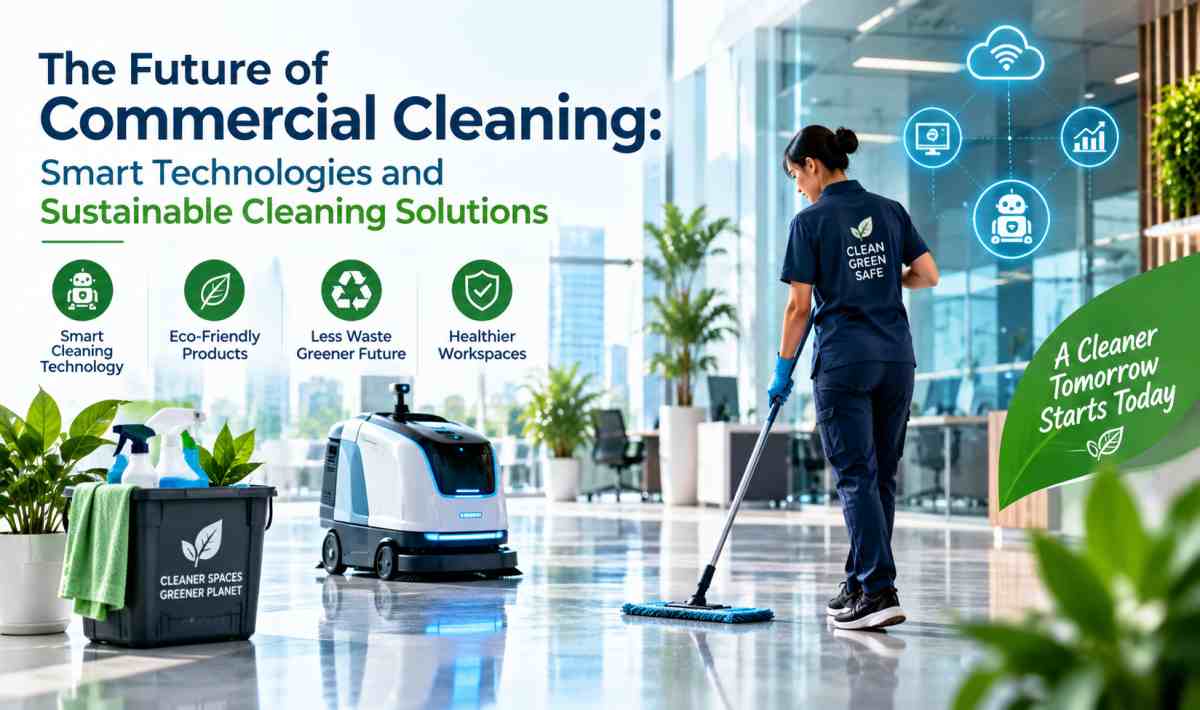
The Future of Commercial Cleaning: Smart Technologies and Sustainable Cleaning Solutions
The commercial cleaning industry is experiencing a significant transformation as businesses increasingly prioritize workplace hygiene, environmental sustainability, and operational efficiency. Traditional cleaning methods are gradually being complemented by advanced technologies, automated equipment, and environmentally responsible cleaning practices.
From artificial intelligence and robotic cleaning machines to eco-friendly cleaning products and smart monitoring systems, modern innovations are changing how commercial spaces are maintained.
The future of commercial cleaning is no longer limited to maintaining clean floors and surfaces. It involves creating healthier workplaces, reducing environmental impact, improving resource efficiency, and delivering consistent cleaning performance.
Businesses across industries, including corporate offices, shopping malls, hospitals, hotels, educational institutions, and industrial facilities, are exploring smarter cleaning solutions to meet evolving operational requirements.
In this article, we explore the latest commercial cleaning trends, emerging technologies, sustainable cleaning practices, and innovations expected to shape professional cleaning services in 2027 and beyond.
1. The Evolution of the Commercial Cleaning Industry
Commercial cleaning has traditionally depended on manual labor, conventional cleaning equipment, and chemical-based cleaning products.
Although these methods remain essential, businesses are increasingly adopting technology-driven approaches to improve cleaning efficiency and service quality.
Modern commercial cleaning companies are investing in automated equipment, digital management platforms, and environmentally responsible products.
Several factors are driving this transformation:
- Growing awareness of workplace hygiene and cleanliness.
- Increasing demand for environmentally friendly cleaning solutions.
- Advancements in artificial intelligence and robotics.
- Rising operational costs and pressure to improve efficiency.
- Greater emphasis on employee health and workplace comfort.
- Demand for transparent and measurable cleaning performance.
These developments are encouraging cleaning service providers to adopt smarter and more sustainable operating models.
As commercial buildings become increasingly connected, cleaning services are also becoming more intelligent, responsive, and data-driven.
2. Artificial Intelligence Is Transforming Commercial Cleaning
Artificial intelligence is emerging as an important technology in the professional cleaning industry.
AI-powered systems can analyze operational information, optimize cleaning schedules, and support efficient resource allocation.
Instead of relying entirely on fixed cleaning routines, businesses can use intelligent systems to identify areas requiring additional attention.
AI-Based Cleaning Scheduling
Traditional cleaning schedules often involve cleaning every area at predetermined intervals.
However, different commercial spaces experience different levels of activity.
For example, office entrances, elevators, and shared facilities generally experience more traffic than storage rooms.
AI-supported scheduling systems can analyze occupancy information and historical cleaning requirements to recommend appropriate cleaning frequencies.
This approach may help businesses:
- Reduce unnecessary cleaning activities.
- Improve staff productivity.
- Prioritize frequently used spaces.
- Optimize cleaning resources.
- Maintain consistent hygiene standards.
AI does not eliminate the need for professional cleaners. Instead, it can help cleaning teams make better operational decisions.
3. Robotic Cleaning Equipment and Automation
Robotic cleaning machines are becoming increasingly relevant in large commercial environments.
Automated floor scrubbers, robotic vacuum cleaners, and intelligent cleaning machines can perform repetitive tasks with reduced manual intervention.
These machines are particularly useful in environments with large, relatively unobstructed floor areas.
Applications of Robotic Cleaning
Shopping Malls: Automated floor-cleaning equipment can support routine maintenance across extensive corridors and common areas.
Corporate Offices: Robotic vacuum cleaners can assist with maintaining floors in suitable office layouts.
Airports: Automated cleaning machines can help maintain large public areas while supporting existing cleaning teams.
Warehouses: Industrial robotic scrubbers can clean extensive floor surfaces efficiently.
Hotels: Automated equipment may support cleaning operations in corridors and shared spaces.
Benefits of Cleaning Automation
Robotic cleaning equipment offers several potential advantages, including improved consistency, reduced repetitive workloads, and better scheduling flexibility.
Some machines also provide operational reports that help supervisors monitor completed cleaning tasks.
However, automation requires suitable building layouts, maintenance support, trained operators, and appropriate safety procedures.
Human cleaning professionals remain essential for detailed cleaning, sanitation, equipment supervision, and tasks requiring judgment.
4. Internet of Things and Smart Cleaning Systems
The Internet of Things, commonly known as IoT, is another technology influencing the future of commercial cleaning.
IoT connects sensors, equipment, and management systems to collect and exchange operational information.
In commercial buildings, connected devices can help cleaning companies understand how facilities are being used.
Smart Restroom Monitoring
Connected restroom systems may monitor:
- Soap dispenser levels.
- Paper towel availability.
- Waste bin capacity.
- Facility usage patterns.
- Equipment maintenance requirements.
When supplies become low, the system can notify cleaning staff.
This reduces unnecessary inspection rounds while helping maintain restroom availability.
Occupancy-Based Cleaning
Occupancy sensors can provide information about how frequently different areas are used.
Cleaning teams can use this information to adjust schedules and focus on high-traffic locations.
For example, a conference room used throughout the day may require additional attention compared with an unused meeting room.
Smart cleaning systems can therefore support more responsive facility maintenance.
Importantly, organizations should implement these technologies with appropriate privacy safeguards and avoid collecting unnecessary personal information.
5. Sustainable Cleaning Solutions Are Becoming Essential
Environmental sustainability is becoming an increasingly important consideration for businesses selecting commercial cleaning services.
Conventional cleaning operations can involve substantial water consumption, disposable materials, chemical products, and energy-intensive equipment.
Sustainable cleaning solutions aim to reduce these environmental impacts while maintaining effective cleaning performance.
Eco-Friendly Cleaning Products
Professional cleaning companies are exploring products designed to reduce environmental harm.
Depending on the application, these may include:
- Biodegradable cleaning formulations.
- Products with recognized environmental certifications.
- Concentrated cleaning solutions.
- Refillable cleaning containers.
- Low-fragrance cleaning products.
- Reusable cleaning materials.
However, products marketed as natural or green are not automatically safer or more effective.
Cleaning companies should evaluate product ingredients, manufacturer instructions, safety information, and independent certifications.
Appropriate disinfectants remain necessary in settings where disinfection is required.
6. Water Conservation in Commercial Cleaning
Water conservation is a major component of sustainable commercial cleaning.
Large facilities can consume considerable quantities of water during routine floor cleaning, restroom maintenance, and other cleaning operations.
Modern equipment and improved cleaning techniques can help reduce unnecessary water consumption.
Water-Efficient Cleaning Technologies
Microfiber Cleaning Systems: Microfiber materials can capture dust and dirt effectively while often requiring less cleaning solution than traditional methods.
Automated Floor Scrubbers: Certain modern machines use controlled dispensing systems to regulate water and cleaning solution consumption.
Low-Moisture Carpet Cleaning: Suitable low-moisture methods can reduce water use and drying times.
Precision Dispensing Systems: Automated dosing equipment helps prevent excessive use of cleaning chemicals.
These solutions can support environmental goals while potentially reducing operating expenses.
Businesses should compare actual water consumption and cleaning performance before selecting equipment.
7. Green Cleaning Practices for Modern Workplaces
Green cleaning involves more than replacing conventional products with environmentally friendly alternatives.
It requires a comprehensive approach to cleaning operations, equipment selection, waste management, and employee training.
Important Green Cleaning Practices
Use Reusable Materials: Durable microfiber cloths and reusable cleaning tools can reduce dependence on disposable products.
Reduce Packaging Waste: Concentrated products and refill systems can help minimize packaging.
Choose Energy-Efficient Equipment: Modern cleaning machines with efficient motors and battery systems may reduce electricity consumption.
Improve Chemical Management: Proper dilution, labeling, storage, and handling can reduce waste and improve safety.
Train Cleaning Employees: Staff should understand sustainable cleaning procedures and correct product usage.
By implementing these practices, commercial cleaning companies can support clients’ environmental objectives.
Sustainable cleaning should always maintain appropriate hygiene standards rather than compromise cleanliness to reduce resource consumption.
8. Data Analytics and Digital Cleaning Management
Digital technology is changing how professional cleaning companies manage daily operations.
Cloud-based cleaning management platforms can help supervisors organize assignments, track equipment, monitor service completion, and communicate with clients.
These platforms may provide real-time information about cleaning activities across multiple buildings.
Advantages of Digital Cleaning Management
- Improved communication between cleaning teams and supervisors.
- Better tracking of completed cleaning activities.
- Faster identification of maintenance problems.
- More accurate resource planning.
- Improved accountability and service transparency.
For example, a cleaning supervisor managing several office buildings can review digital reports to identify incomplete assignments.
Data analytics can also help companies identify recurring operational challenges and improve future cleaning schedules.
However, digital reports should complement physical inspections and quality assessments rather than replace them entirely.
9. The Growing Importance of Indoor Air Quality
Indoor air quality is becoming an important consideration in commercial building maintenance.
Dust, allergens, airborne particles, and certain cleaning product emissions can affect indoor environmental conditions.
Professional cleaning services can contribute to better indoor environments through effective dust removal and appropriate product selection.
Cleaning Practices That Support Indoor Air Quality
HEPA-Filter Vacuum Cleaners: Properly maintained vacuum cleaners with high-efficiency particulate air filtration can help capture fine particles.
Low-Emission Cleaning Products: Suitable low-emission formulations can help reduce unnecessary indoor chemical exposure.
Microfiber Dusting: Effective microfiber cleaning can capture dust rather than simply redistribute it.
Regular Surface Maintenance: Routine cleaning can reduce accumulated dust and debris.
Ventilation Coordination: Cleaning teams can coordinate with facility managers to support appropriate ventilation during cleaning activities.
Indoor air quality also depends on building ventilation, filtration, moisture management, and pollution sources.
Therefore, cleaning should form part of a broader indoor environmental management strategy.
10. Specialized Commercial Cleaning Services
The future of commercial cleaning will also involve increasing demand for specialized services.
Different commercial environments have unique cleaning requirements, safety considerations, and operational challenges.
Healthcare Facility Cleaning
Hospitals and healthcare centers require carefully defined cleaning and disinfection procedures.
Cleaning teams must follow applicable infection prevention protocols and use suitable products.
Industrial Cleaning
Factories and warehouses may require specialized equipment for cleaning machinery, production areas, and industrial floors.
Hospitality Cleaning
Hotels and resorts need consistent cleaning standards to maintain guest comfort and service quality.
Educational Institution Cleaning
Schools, colleges, and universities require routine cleaning of classrooms, restrooms, laboratories, and shared facilities.
Commercial Kitchen Cleaning
Restaurants and commercial kitchens require cleaning practices that support food safety and hygiene.
Specialized cleaning providers must ensure employees receive appropriate training for the environments in which they work.
11. How Sustainable Cleaning Benefits Businesses
Businesses adopting sustainable commercial cleaning practices may experience several operational and environmental benefits.
Reduced Environmental Impact
Water-efficient equipment, reusable materials, and responsible chemical management can reduce waste and resource consumption.
Better Resource Management
Automated dosing systems and improved scheduling can help prevent unnecessary use of cleaning supplies.
Improved Workplace Experience
Well-maintained workplaces can provide employees and visitors with a cleaner, more comfortable environment.
Support for Sustainability Goals
Documented green cleaning practices can contribute to broader corporate environmental initiatives.
Potential Long-Term Savings
Although advanced equipment may require higher initial investment, efficient operations can generate savings over time.
Actual financial benefits depend on equipment costs, maintenance requirements, facility size, and operating conditions.
12. Challenges Facing Smart Commercial Cleaning
Despite its advantages, smart cleaning technology presents several challenges.
High Initial Investment
Robotic equipment, IoT sensors, and digital management systems may require substantial upfront expenditure.
Employee Training
Cleaning professionals need training to operate advanced equipment safely and effectively.
Equipment Maintenance
Automated machines require routine servicing, software updates, and replacement components.
Technology Integration
Connecting cleaning systems with existing building management platforms can involve technical difficulties.
Data Security
Connected devices and cloud-based platforms require appropriate cybersecurity and privacy protections.
Businesses should evaluate these challenges before implementing new cleaning technologies.
A phased approach can help organizations test solutions, measure results, and expand successful programs.
13. Commercial Cleaning Trends to Watch in 2027
Several emerging developments are expected to influence commercial cleaning services in 2027 and beyond.
Greater Adoption of Cleaning Robots
As robotic equipment improves, more large facilities may evaluate automated cleaning solutions.
Increased Use of Predictive Maintenance
Connected equipment can help identify maintenance needs before unexpected failures occur.
Expansion of Sustainable Cleaning Programs
Businesses may increasingly request measurable environmental performance from cleaning providers.
More Demand-Based Cleaning
Occupancy information and facility usage patterns can help determine when cleaning is necessary.
Improved Digital Reporting
Clients may expect clearer records of cleaning activities, service quality, and resource consumption.
Human-Robot Collaboration
Cleaning professionals and automated machines will increasingly work together, combining human expertise with technology.
These developments suggest that the industry will become more technology-enabled without eliminating the importance of skilled cleaning employees.
14. How to Choose a Future-Ready Commercial Cleaning Company
Selecting the right cleaning company is essential for businesses seeking reliable, efficient, and sustainable services.
Organizations should evaluate service providers based on experience, technology, environmental practices, and operational transparency.
Important Factors to Consider
Industry Experience: Choose a company familiar with the cleaning requirements of your business sector.
Modern Equipment: Evaluate whether the provider uses suitable and properly maintained cleaning technology.
Sustainable Practices: Ask about water conservation, waste reduction, product selection, and environmental certifications.
Employee Training: Confirm that cleaning staff receive appropriate technical and safety training.
Quality Monitoring: Look for documented inspections, clear performance standards, and effective complaint resolution.
Flexible Services: Select a provider capable of adapting cleaning schedules to business operations.
Transparent Pricing: Request clear information about service inclusions, additional charges, and contract conditions.
A dependable cleaning company should recommend solutions based on actual facility requirements rather than promoting technology unnecessarily.
15. The Future of Commercial Cleaning in India
India presents significant opportunities for modern commercial cleaning services as offices, shopping complexes, healthcare facilities, hotels, and industrial properties continue to evolve.
Growing interest in organized facility management and sustainable building operations may encourage wider adoption of professional cleaning solutions.
In major commercial centers such as Mumbai, Bengaluru, Delhi NCR, Hyderabad, Chennai, Pune, and Kolkata, businesses are exploring improved building maintenance practices.
However, technology adoption will vary according to property size, budgets, workforce availability, and operational needs.
For Indian cleaning companies, future competitiveness may depend on combining trained employees, dependable service quality, digital management, and environmentally responsible practices.
Companies that can demonstrate measurable cleaning performance and responsible resource use may be better positioned to serve increasingly demanding commercial clients.
Conclusion
The future of commercial cleaning will be shaped by the integration of smart technologies, sustainable cleaning solutions, and professional expertise.
Artificial intelligence, robotic cleaning machines, IoT monitoring systems, and digital management platforms offer opportunities to improve efficiency and service consistency.
Meanwhile, eco-friendly cleaning products, water-saving equipment, reusable materials, and responsible waste management can help reduce environmental impact.
However, technology alone cannot guarantee better cleaning outcomes. Successful implementation requires employee training, appropriate equipment selection, quality monitoring, and compliance with relevant safety standards.
As businesses prepare for 2027 and beyond, commercial cleaning companies that combine innovation with sustainability and reliable human expertise will be well positioned to meet changing workplace requirements.
Ultimately, the goal of modern commercial cleaning is not simply to clean faster. It is to maintain healthier, safer, more efficient, and environmentally responsible commercial spaces.